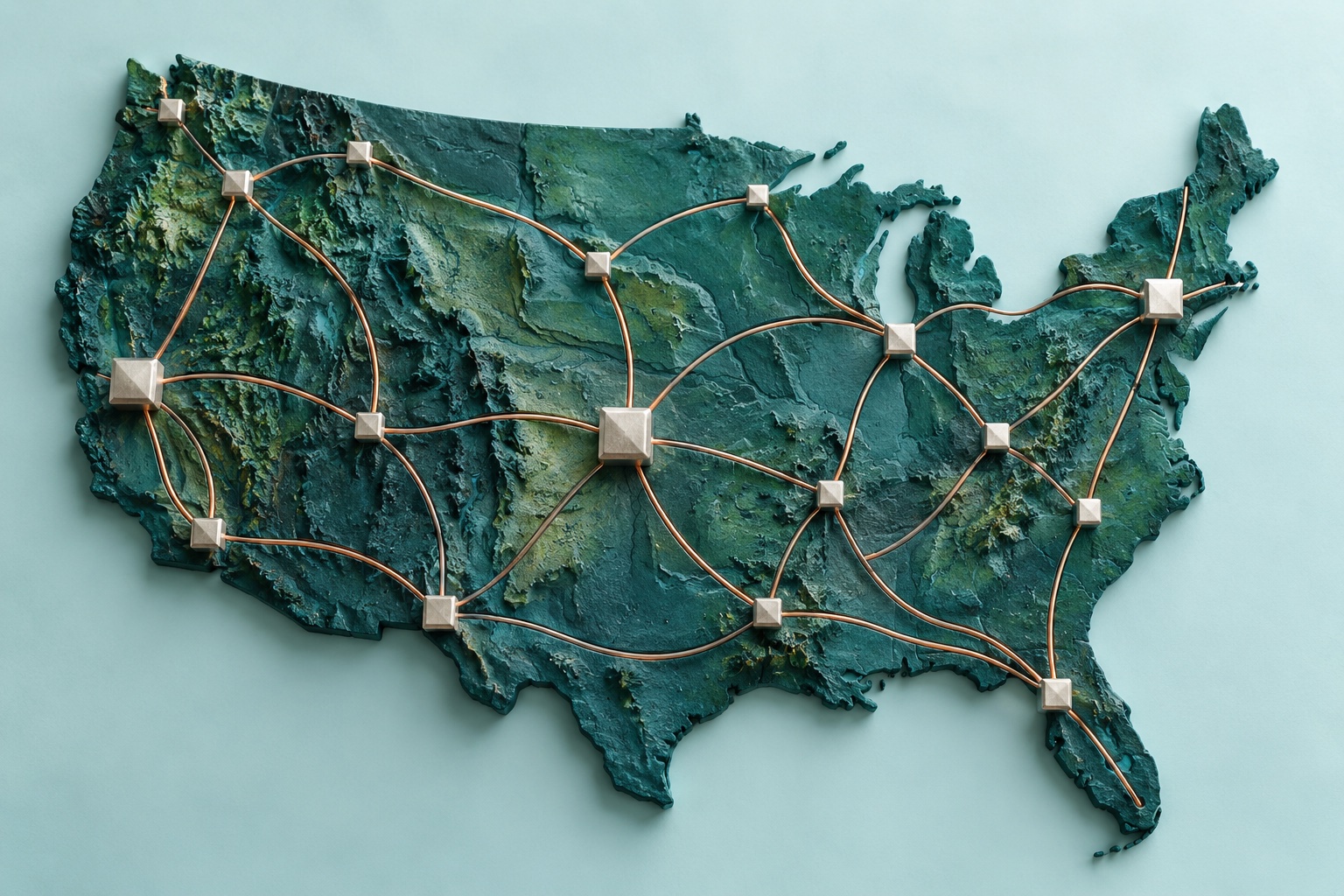
Utility-scale batteries are popping up across the country like popcorn in a hot pan. Some places are racing ahead thanks to friendly rules, wide-open land, and lots of sunshine or wind. Others are jumping in with new laws and cash bonuses. Below is a plain-English ranking of the ten best states to build big batteries in 2025, plus quick facts that show why each one makes the list.
1. Texas
Current muscle: Almost 10 gigawatts (GW) of battery power are already plugged into the ERCOT grid, and analytics firm Modo Energy thinks that number could reach 18 GW by New Year’s Eve.
Why it works: Texas has an energy-only market, so prices swing high on hot afternoons and cold mornings. Batteries can cash in on those spikes. Interconnection studies move faster than in most regions, and land is plentiful in the western half of the state.
Key nudge: No statewide storage tax credit, yet cheap land and easy market access make private returns strong.
2. California
Current muscle: State trackers count about 15.7 GW online as of April, up from just 0.5 GW in 2018. Another 8.6 GW is slated to arrive by 2027.
Why it works: California’s sunset solar surge means prices crumble at noon and climb at dusk, a perfect pattern for four-hour batteries. A 100 percent clean-power mandate by 2045 keeps the pipeline full.
Key nudge: The California ISO lets batteries stack several services, boosting revenue and shortening payback.
3. Arizona
Current muscle: The new Papago Storage site near Phoenix adds 300 MW and 1,200 megawatt-hours (MWh) on its own, the first of three twin projects.
Why it works: Blazing sun drives big solar farms, and the evening demand ramp is steep. Investor-owned utilities sign long-term “tolling” deals that guarantee cash flow.
Key nudge: The state land department now offers streamlined leases for solar-plus-storage projects on trust lands, shaving months off permitting.
4. Nevada
Current muscle: A mix of high solar penetration, nearby lithium supplies, and friendly siting laws has turned Nevada into a storage hotspot for West Coast energy traders.
Why it works: Projects can send power west into California or north into Idaho and Oregon, taking advantage of price spreads.
Key nudge: State lawmakers allow property-tax abatements that can cut local taxes by up to 55 percent for twenty years.
5. New York
Current muscle: About 1.4 GW is already built or under contract. The state still targets 6 GW by 2030, and regulators keep handing out awards through NYSERDA auctions.
Why it works: Dense load pockets around New York City suffer pricey peaks. Batteries that can hit the capacity market and the 15-minute reserve market make strong returns.
Key nudge: Premium “bridge” incentives soften the hit from uncertain wholesale revenues during early years of operation.
6. New Jersey
Current muscle: The Garden State Energy Storage Program opened its first bid round in June, aiming for 350 to 750 MW right away and 2 GW statewide by 2030.
Why it works: Space is tight, yet batteries can slot into brownfields and transmission corridors. The PJM queue offers lucrative frequency-regulation payments.
Key nudge: A fixed incentive paid out over fifteen years gives developers a clear revenue floor, helping projects win financing.
7. Virginia
Current muscle: Four Dominion batteries run today, and lawmakers just voted to triple the storage target under the Virginia Clean Economy Act, shooting for roughly 10 GW.
Why it works: Northern Virginia hosts the planet’s densest cluster of data centers, all hungry for 24-hour power. Batteries back up new solar and protect grid reliability.
Key nudge: Utilities must petition regulators for storage approvals, so each project enjoys a stable cost-recovery path once green-lighted.
8. Florida
Current muscle: Florida Power & Light’s Manatee system (409 MW / 900 MWh) is already one of the world’s largest solar-charged batteries. FPL plans more than 2 GW of new storage during 2026-27, on top of a 4 GW roadmap for the decade.
Why it works: Afternoon thunderstorms and muggy evenings create volatile demand curves that batteries can smooth.
Key nudge: Investor-owned utilities may earn regulated returns on storage just like traditional power plants, making large fleet roll-outs attractive.
9. Illinois
Current muscle: The Climate and Equitable Jobs Act sets a carbon-free grid by 2045 and pushes regulators to treat storage like renewables. New bills add tax perks and workshop sessions to map an incentive plan.
Why it works: Chicago’s fast-growing data-center hub needs firm capacity, and MISO transmission ties allow batteries to trade across several states.
Key nudge: A recent law adds property-tax breaks and clear wage rules for storage plants, giving developers certainty on costs.
10. Colorado
Current muscle: Platte River Power Authority is building Northern Colorado’s first 100 MW / 400 MWh battery, slated for late 2026, and the state won a federal long-duration pilot grant.
Why it works: High solar output at altitude and fast-changing mountain weather create big price swings that batteries can capture.
Key nudge: The legislature lets utilities recover storage costs through renewable-portfolio surcharges, and rural cooperatives now qualify for zero-interest federal loans.
How We Ranked Them
This top ten considers four simple filters:
Installed and pipeline capacity in public interconnection queues
Market design or incentives that reward storage services
Speed and cost of permitting and land
Local demand curves that produce strong daily price spreads
Weights are subjective but favor near-term build potential rather than distant goals.
What It Means for Developers
Equipment orders: Texas and California factories are stacking up lead times. Lock slots early.
Hybrid design: In PJM and NYISO, pairing batteries with solar may dodge grid-upgrade costs.
Long duration: States like Colorado and Nevada attract federal grants for multi-day chemistries. Keeping flexibility in site layouts can future-proof assets.
Local partners: Many states offer bonus points for projects that hire apprentices or source U.S. content. Building those ties early can lift bids over the line.
Big batteries are moving from edge case to everyday grid gear. Picking the right state in 2025 could mean faster approvals, richer revenue, and smoother exits down the road.
Sources
Yes Energy, “ERCOT’s Battery Storage Boom” https://blog.yesenergy.com/yeblog/ercots-battery-storage-boom
Modo Energy, “Battery Buildout Projection for ERCOT” https://modoenergy.com/research/ercot-battery-energy-storage-buildout-projection-july-2024-12-gw-18-gw-2025-approval-energize-synchronize-interconnection-queue
California Energy Commission, “Energy Storage System Survey” (April 2025 dashboard) https://www.energy.ca.gov/data-reports/energy-almanac/california-electricity-data/california-energy-storage-system-survey
Reuters, “Arizona’s Largest Grid-Scale Battery Now Online” https://pv-magazine-usa.com/2025/07/07/arizonas-largest-grid-scale-battery-is-now-online/
The Progress Playbook, “How Nevada Became One of America’s Biggest Battery Storage Markets” https://theprogressplaybook.com/2025/03/25/how-nevada-became-one-of-americas-biggest-battery-storage-markets/
New York Department of Public Service, “State of Storage in New York” (March 2025) https://documents.dps.ny.gov/public/Common/ViewDoc.aspx?DocRefId=%7BF03F3A96-0000-CE19-A1B9-03455BB61011%7D
Utility Dive, “New Jersey Seeks 1 GW of Transmission-Scale Storage” https://www.utilitydive.com/news/new-jersey-bpu-energy-storage-rfp-solicitation/752064/
PV Magazine USA, “Virginia Passes Legislation to Triple Energy Storage Capacity” https://pv-magazine-usa.com/2025/04/29/virginia-passes-legislation-to-triple-energy-storage-capacity/
Utility Dive, “Florida Power & Light Doubles Planned Storage Deployments” https://www.utilitydive.com/news/nextera-energy-florida-power-light-fpl-doubles-planned-storage-deployments-four-gigawatts/714246/
Canary Media, “Illinois’s Grid Needs Batteries. Can the Legislature Deliver?” https://www.canarymedia.com/articles/energy-storage/illinois-grid-battery-legislation
Platte River Power Authority, “Collaborates with NextEra on Battery Storage” https://prpa.org/news-releases/platte-river-collaborates-with-nextera-energy-resources-to-develop-utilitys-first-large-scale-battery-energy-storage-system/