
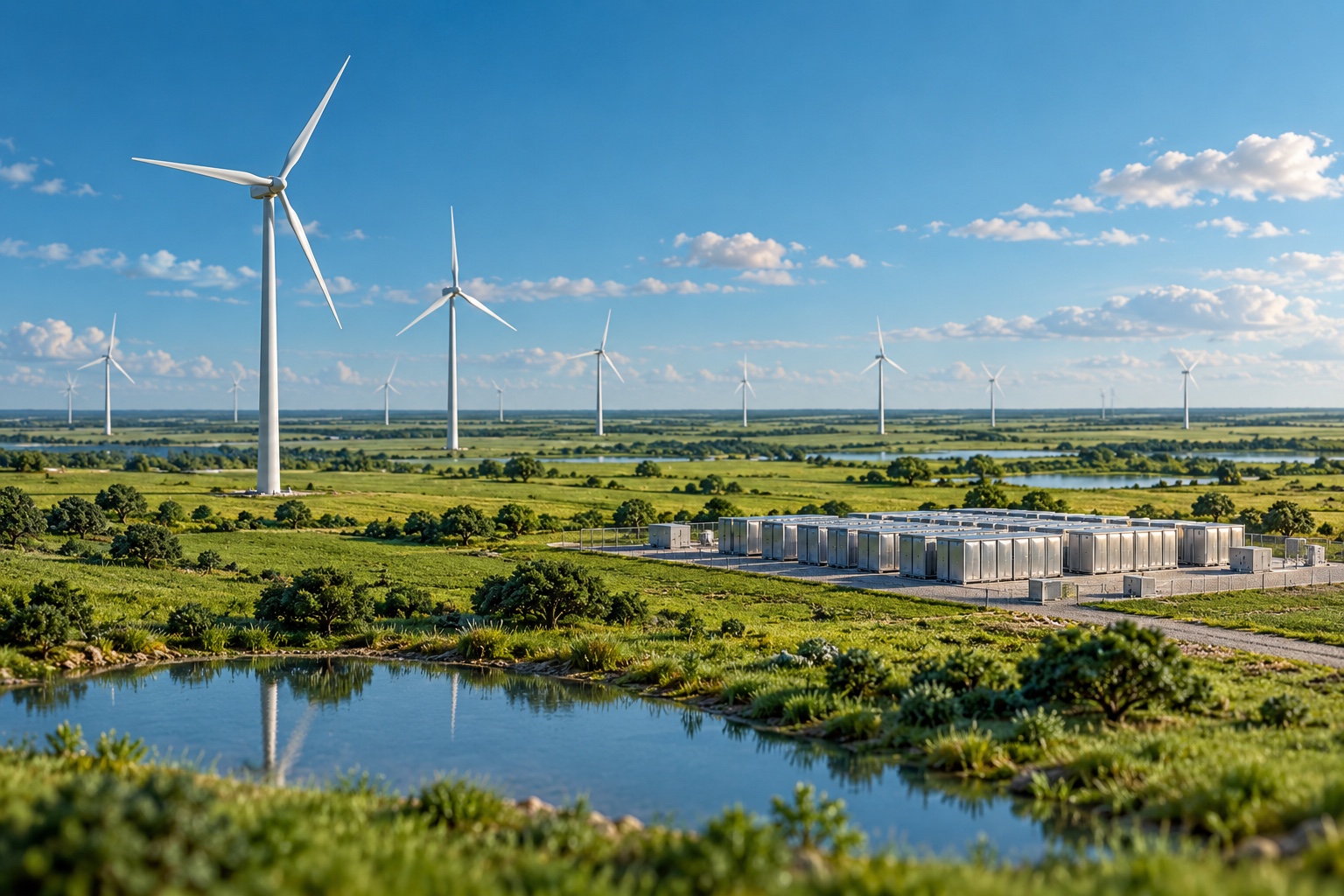
Everything is bigger in Texas, including the battery boom. The Electric Reliability Council of Texas (ERCOT) grid already hosts more utility-scale battery capacity than most countries, and developers keep flocking to build more. What makes this market so attractive? Below is a plain-English tour of the forces turning the Lone Star State into the capital of giant grid batteries—and what that means for companies planning their next project.
1. A Wild-West Energy Market That Rewards Speed
ERCOT runs an “energy-only” market. Generators earn their money from real-time and day-ahead power prices, not from a separate capacity auction. When Texans crank the air-conditioning on triple-digit afternoons, prices can rocket from forty dollars to nine thousand dollars per megawatt-hour in minutes. Batteries soak up cheap power at lunch, then discharge during the spikes and pocket the spread. Unlike regions that cap prices low, ERCOT lets the roller coaster run, so storage owners can make serious cash on volatility alone.
2. Price Swings Keep Getting Bigger
Solar and wind already supply about forty percent of ERCOT’s annual energy. They often flood the grid at noon, crashing prices, then fade at sunset when demand stays high. That daily yo-yo keeps widening. Analysts at Yes Energy say ERCOT nearly doubled its battery fleet between 2023 and 2025 as operators chased those swings. Fresh demand from data centers and oil-field electrification adds to the peaks, making the evening ramp steeper and more profitable for four-hour batteries.
3. A Massive and Moving Pipeline
By April 2025 ERCOT counted more than eight and a half gigawatts of battery storage online, with over 165 gigawatts sitting in the interconnection pipeline. For scale, a single gigawatt can power 750,000 homes. Many projects in line today will not all reach operation, but the numbers prove developers see Texas as open territory. Modo Energy notes that the median project takes just under three years from filing to first megawatt—much faster than the six-plus years common in Eastern markets.
4. A Faster Interconnection Process
ERCOT’s study track differs from the queue systems run by other U.S. grid operators. Projects move individually rather than waiting for a giant batch study, which helps speed past bottlenecks. Once a developer clears the Full Interconnection Study and signs an agreement, history shows the median time to commercial operation is about eighteen months. That timeline lets investors turn capital quicker and reroll it into the next site.
5. An Ancillary Service Buffet
Batteries in ERCOT bid into a four-course meal of ancillary services:
Regulation Up and Down keeps frequency steady.
Responsive Reserve Service (RRS) stands by to rescue the grid within ten minutes.
Contingency Reserve Service (ECRS) launched in 2023 as a fresh market tailored to batteries.
Synchronous Inertial Response Service (SIR) pays for lightning-fast injections when frequency dips.
Reports from GridStatus show batteries now provide most of ERCOT’s regulation needs, yet there is room to earn extra revenue by switching between these services and pure energy arbitrage when prices spike.
6. Friendly Policies and Clear Rules
Texas loves private investment. Zoning hurdles are lighter than in many coastal states, and state leaders have not imposed special permits for battery storage. County officials value the property-tax base these projects bring. While a new Chapter 403 program replaced the old school-tax abatement, grid storage projects can still pursue city or county abatements under Chapter 312 agreements. With no state income tax, developers keep more of each dollar earned.
7. Ample Land and Big Substations
West and South Texas offer endless flat ranchland, often near 345-kilovolt transmission lines built for wind farms. Many substations already include high-voltage bays sized for future projects, trimming interconnection upgrades. Landowners are familiar with energy deals and welcome steady lease checks that beat grazing returns.
8. Supply-Chain Advantages
Tesla’s Lathrop Megafactory ships containerized “Megapack” units straight to Texas sites, and LG Energy Solution now produces LFP cells in Michigan that flow south by rail. A cluster of Houston-area firms provides construction and engineering crews who have built dozens of projects, shrinking learning curves and labor costs.
9. High Demand Growth Means Long-Term Need
The Public Utility Commission projects ERCOT summer peak demand could hit 218 gigawatts by 2031—up nearly forty percent from 2023. Data centers alone are expected to add several gigawatts of continuous load this decade. More demand paired with rising renewable energy equals larger evening gaps for batteries to fill. Investors betting on ten-year paybacks like markets where growth is baked in.
10. Challenges to Watch
Revenue Compression: As the fleet grows, competition chips at ancillary prices. Smart software and careful siting will separate winners from laggards.
Insurance and Safety Costs: Large fires in other states have raised scrutiny. Local fire marshals now ask for wider setbacks and new water supplies.
Property-Tax Changes: Chapter 403 currently excludes most battery projects, so developers must negotiate county-level deals or budget higher tax bills.
Weather Extremes: Texas sees both hurricanes on the coast and ice storms up north. Designs need wind ratings and winterization plans.
Being aware of these hurdles early keeps spreadsheets honest and avoids surprises after construction starts.
Putting It All Together
ERCOT pairs sky-high price swings with a clear rulebook and an eager land base. Projects move from concept to cash flow in three years, sometimes faster. Ancillary markets pay today, and surging load promises more opportunity tomorrow. That mix makes Texas the top habitat for grid batteries in 2025—and likely for years to come.
Developers who map price data, pick robust substations, and line up flexible revenue strategies can still lock in attractive returns even as the market grows crowded. For companies like Sunland America, the message is simple: stake your claim early, design for speed, and let the Texas grid’s natural volatility do the heavy lifting.
Sources
Yes Energy, “ERCOT’s Battery Storage Boom” https://blog.yesenergy.com/yeblog/ercots-battery-storage-boom
Modo Energy, “ERCOT BESS Capacity Grows to 8.5 GW in the First Four Months of 2025” https://modoenergy.com/research/ercot-battery-energy-storage-capacity-buildout-interconnection-queue-january-april-2025-size-duration-location-houston-brazoria-county-policy
ERCOT, “Monthly Operational Overview — January 2025” https://www.ercot.com/files/docs/2025/02/18/ercot-monthly-operational-overview-january-2025.pdf
Modo Energy, “ERCOT Battery Energy Storage Revenues: November 2024 Update” https://modoenergy.com/research/ercot-november-2024-battery-energy-storage-revenues-energy-arbitrage-realtime-price-spike-net-load-jupiter-power
GridStatus, “Batteries Have Reshaped ERCOT’s Ancillary Services Procurement” https://blog.gridstatus.io/batteries-ercot-ancillary-services-2024/
Energy + Environmental Economics, “2024 ERCOT Market Update” https://www.ethree.com/wp-content/uploads/2024/12/E3-2024-ERCOT-Market-Update.pdf
Modo Energy, “ERCOT Battery Interconnection Timeline Analysis” https://modoenergy.com/research/ercot-battery-energy-storage-interconnection-queue-gis-report-development-timeline-full-interconnection-study-interconnection-agreement
Reuters, “Dash for Data Centers Creates Revenue Risks for Power Developers” https://www.reuters.com/business/energy/dash-data-centers-creates-revenue-risks-power-developers-2025-07-01/
BDO, “Texas Revamps Property Tax Incentive for Qualifying Projects” https://www.bdo.com/insights/tax/texas-revamps-property-tax-incentive-for-qualifying-projects