
Mark the area you could actually offer
Begin with the part of the property you would consider, rather than assuming the developer can use everything. Mark existing buildings, paths, crop areas and land you plan to retain. Include the route from the public road to the proposed area.
If you own adjoining parcels, give their parcel numbers separately. They may have different access, owners or restrictions. A combined acreage figure does not explain those differences.
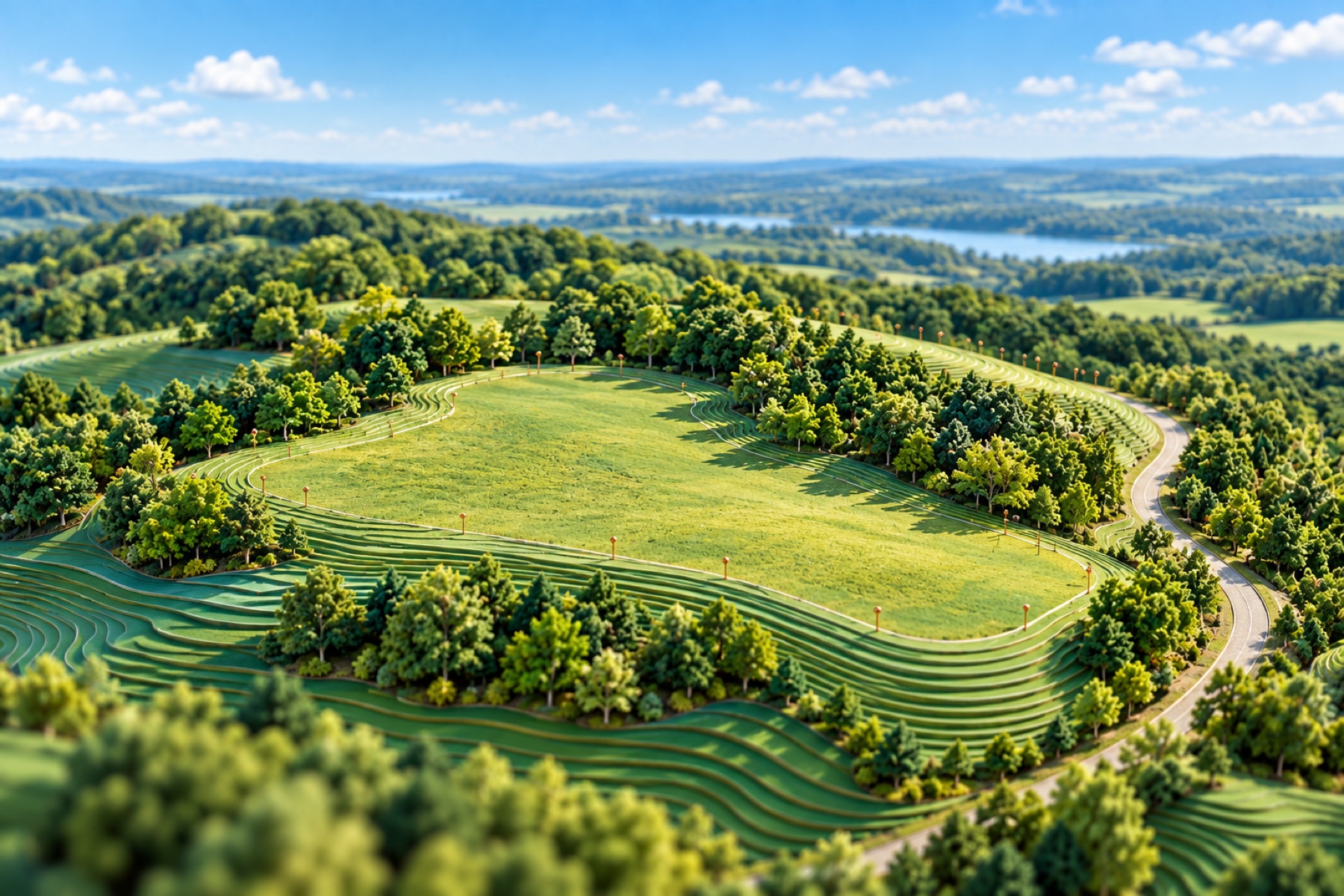
Leave room for more than the batteries
A concept layout needs to show electrical equipment, vehicle access and drainage as well as the battery enclosures. Required clearances and separation from other uses depend on the equipment and applicable requirements. Ask for these features on the drawing.
A photo of a compact battery site does not establish the footprint needed on your property. The image may omit access roads or show equipment with different requirements. Use the actual proposal when discussing the area being reserved.
Reference: NYSERDA: battery storage siting guidebook
Point out places that may be difficult to use
Mention steep ground, wet areas, streams, drainage ditches and places where vehicles cannot reach the site. You do not need to classify every feature. A straightforward description helps focus later engineering and environmental review.
Do not clear trees or change drainage just to make a parcel look more suitable. First find out whether there is a practical connection and a layout that can be reviewed. Site work can create costs without solving the issues that determine whether a project proceeds.
Want to ask about your land?
Send the location and what you know. You don’t need a project plan.
Tell us about your landKeep the rest of the property in the discussion
Ask how the remaining land could be used during construction and operation. Will a road be shared? Could a utility line cross a field you want to retain? Would a future building need access through the reserved area? Put those questions on the map.
If only part of your land would be leased, ask how that area will be described in the agreement. If more land is reserved during investigations, ask when the unused area would be released.
What to send when acreage is uncertain
Send the location, county and state with your contact details. A parcel number, tax map or old survey is helpful if you have it. If you know the approximate acreage but not the usable portion, explain that.
For example: “The property is about 20 acres, but I would consider only the open area beside the road.” That gives a reviewer a useful starting point without pretending you know the final footprint.
- Property address or nearby road and town
- County and state
- Parcel number or map, if available
- Area you would consider and uses you want to keep
Questions landowners ask
Can a small parcel be considered?
Yes, you can ask about it. Whether it proceeds depends on the usable space, access, connection and local requirements.
Do I need a new survey before reaching out?
No. Start with the location and records you already have. A survey may be needed at a later stage.
Does owning many acres guarantee a project?
No. The utility connection, layout, costs and approvals still need to work.
Sources & further reading
Sources checked 2026-10-03. Local rules and program details can change. Check the requirements for the actual project.