
Check what “filed with DEQ” means
Virginia’s full energy storage permit-by-rule application route distinguishes a notice of intent, application documents and a written authorization. Ask which stage the project has reached and request the dated record for that stage.
The notice identifies an intended application. Under section 9VAC15-100-30, DEQ reviews the required documents and fees before making its completeness determination and issuing written authorization under the chapter. Do not treat the notice alone as permission to start construction.
If a team says its permit is complete, ask for the authorization and the plans it covers. Have it list the other steps still needed, including the applicable land-use route, environmental permits and electrical connection. Ask who is responsible for each one.
Compare that timetable with the option or lease you are considering. A public filing does not tell you when payments begin under your agreement, how extensions work or when land is released if the project stops.
Reference: Virginia Administrative Code: full storage permit-by-rule application and authorization
Ask for three different boundaries on a drawing
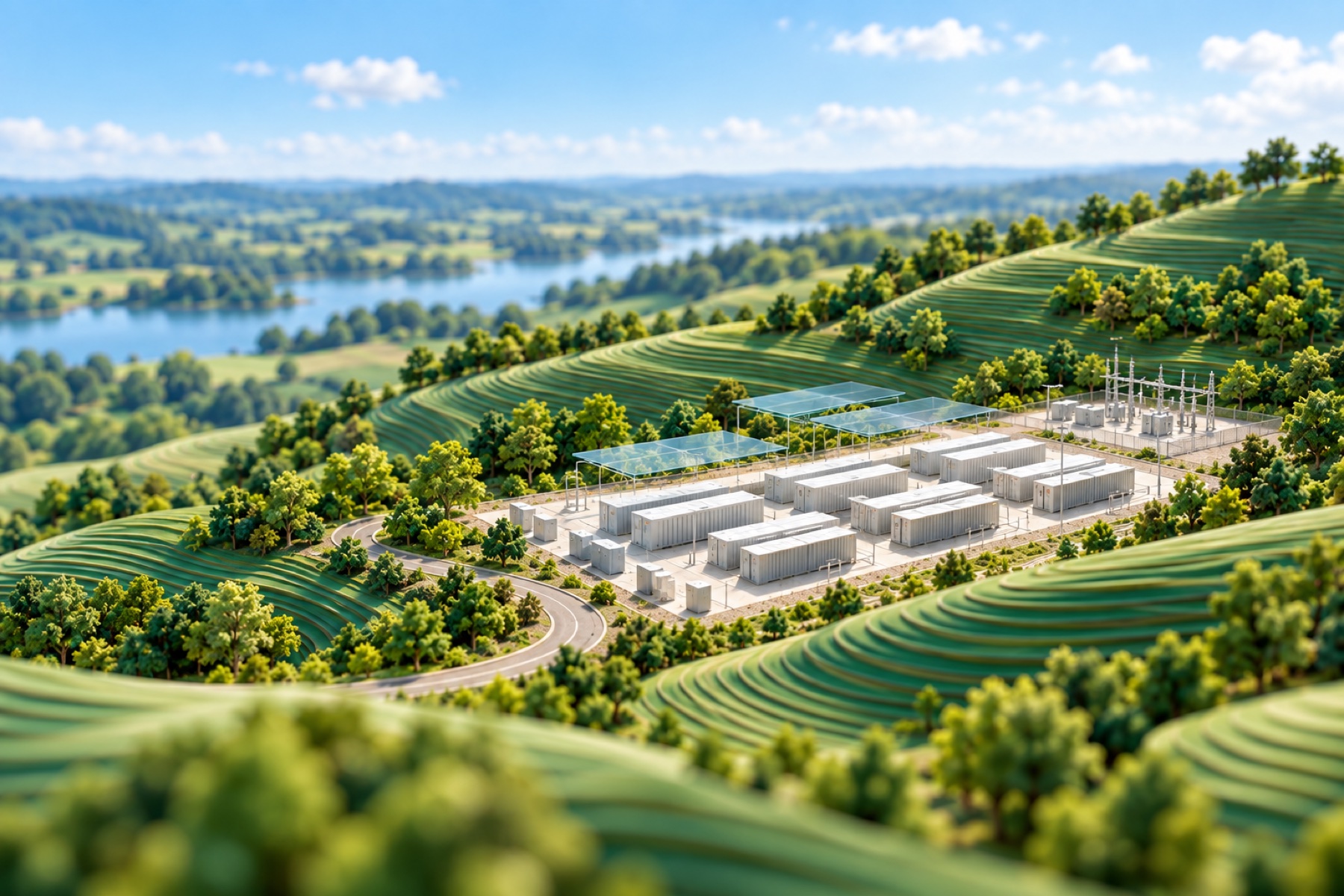
The battery fence, the land included in the project and the disturbance zone may be different areas. Virginia’s definitions include electrical infrastructure and related structures up to the interconnection point within the site. The disturbance-zone definition includes directly affected land and a surrounding area, with an urban non-hybrid distinction.
Ask the team to mark each boundary and explain which definition it is using. Then compare the drawing with your property lines and the land rights requested. A shaded review area does not, by itself, grant permission to occupy or restrict the land.
Identify temporary construction space, permanent roads, equipment and the electrical route. Mark the entrance, tenant area, timber or future building site you need to keep. Ask how the proposal affects them before discussing an expanded option area.
Keep the drawing date with the explanation. If equipment or a road moves, ask whether the review area, land agreement and application need updating. Avoid relying on an acreage number copied from an earlier layout.
Reference: Virginia Administrative Code: energy storage definitions
| Boundary or record | Owner’s question |
|---|---|
| Equipment fence | What will be inside it? |
| Project site | Which roads and electrical works are included? |
| Disturbance zone | How was the review area drawn? |
| Land agreement | Which rights are you asking me to grant? |
Do not classify the review by the parcel acreage alone
Section 9VAC15-100-130 provides a route for disturbance zones of ten acres or less and specified previously disturbed or repurposed-area cases. Its application still calls for documents including a site plan and applicable certifications. Ask the team which provision fits the actual design.
The chapter defines previously disturbed or repurposed areas by specified industrial, commercial and mining uses. It excludes active or fallow agricultural land and silvicultural use from that definition. A field that has been farmed is not automatically in the same category as a former industrial site.
Ask how land-use history was established and what supporting records the team is using. Tell it about past buildings, filled ground, forestry, farming or operations you know about. Mark uncertain information as uncertain.
Have the team confirm the route with DEQ when classification is unclear. A project described as “small” may still involve substantial equipment and land: the chapter’s storage definition extends to a rated power capacity of 150 MW AC. The label is not a promise about the size of the footprint or a qualifying acreage for your property.
Reference: Virginia Administrative Code: smaller disturbance zones and categorical storage review · Virginia Administrative Code: energy storage definitions
Want to ask about your land?
Send the location and what you know. You don’t need a project plan.
Tell us about your landUse the site plan to discuss work on your land
Virginia’s site-plan rule calls for before-and-after land features, equipment, temporary and permanent roads, and water features such as wetlands and drainage channels. Ask to see a readable version of those plans for your property.
Walk through the entrance, road grades, drainage and areas proposed for clearing. Ask what would change during construction and what would remain afterward. Explain recurring wet spots or access problems you have observed; you do not need to classify them yourself.
Discuss investigation access separately from construction rights. Agree on the visits, testing, notice, responsibility for damage and repair before work begins. A request to gather information should be clear about what the team may actually do.
If you receive a revised plan, compare it with the previous version and your agreement. Ask for a plain explanation of the changes and the decisions still required.
Reference: Virginia Administrative Code: storage site plans and context maps
Start with the location and what you know
Send your name, email and phone, then the Virginia property location. Mention any existing option, lease, solar approval or battery proposal. If you have a DEQ notice or project name, tell us which record you are looking at.
Explain whether you would consider a lease, sale or part of the land. Include the use or access you want to preserve. Parcel numbers, acreage and studies are optional if you do not have them available.
Further review must establish the rights, design, connection, approval route and commercial fit. Contacting Sunland does not authorize work or commit you to a land agreement.
Questions landowners ask
Does a DEQ notice of intent authorize construction?
The notice is an initial filing. Ask for the actual authorization and the other approvals the proposal needs.
Is the disturbance zone just the fenced equipment area?
Ask for the mapped boundaries. The defined review area and project site can include land beyond the fence.
Does past farming make land a previously disturbed area under this rule?
The chapter excludes active or fallow agricultural land and silvicultural use from that specific definition. Have the project team establish the applicable review category.
Sources & further reading
Sources checked 2026-10-04. Local rules and program details can change. Check the requirements for the actual project.