
Find the ordinance for the actual parcel
The county’s ordinance page identifies exceptions for incorporated towns, certain Route 28 Tax District properties and grandfathered applications. A mailing address alone does not settle which rules apply. Start by confirming the governing authority and ordinance with the parcel number.
If you receive an offer, ask the developer to write down the ordinance and district it is using. Include any earlier approvals or zoning correspondence you have. If the proposal relies on an older approval, ask what it covers and whether the new equipment or layout would require further review. Keep the answer with the agreement rather than relying on a general statement that the land is industrial.
Reference: Loudoun County: applicable ordinances, Route 28 exceptions and incorporated towns
Ask how the proposed battery is classified
Section 4.07.02 separates utility-scale storage from site-specific, on-site accessory use. It also addresses storage associated with substations, data centers and utility-scale solar facilities. Have the team explain which category applies before discussing where the equipment can go.
For example, a business owner might offer an unused field for a separate grid-connected project. That is a different proposal from adding equipment intended to serve the existing building. Ask what the battery would serve, where it would connect and which land-use provisions the team expects to follow. The name used in a sales presentation should match the design being submitted for review.
Reference: Loudoun County: published section 4.07.02, Energy Storage Facility
| Proposal described to you | Question for the project team |
|---|---|
| Separate land project | Which use category and district apply? |
| Battery for an existing business | What on-site needs would it serve? |
| Storage beside a substation or solar site | Which associated-use provisions and existing rights matter? |
| Battery serving a data center | How does the proposed size affect classification? |
Compare usable land with the complete layout
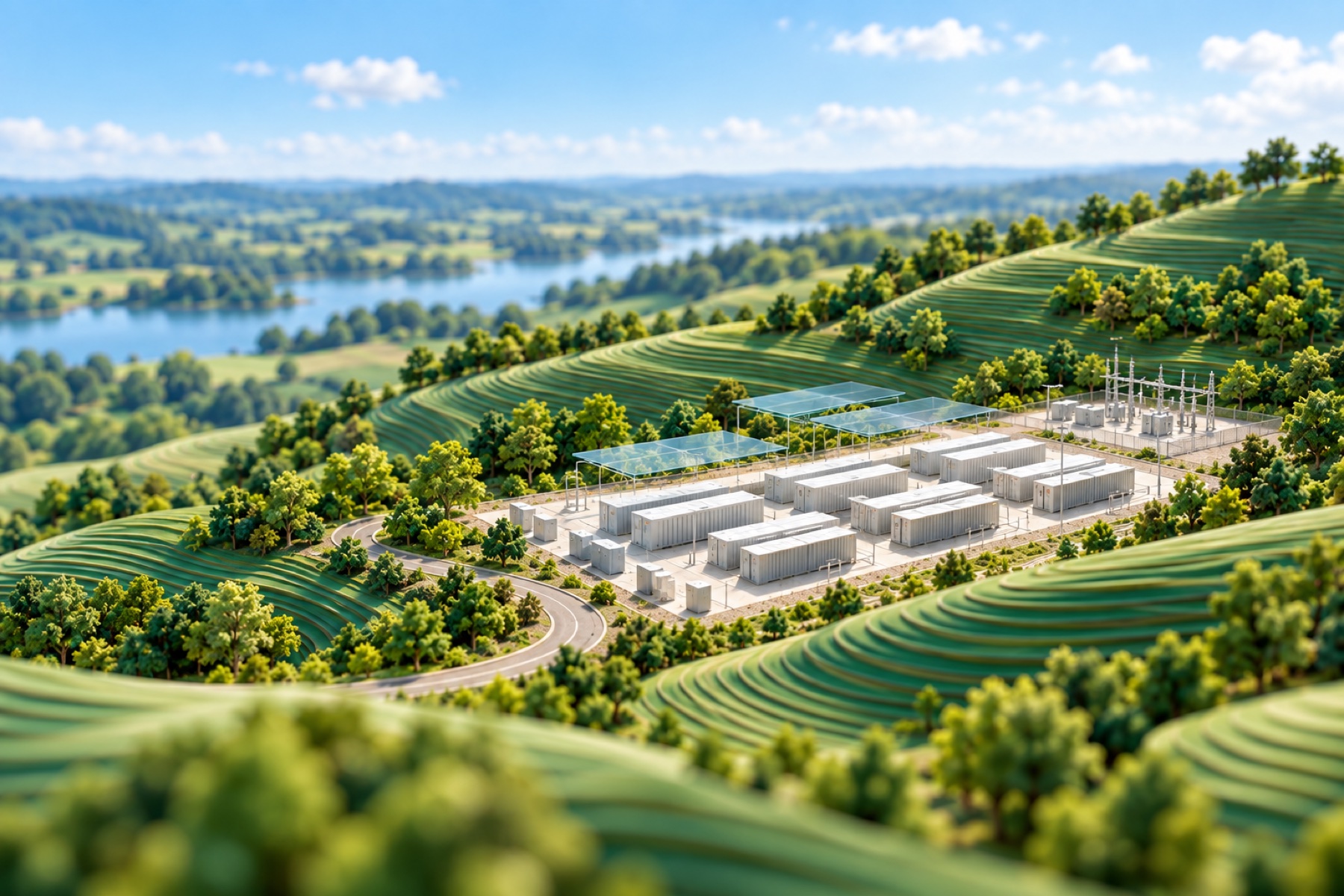
The utility-scale section addresses project area, setbacks, historic resources, screening and fire access. Those features belong on the plan, alongside the equipment. Ask the designer to show how they affect the land you are being asked to reserve.
Mark your buildings, entrances, tenants, drainage and future plans on the same drawing. If the project crosses adjoining parcels, identify who owns each and how the rights would be documented. Ask whether the reserved boundary includes temporary work space or land outside the final equipment area. A drawing of battery containers alone does not explain the full commitment.
Imagine that you want to retain a driveway for deliveries. Ask where construction trucks would turn, how later maintenance would reach the battery and whether emergency access would share that drive. Get those routes discussed before deciding which acres to offer.
Reference: Loudoun County: published section 4.07.02, Energy Storage Facility
Want to ask about your land?
Send the location and what you know. You don’t need a project plan.
Tell us about your landDiscuss sound, screening and daily use with the design team
The published utility-scale rules include noise-study and soundproofing provisions. Ask which apply to the surroundings of your parcel. Have the team identify the equipment being studied and show proposed screening on the layout; a landscaped illustration is not an acoustic study.
Explain when your own business, tenants or neighbors are most likely to be affected by work or equipment operation. Ask who maintains the screening, how you would report a problem and who pays for repairs. If trees or a berm would occupy land you want to keep, include that area in the agreement discussion instead of treating it as decoration added later.
Reference: Loudoun County: published section 4.07.02, Energy Storage Facility
Read removal responsibilities before accepting rent terms
The storage section includes decommissioning, unsafe or abandoned facilities and owner-related responsibilities. Ask your agreement reviewer to explain how the public duties and private lease fit together. Equipment ownership alone should not be used as an answer to every question about your land.
Request the removal plan and an explanation of who funds and carries out the work. Ask how the arrangement is maintained if the project company changes. Find out who receives notices and what you should do if the operator stops responding. Discuss restoration as well as equipment removal: what happens to foundations, cables, roads and drainage?
Keep the option period, rent start and termination terms beside that discussion. If the project cannot obtain the necessary approvals or connection, ask when reserved rights end and what records would show that your land has been released.
Reference: Loudoun County: published section 4.07.02, Energy Storage Facility
Use parcel tools to prepare a useful inquiry
Loudoun’s zoning page links parcel research tools and a process for zoning determinations or verification. If you already have a parcel record or office response, keep it with the proposal. You can ask Sunland about the property before obtaining a formal determination.
Send your contact details and the location, then add Loudoun County, the town if relevant and the current use. Mention Route 28 status or older approvals if known. If you are unsure, say so. Describe the part you could consider and the access, tenant use or future building area you need to retain.
An initial inquiry does not establish permission or reserve the land. Further review needs to address the actual property rights, classification, design, electrical connection, approvals and commercial fit. You do not need to choose a battery size or prepare engineering drawings to begin.
Reference: Loudoun County: parcel research and zoning verification
Questions landowners ask
Does the same county ordinance cover every Loudoun address?
No. The county identifies exceptions, including incorporated towns and certain Route 28 properties. Confirm the authority and ordinance for the parcel.
Is storage beside a business automatically accessory use?
Ask how the actual design is classified, what it serves and which provisions apply. Location beside a building does not settle those questions.
Should I review removal duties if a developer owns the battery?
Yes. Ask how the public requirements and private agreement address your role as landowner, funding and restoration.
Sources & further reading
Sources checked 2026-10-04. Local rules and program details can change. Check the requirements for the actual project.