
Understand what a local application tells you
Spotsylvania County publishes materials for Scarlet Energy Storage under case SUP25-0006. The fifth-submission narrative is dated July 16, 2026. It requests a special use permit and a separate comprehensive-plan review for a battery facility and related electrical equipment.
The narrative is the applicant’s explanation of its proposal. Its discussion of potential conditions is not a final county decision. This guide uses the dated submission to explain questions an owner can ask; it does not establish the project’s current approval or construction status.
The county describes a public-hearing process in which the Planning Commission makes a recommendation and the Board of Supervisors decides whether to approve or deny the request. Ask for the actual decision and any adopted conditions, alongside the latest plan, when a developer says a review is complete.
For an offer on your land, ask for the project name, applicant and case reference. Confirm which approvals the team needs for its particular design. A nearby application does not establish that your parcel can host the same equipment or use the same electrical connection.
Reference: Spotsylvania County: SUP25-0006 Scarlet Energy Storage application materials · Spotsylvania County: Scarlet Energy Storage fifth-submission narrative, dated July 16, 2026 · Spotsylvania County: public-hearing process and application records
Separate the equipment area from the full land request
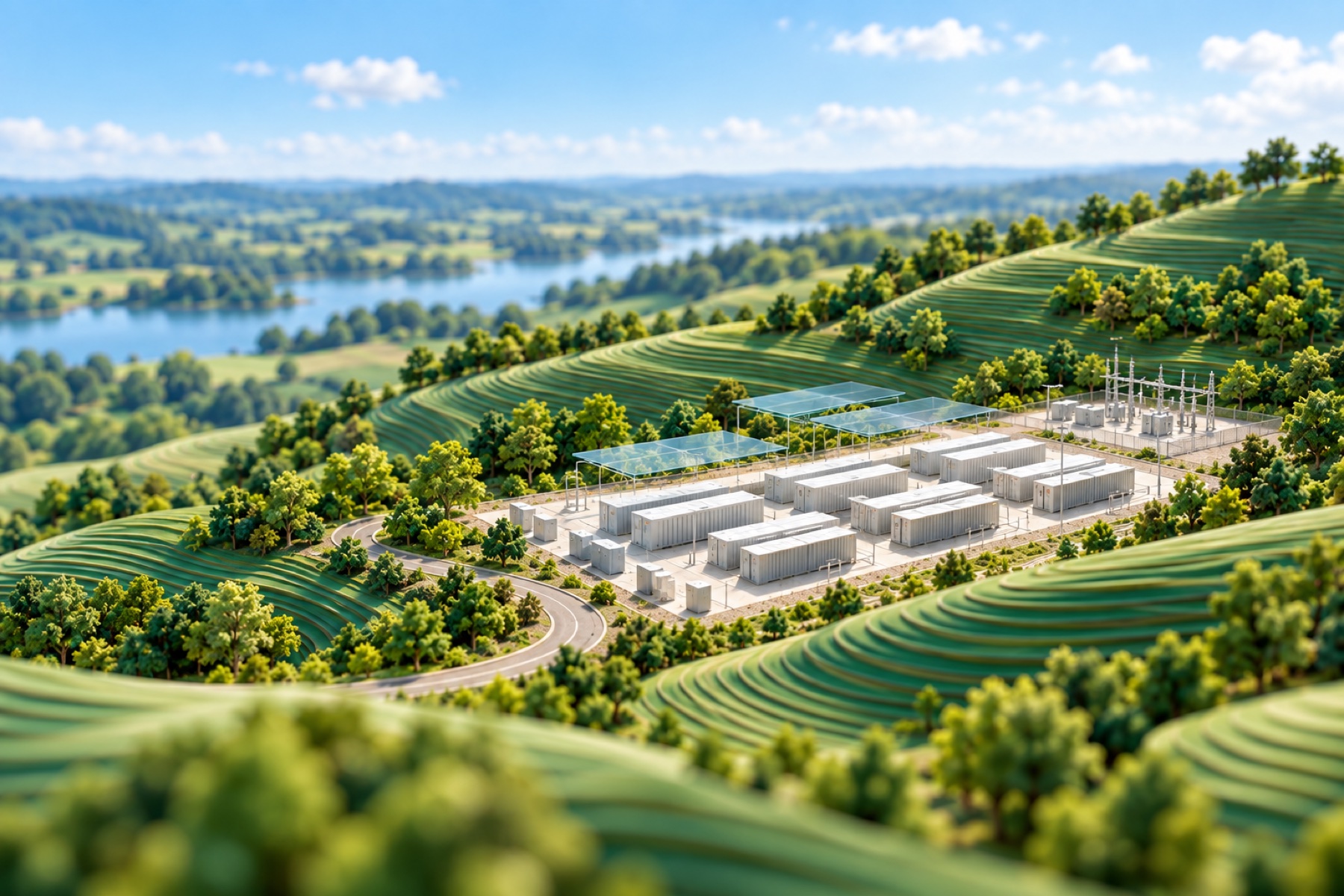
The July narrative describes approximately 9.84 acres inside the fence and 28.03 acres of anticipated on-site disturbance. It also identifies 3.49 acres of off-site disturbance associated with an access easement. These are figures for that proposal, not acreage requirements for every battery site.
Ask the developer to mark the areas it needs on a drawing of your property. Separate the permanent equipment and roads from temporary construction space, drainage work, screening and cable routes. Include work beyond the lease boundary if it affects another part of your land.
Check what each area means in the agreement. Is it leased throughout operation, reserved while the project is investigated, or used only during construction? Ask when temporary rights end, how the area is restored and which uses you retain in the meantime.
Do not assume land shown as open space will remain untouched. Ask whether it will be cleared, graded, planted, used for drainage or kept undisturbed. Have the team distinguish those uses before you decide how much of the property you are willing to commit.
Reference: Spotsylvania County: Scarlet Energy Storage fifth-submission narrative, dated July 16, 2026
| Area on the drawing | Question for the agreement |
|---|---|
| Equipment and permanent roads | Which land remains under project control? |
| Temporary work or storage | When does use end, and how is it restored? |
| Drainage and screening | What work and maintenance are required? |
| Off-site access or cables | Whose rights are needed, and who obtains them? |
Compare each revised drawing with the previous one
The July narrative says revisions included a different access route, larger residential setbacks, enhanced screening, removal of enclosures near the northern boundary and relocation of a construction laydown area. Those examples show why a plan revision can matter to an owner even when the project name stays the same.
Ask for the revision date and a simple explanation of what moved. Keep the earlier drawing so you can compare entrances, equipment, temporary space and boundaries. A new sketch should not replace the agreed land description without a clear explanation of the requested change.
Walk through the consequences for the uses you care about. Would the change interrupt a farm entrance, bring deliveries closer to an occupied building or reserve a field you expected to keep using? Mark tenant access, drainage routes and planned improvements on the comparison.
Check the agreement’s provisions for changes. Can the company adjust the layout within an agreed area, or is it requesting additional land or rights? Have the language reviewed and ask for a written amendment when appropriate. Discuss payment and restoration alongside the drawing, rather than after work begins.
Reference: Spotsylvania County: Scarlet Energy Storage fifth-submission narrative, dated July 16, 2026
Want to ask about your land?
Send the location and what you know. You don’t need a project plan.
Tell us about your landReview access as its own commitment
A battery area may occupy only one part of the land, while a road crosses another. Ask how construction vehicles, emergency responders and maintenance crews would reach the site. Identify which route is permanent and which is proposed only for construction.
Request the route, width and permitted activities in writing. Ask whether access includes widening, grading, drainage changes, tree removal or utilities. Find out who maintains the road and who repairs damage to the entrance, fences, culverts or adjoining land.
If the route uses someone else’s property, ask who is responsible for obtaining that owner’s agreement. Do not treat an adjacent road or a line on a drawing as proof that the needed rights exist. Ask what happens to your reservation if the route cannot be obtained.
Discuss shared use. Could you, a tenant or a future buyer still use the entrance? Would any gates or delivery periods interfere? Agree on how work is coordinated with occupied areas and existing activities, including who you contact when access is blocked or damage occurs.
Ask who is responsible for the land outside the fence
Screening, drainage and other supporting areas can remain important long after construction. Ask who installs and maintains them, how failed planting or erosion is addressed and whether anyone needs continuing access through land you retain.
Request the current plan for those areas and an explanation of responsibilities in the agreement. An applicant’s proposed measure and an adopted permit condition are different documents. You need to understand both the actual approval requirements and the company’s commitments to you.
Discuss investigation visits before granting entry. Ask who will attend, what testing is proposed, whether equipment will enter and how ground disturbance is repaired. Point out occupied areas, farm activities and places you want protected before the team sets a route.
Keep the signed agreement, dated drawings, amendments and visit records together. If the design changes, check whether the land obligations change as well. A clear record makes it easier to resolve questions about boundaries, restoration or the work that was authorized.
Tell Sunland where the property is and what you want to retain
Start with your name, email and phone, then the property location. Virginia and Spotsylvania County are selected in the form and can be corrected. Acreage and a parcel number are optional.
Tell us whether you are exploring a possible use or already reviewing an offer. Mention any deadline and which part of the land you could consider. Explain the entrances, farming, tenant activities or future plans you want to keep.
If you have a drawing, note its date and the part you are unsure about. You do not need to resolve every detail before contacting us. The location and the question you are facing provide a useful starting point.
An inquiry starts a review conversation. It does not grant access or commit you to a lease or sale. The property, electrical connection, design, approvals and proposed terms still need investigation before anyone can establish whether a project fits.
Questions landowners ask
Is the fenced battery area the only land a project needs?
Not necessarily. Ask about roads, drainage, screening, cables and temporary construction areas, including any work outside the proposed lease boundary.
Does a published application mean the county approved the site?
No. Request the actual decision and adopted conditions. An application, a Planning Commission recommendation and a Board decision are different records.
What should I do when the developer changes the drawing?
Compare the dated plans and the rights in your agreement. Ask what moved, how your retained uses are affected and whether additional rights or an amendment are requested.
Can temporary construction space be returned to me?
Ask for written terms covering the duration, permitted work, restoration and end of the temporary rights. Do not assume those terms from the label on a drawing.
Can I contact Sunland without a parcel number?
Yes. Start with contact details and the property location. Acreage and a parcel number are optional.
Sources & further reading
Sources checked 2026-10-06. Local rules and program details can change. Check the requirements for the actual project.