
What would go on the land?
A battery storage project stores electricity and supplies it when needed. You may see it called BESS, short for battery energy storage system.
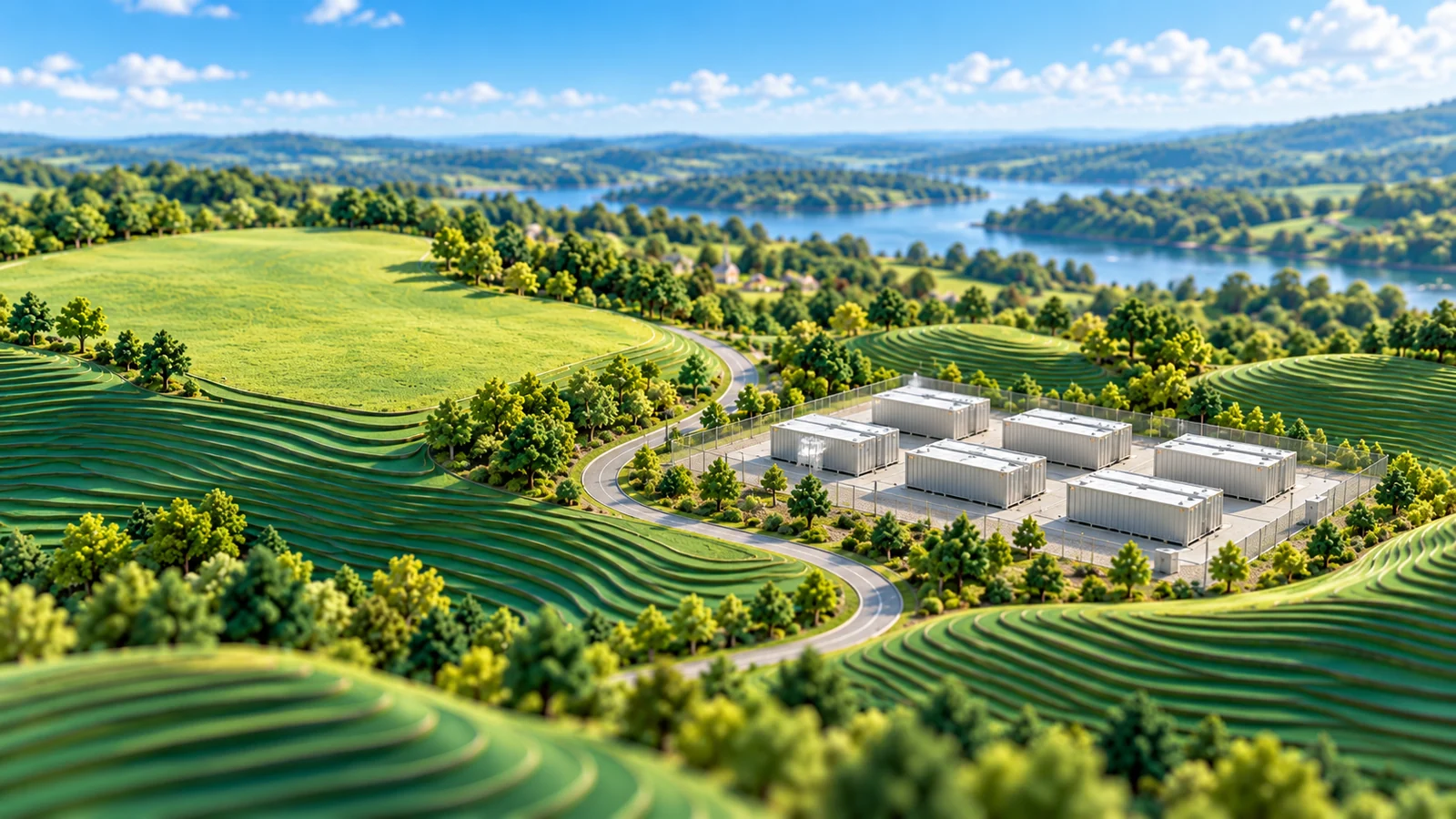
The site needs space for battery enclosures, electrical equipment and vehicle access. Before agreeing to a project, ask for a layout showing where the equipment would go, how vehicles would reach it and what land you could keep using.
Where to start with Illinois land
Start with the location and the part of the property you could make available. A farm field, unused commercial land or part of a larger property may be worth reviewing. Tell us about any areas you want to keep using.
If you know the electric utility serving the property, include its name. ComEd, Ameren Illinois and other providers serve different areas. A county name alone does not tell us which utility serves your land.
A smaller battery project may connect to local power lines. Larger projects may need a different connection. You may see smaller projects described as “DG,” or distributed generation. You don’t need to know which type could work before contacting us.
What makes land suitable for battery storage?
Room for the project
How much land could you make available? Include space for the batteries, a driveway and drainage. Tell us about steep ground, wet areas or parts you want to keep using.
A possible utility connection
If you know of nearby power lines or a substation, mention them. A substation is a utility facility that connects parts of the power system. The utility still needs to check whether a project can connect.
Road access and neighbors
Describe how vehicles would reach the site. Nearby homes, businesses and other land uses can affect where equipment is placed.
Local land-use rules
The county or municipality needs to be identified so the project’s zoning and permit requirements can be checked. Share any zoning information you already have.
Want us to look at your land?
Send the location and your contact details. You can start with what you know.
Tell us about your landWhat to ask about a lease or sale
Ask for a map showing exactly which land the project would use. It should show the equipment area, access road and any rights to run utility lines across your property. Ask how you could use the rest of your land.
Check when payments start. An option agreement reserves land while a developer investigates the site. An operating lease covers a later stage. Ask how long the option lasts, what you are paid during it and what happens if the project stops.
There is no one lease rate that applies to every Illinois property. Compare the payment schedule, rent increases, access rights and responsibility for removing the equipment. Get those terms in writing before deciding.
You can ask us about a lease, a sale or both. Sending the form does not commit you to either.
How the property review works
Share the location
Tell us where the property is and what you know about it. A road or parcel reference can help if there is no street address.
We review your information
Sunland reviews the details and may contact you for a map or to ask questions about the property.
Discuss what comes next
If the land looks promising, the utility connection, layout, local rules and costs need further investigation. You can ask questions before deciding whether to proceed.
Landowner questions
How many acres do I need?
There is no single minimum for every project. The space needed depends on the equipment, access road, drainage and local requirements. Tell us the acreage you know and whether all or only part of it could be available.
My land is near a substation. Is that enough?
It is a reason to investigate, but it is not a guarantee. The utility needs to check the connection, any upgrades and the costs. A project can be close to a substation and still be too costly to connect.
Could a smaller parcel work?
Possibly. A project connected to local power lines may need less land than a larger project. The usable space, connection and local rules still need to be checked.
Will you need all of my property?
A project may use only part of it. Tell us what you could make available. Before signing anything, ask for a map of the project area and any access or utility rights affecting the rest of the land.
What should I ask about noise, safety and removal?
Ask where the equipment would go, how noise would be addressed and how emergency access would work. Also ask who maintains the site, who removes the equipment at the end and how removal would be paid for.
What happens after I send the form?
Sunland reviews the information and may contact you for a map or other details. Some properties do not proceed because of connection costs, local rules or site conditions. A submission does not reserve your land or commit you to an agreement.
Sources & further reading
Sources checked October 2, 2026. Program rules and local requirements can change. These references provide market context; property suitability requires site-specific review.