
Identify the company and the role it wants you to take
When a company proposes battery storage on your Clinton County land, ask for its full legal name and a description of its role. Is it arranging the opportunity, developing the project, applying for approvals or planning to own and operate the equipment?
Ask which company would sign the land agreement and which would handle payments, construction and upkeep. Those roles may be held by different companies. Request the relationship between them and a contact responsible for answering your questions.
The county storage ordinance defines a facility owner separately from participating property. Have your advisers explain how those definitions apply to the proposal and any role the company asks you to take.
Before agreeing to be named in an application, find out what statements, fees or other duties come with that role. Owning the land should not leave you guessing about whether a document also treats you as the project applicant or operator.
Reference: Clinton County: energy storage ordinance 2026-8.50, adopted August 17, 2026
Confirm the actual operation and jurisdiction
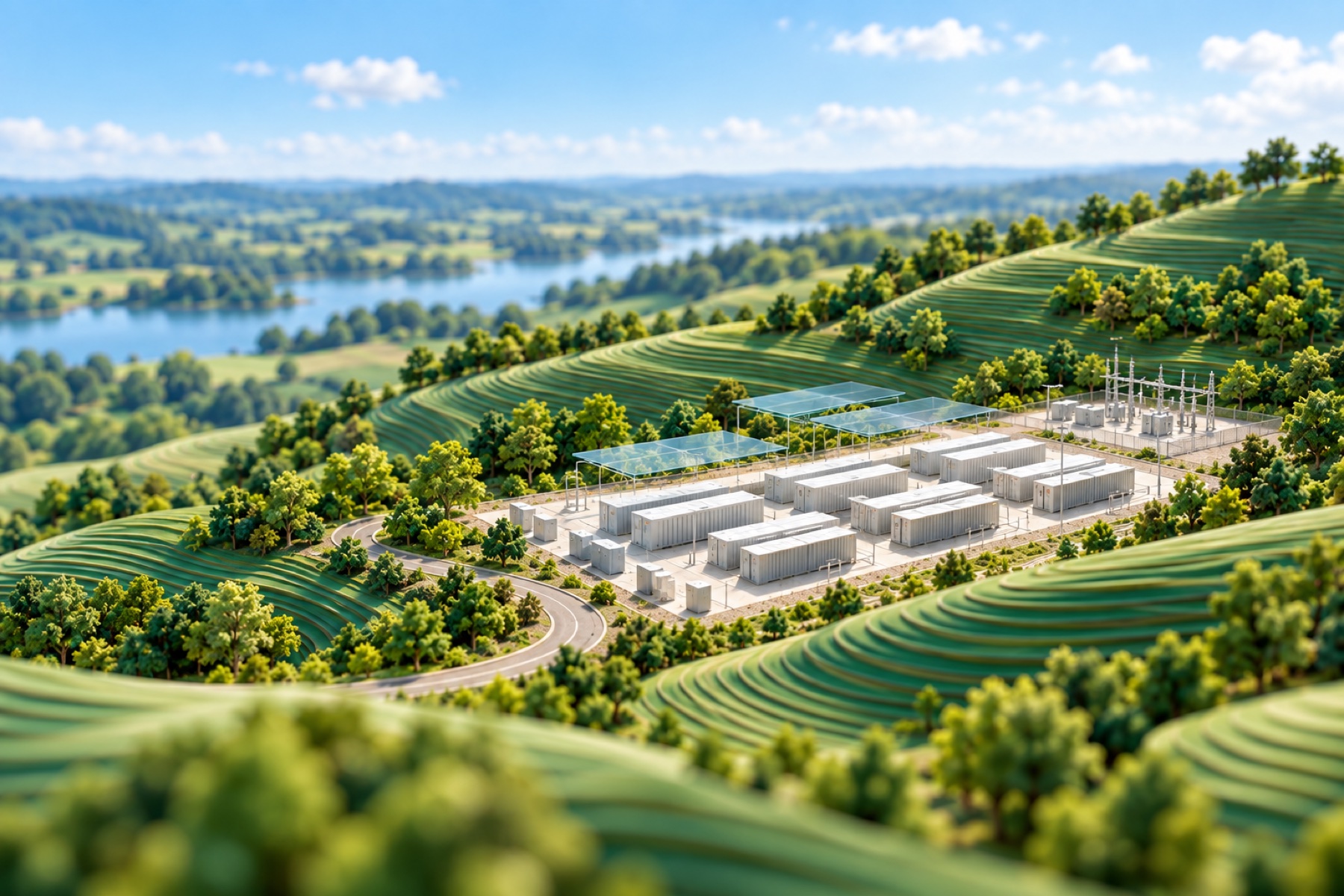
Ask what the battery would serve and how it would connect. Is it a separate storage facility, storage associated with a solar or wind project, or equipment serving an existing property use? Request an explanation tied to the proposed design.
Clinton County’s zoning page describes its jurisdiction as unincorporated land and villages without their own zoning ordinance. Confirm the authority for the parcel rather than relying only on its address or the name of the nearest town.
The August 2026 storage amendment adds special uses in agricultural and industrial districts. Its defined scope excludes storage associated with specified commercial solar and wind facilities. Ask the team which provisions apply to the actual location and operation.
Illinois section 5-12024 also has a defined scope, limits county storage standards and contains an exception for certain earlier applications. Have the advisers compare the current law with the county text and project history. This guide does not decide approval for a particular parcel.
Ask the applicant to distinguish requirements, recommendations and unresolved questions. If the team refers to a distance or design standard, request its basis and an explanation of how it fits with the current state limits.
Reference: Clinton County: zoning jurisdiction and application resources · Clinton County: energy storage ordinance 2026-8.50, adopted August 17, 2026 · Illinois General Assembly: Counties Code section 5-12024, energy storage systems
Match every signature to the plan it covers
The county’s general special-use packet has separate applicant and owner entries. Its signature page includes certification, county entry permission and fee language. Read the actual document and attachments the company wants you to sign.
Ask what you are certifying and whether the information is complete. If the plan changes after signing, how will the company obtain any further permission it needs? Keep the dated version reviewed by you and your advisers.
The packet also includes a district inspection permission. Ask who would enter, why, what work is involved and how visits are coordinated. A filing permission and a developer’s construction rights need separate explanations.
Have your reviewer identify who accepts costs and other commitments in each document. Compare the proposed land agreement with the application language, and resolve any mismatch before the company submits documents using your signature.
If someone is acting for the owner, confirm the extent of that authority. Discuss co-owners, existing occupants, lenders and recorded rights with your advisers. Keep copies of submitted materials and official correspondence.
Reference: Clinton County: general special-use application and owner permissions
Want to ask about your land?
Send the location and what you know. You don’t need a project plan.
Tell us about your landRequest a complete drawing before reserving the land
Ask the project team to show the equipment area, fence, supporting electrical equipment, road, gate and cable route. Include areas used only while construction is underway, such as staging and soil storage.
Add the property uses you intend to retain. Mark your current entrance, routes to buildings and fields, and any space needed for deliveries or seasonal work. Tell the preparer about access that may not be obvious from a brief visit.
Compare the drawing with the boundaries in the proposed agreement. Does the company reserve more land than the equipment occupies? Can it relocate supporting facilities or take additional temporary space? Ask how changes require owner consent and affect payments.
The generic county application asks for property and access information. Have the project team confirm the technical drawings and information needed for its storage application. A sketch or map used for an initial conversation does not settle boundaries or engineering.
Keep a current drawing you can use on the ground. Ask the preparer to distinguish confirmed features from items still under study, so you can understand what remains uncertain.
Reference: Clinton County: general special-use application and owner permissions
| Identify clearly | Owner question |
|---|---|
| Project and land-agreement companies | Who owes payments and performs the work? |
| Permanent and temporary work areas | What land can you continue using? |
| Application and entry permissions | Which statements and activities does your signature cover? |
| Operating and repair contacts | Who handles a problem after construction? |
| Removal funding and duties | Who restores the land if the project stops? |
Ask who will handle drainage and repairs
Point out known drains, ditches and culverts before site work begins. Tell the team about places that hold water and routes that become difficult to use after rain. Ask how it will investigate features not visible on a map.
The storage ordinance addresses farmland drainage, repairs and agricultural damage responsibilities. Ask the applicant how those duties would be met for the proposed work and how the plan deals with construction and eventual removal.
Agree on a record of the existing condition and a way to report damage. Who inspects a blocked drain or damaged crossing? How are repairs scheduled and crop losses documented? Ask for a responsible company rather than a general assurance that contractors will take care of it.
Discuss damage outside the equipment boundary too. A service road, trench or temporary route can affect land you keep using. Compare repair commitments with every area the company can enter or disturb.
Reference: Clinton County: energy storage ordinance 2026-8.50, adopted August 17, 2026
Set up operating contacts and information you can use
Ask what you should expect during normal operation: service visits, deliveries, vegetation work and access through gates. Discuss advance notice for routine work and how urgent access would be handled.
The county ordinance addresses emergency planning, responder arrangements and annual reporting. Ask the team who prepares those records and which information relevant to the property will be shared with you.
Request a contact for reporting an apparent problem, damage or activity that affects your use of the land. Ask how the operator records the report, responds and tells you what was done. Keep the current contact information with the agreement.
Discuss maintenance of roads, fences, gates and vegetation. Identify the company responsible and the access it needs to perform the work. If an issue continues, ask your reviewer how notice and repair obligations in the agreement can be enforced.
Have advisers compare proposed insurance and responsibility provisions with the owner’s position. Ask who is covered, what evidence you receive and what happens if coverage or the operator changes. An insurance certificate needs to be reviewed against the actual obligations.
Reference: Clinton County: energy storage ordinance 2026-8.50, adopted August 17, 2026
Make payments, delays and removal part of the same review
Ask when each payment becomes due and what event starts it. Separate the period reserved for studies from construction and operation. Include extension payments, notice dates and the point at which unused rights are released.
If approval, financing or connection work takes longer than expected, what happens to your land and payments? Ask whether the company can extend the agreement and what you receive for additional time.
Plan for work stopping after disturbance. Who secures the site, maintains drainage and restores temporary work areas? Make those responsibilities understandable before giving construction access.
The county text addresses removal plans and financial assurance. Ask for the actual proposed documents and how they fit with state law and your land agreement. Find out who can use the funds, what work they cover and how protection changes over time.
Have the reviewer compare removal of equipment, foundations, roads and cables with the condition promised for soil, drainage and vegetation. Identify anything you may choose to retain and how that decision would be recorded.
Ask how unpaid amounts, a long interruption or a project transfer affect your rights. Who remains responsible for payments and restoration? A change of project company should leave you with clear documents and a current contact.
Reference: Clinton County: energy storage ordinance 2026-8.50, adopted August 17, 2026 · Illinois General Assembly: Counties Code section 5-12024, energy storage systems
Tell us the location and what the company is proposing
Use the form to send your contact information, then the property details. Clinton County and Illinois are starting entries you can correct. Exact acreage and a parcel number are optional for the initial inquiry.
Mention the current use, access and any existing agreements affecting the land. If you have a proposal, describe what the company wants to build or have you sign and the questions you would like answered.
You can start without a finished engineering plan. We may follow up for more information about the property and opportunity. An inquiry does not authorize studies, an application or construction and does not commit you to a lease or sale.
Questions landowners ask
Am I the project applicant simply because I own the land?
Read the proposed application and agreement with your reviewer. Ask which role you would take, which statements you would make and what costs or duties accompany it.
Does an application signature let the developer start construction?
Have your reviewer explain the actual permission and attachments. Identify the entry or filing it authorizes and what separate rights and approvals are needed for construction.
Who should I call about damage after construction?
Agree on a responsible operator contact and a process for reports, inspection and repair. Keep that information current if the project company changes.
Does a county removal plan replace the lease’s restoration terms?
Review them together. Ask which work and costs each document covers, who performs the work and who can use the available removal funds.
Can I inquire without an exact parcel number?
Yes. Send the location, current use and what you know about the proposal. Exact acreage and a parcel number are optional at the initial inquiry.
Sources & further reading
Sources checked 2026-10-07. Local rules and program details can change. Check the requirements for the actual project.