
Start with the village boundary and the actual proposal
North Aurora is a village in Kane County, separate from the City of Aurora. Establish whether the parcel is within village zoning jurisdiction before using this guide for a proposed site.
Ask the project team to identify what it intends to build. Is this a standalone battery facility, storage alongside solar, or equipment serving an existing business? Get the equipment ratings and intended operation in writing.
The amendment’s storage definition uses kilowatts in wording about energy capacity. Ask the reviewing office to confirm the classification for the actual equipment. Do not assume a smaller installation is exempt or substitute a different unit yourself.
A property inquiry can begin before these answers are complete. Share the location and the proposal you have received. Later engineering and permitting work should resolve the jurisdiction and classification before land rights are finalized.
Reference: North Aurora: adopted Ordinance 26-05-18-02, May 18, 2026 · North Aurora: published zoning code and uncodified ordinance directory
Use the adopted buffer, not a planning recommendation
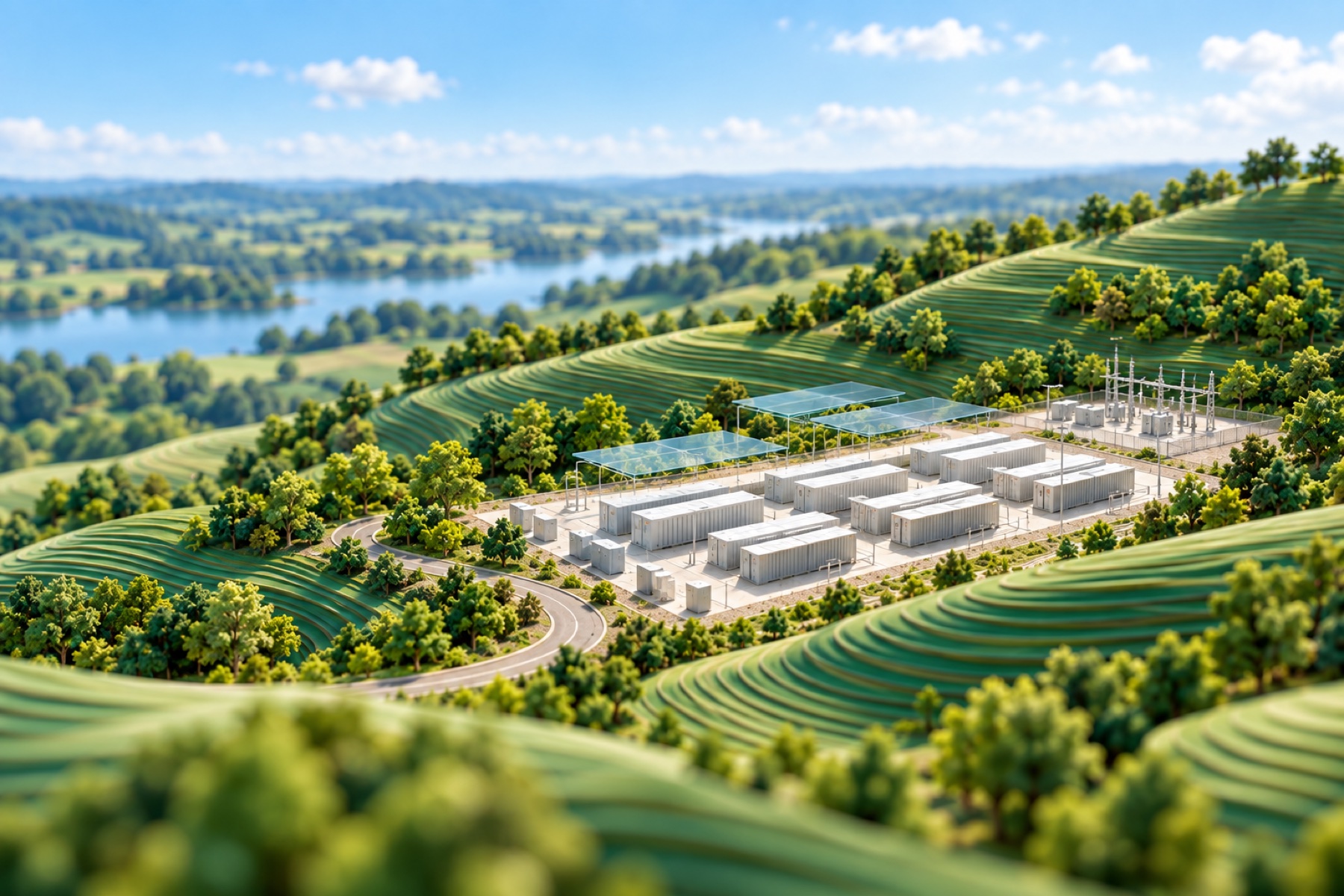
The May 18 adopted text sets a fifty-foot buffer yard from public right-of-way and 150 feet from adjacent residential property, with screening and a reference to landscape section 14.10.C.2. Attached May 5 planning minutes discuss a 200-foot residential battery buffer. That recommendation is not the final provision.
Ask the designer which official text and later requirements the plan uses. Have the reviewing office confirm the applicable measurements for this location. A line on a sales sketch does not establish how the buffer is measured or where every component can go.
If the offer already has a drawing, ask for a revision that identifies the rule used, its date and the areas affected. Compare that revision with the site description in the agreement before accepting it.
A buffer affects the shape of the usable area. It does not establish a universal minimum acreage, a battery capacity or an approved design for your property.
Reference: North Aurora: adopted Ordinance 26-05-18-02, May 18, 2026
Treat planted land as part of the agreement
Published landscape section 14.10 reserves buffer yards for planting and screening and restricts impervious uses there. Its referenced subsection includes trees, screening and groundcover. Have the designer explain how those provisions apply with the battery amendment.
Ask whether the company wants to lease the screening strip, acquire it, hold an easement over it or impose a restriction on land you retain. The answer should appear in the agreement and drawing, not only in a landscape plan.
Who plants, waters and replaces the trees? Who repairs a fence after storm damage? Does the company have maintenance access, and where does it enter? Decide those responsibilities before a planted strip becomes a recurring expense for you.
Describe any existing path, drainage feature or tenant use in that area. Ask whether it can remain, must move or needs separate approval. Do not count the same strip as unrestricted retained land until the permitted use and private restrictions are clear.
Reference: North Aurora: published zoning code and uncodified ordinance directory
| Part of the site | Question for the offer |
|---|---|
| Equipment and fence | Exactly which area is leased or purchased? |
| Planting and screening | Who controls, maintains and pays for this strip? |
| Road and cable route | What rights cross the land I keep? |
| Temporary work area | When does access end and restoration occur? |
Want to ask about your land?
Send the location and what you know. You don’t need a project plan.
Tell us about your landIdentify the zoning route without assuming approval
Read with the published district headers and legend, the amendment lists commercial storage as special use in I-1, I-2 and O-R-I, and permitted use in I-3. The online base tables do not yet include that amendment. Ask the village to confirm the current route for the parcel and design.
Request a list of the remaining reviews, the party responsible for each and the documents already received. Ask what has been submitted and what decision has actually been issued.
A use designation does not provide an electrical connection or settle construction readiness. Have the company explain the utility study, proposed connection point and any rights needed between the battery site and that point.
Keep copies of decisions that identify the property. If the company expects an amendment or a different route, make that unfinished step visible in the timetable and proposed hold period.
Reference: North Aurora: adopted Ordinance 26-05-18-02, May 18, 2026 · North Aurora: published zoning code and uncodified ordinance directory · North Aurora: Building and Zoning Division
Review your application authority separately from the lease
Published section 3.1 requires owner approval for specified zoning applications and addresses authorized agents. Ask which application the company intends to file, what you would sign and who would represent the property.
Before authorizing a filing, request the complete application and its current site drawing. Compare them with the area and rights you have discussed. If a drawing changes, decide how you will review and approve changes affecting your land.
Identify who pays for application preparation, engineering, legal work and public-review costs. Discuss what happens if additional studies are requested or the company decides to withdraw. A general promise to handle permitting should not leave those expenses unexplained.
Keep entry permission, application authority and long-term land rights understandable as separate decisions. Ask your adviser to explain each document rather than relying on a signature page or an informal summary.
Reference: North Aurora: published zoning code and uncodified ordinance directory
Connect each payment to an understandable event
Ask for a written schedule showing what you receive while studies and reviews are underway. Which fee is due at signing? What payment is due if the company extends the hold? When does long-term rent begin?
Compare those dates with the work still needed. A completed zoning step may occur well before utility work, financing or construction. An agreement should explain what happens during that gap.
Describe the uses you want to continue during the hold: an existing tenancy, access to another building, improvements or a planned sale of retained land. Ask which activities would be restricted and for how long.
Discuss what ends the reservation if progress stops. Who gives notice, repairs testing damage and releases recorded rights? Ask whether part of the property can be released when the company no longer needs it.
Plan for operations, transfer and removal
Ask for the operating plan, including access, maintenance traffic, lighting, noise and emergency arrangements. Discuss how visitors reach the equipment without interfering with your remaining property.
Identify the company responsible for those obligations and for the screening area throughout the agreement. If the project is sold, how will you receive updated contacts and confirmation of responsibility?
For the end of the project, compare the removal promise with the complete drawing. Decide which cables, foundations, fences, roads and plantings would be removed or retained, and what condition you expect afterward.
Ask what financial protection supports the work if operations stop or a company fails. Have your adviser compare any public requirement with the private agreement; neither a zoning designation nor this guide establishes a restoration guarantee.
Tell Sunland what you own and what you want to keep
Start with your contact details, then the property location. Illinois and Kane County are selected in this form and can be corrected. Acreage and parcel number are optional.
Mention the current use, whether the land is inside North Aurora and any offer or drawing you have received. Point out the entrance, building, tenant area or future plan you want to preserve.
You do not need a completed engineering study to inquire. Sending the form does not grant property entry, reserve the land or authorize Sunland to file an application for you.
Questions landowners ask
Is North Aurora the same jurisdiction as Aurora?
No. Confirm the parcel’s actual village or city jurisdiction before relying on a zoning route.
Should I count only the fenced battery area?
No. Identify planting, access, cable and temporary work rights too, including any restrictions on property you retain.
Does a zoning designation guarantee a lease or connection?
No. The offer, project reviews and electrical connection require their own evidence and agreed terms.
Do I need the parcel number to contact Sunland?
No. Start with the location and what you know. Parcel number and acreage are optional.
Sources & further reading
Sources checked 2026-10-07. Local rules and program details can change. Check the requirements for the actual project.