
What the Roscoe case shows
The village’s September 16, 2026 Zoning Board packet lists ZBA-2026-013 at 11629 Main Street. The staff report describes a proposed battery at an operating car wash with existing solar. This is an accessory installation, not evidence of a standalone battery land-leasing project.
Staff requested a setback revision, screening and written utility approval or confirmation that approval was unnecessary before a building permit. The applicant’s narrative and staff review differ on the setback. The packet contains a recommendation; this guide does not establish the board’s decision or an issued permit.
The meeting agenda is dated September 16; the attached staff report carries a September 9 heading. Request the dated decision and final drawing when checking what was actually authorized. These records do not establish a Sunland acquisition mandate or a utility connection for your property.
Reference: Roscoe: September 16, 2026 Zoning Board packet, battery design review ZBA-2026-013 · Roscoe: recent meetings and decision records
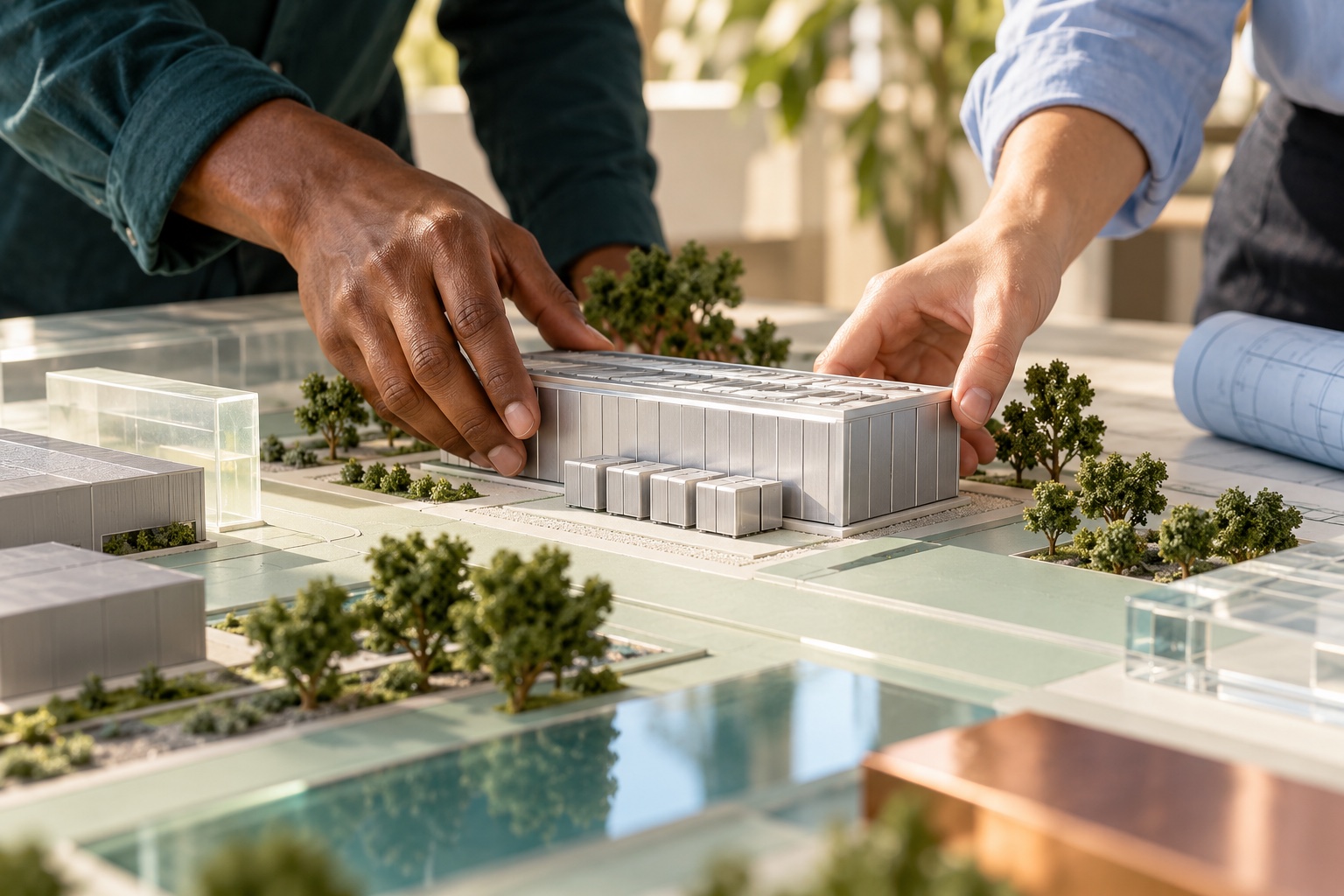
Compare the revised drawing with what you need to keep using
Start with your current use. Mark customer entrances, parking, deliveries, tenant access and any route you need to keep open. Then place the proposed equipment, cables, screening and work areas on the same drawing.
Ask for the version submitted for review and any later revision. If the battery moves, what else moves with it? A new position may change the cable route, maintenance entrance or land occupied by screening. Check those changes before agreeing to the footprint.
Ask who will explain differences between the application, drawing and reviewer’s comments. Keep a written list of unresolved items. A company’s statement that its design meets requirements should be checked against the actual review.
Discuss removable barriers and screening with the person responsible for access. Who opens them for maintenance or an emergency? Would that work interfere with customers, deliveries or a tenant? Have the project team explain the arrangement on the plan.
Keep temporary construction use separate from permanent occupancy. Delivery trucks, cranes or excavated material may need more room than the finished equipment. Ask how that space is reserved, for how long, and how it is restored.
| Item to compare | Question for the project team |
|---|---|
| Current property use | Which entrances and operating areas stay available? |
| Revised layout | What changed, and which version will be built? |
| Electrical work | Where do cables and related equipment go? |
| Construction plan | What space is used temporarily, and when? |
| Agreement exhibits | Do the rights requested match the final drawing? |
Ask what utility review remains
Ask the team to name the serving utility and explain the proposed connection. Is the battery intended to serve the business, store on-site generation, export electricity or combine those uses? Request an explanation you can follow.
Keep local design review and utility review as separate entries on the project schedule. Ask which documents have been issued and which are still pending. Do not treat a local recommendation as a completed utility review.
If the company says no additional utility approval is needed, ask for written confirmation covering the actual installation. Have it explain whether a change in equipment, operating mode or connection would require another review.
Discuss outages and construction work on existing electrical service. Who coordinates the work, how much notice do you receive, and what happens if it interrupts your business? Put responsibility for the arrangements and costs in writing.
Ask whether the proposal changes your meter, electricity agreement or existing solar arrangement. Identify who owns each system and who may change its settings. An existing solar installation should not leave you guessing which party controls a new battery.
Want to ask about your land?
Send the location and what you know. You don’t need a project plan.
Tell us about your landMake the business arrangement clear
First identify what is being offered. Are you buying equipment, letting a company use part of the site, entering a service agreement or considering a lease? Each arrangement asks for different commitments. Request the complete proposed documents before comparing the benefit.
Identify the equipment owner, operator and contracting company. Ask who pays for installation, maintenance, insurance and repairs. If several companies are involved, request a clear contact and responsibility list.
Ask how any promised payment or bill savings would be calculated. Which costs are deducted, which records will you receive, and who checks them? Do not assume that a proposed battery brings land rent or a guaranteed reduction in operating expenses.
Review existing leases, financing and solar agreements with your advisers. Ask which consents are needed and whether a new agreement affects a tenant’s rights, a lender’s interest or access already granted to another company.
If you are asked to designate an applicant or agent, discuss the limits of that authority. Does it cover a particular drawing and application, or later changes too? Keep the completed form and attachments. Application authority should be clear alongside the private agreement.
Plan for changes and equipment removal
Ask what happens if the approved layout differs from the one you agreed to. Would you need to approve the revised land area or access rights? Discuss who pays if revisions make the proposal unsuitable for your business.
Compare the development schedule with your commitments. When can work begin, when must it be completed, and what happens if the project stops? Discuss the release of unused rights and the restoration of any work already performed.
Ask who can transfer the equipment or agreement, how you are notified, and who remains responsible for payments and repairs. A change in operator should not make the responsible party hard to find.
Address the end of the arrangement before installation. Who disconnects and removes equipment, restores pavement and handles remaining foundations or cables? Ask how those obligations are funded and what happens if the company cannot perform them.
Keep decisions, final drawings, agreements and service contacts together. When the project changes, request an updated explanation of the work, responsibilities and rights involved.
Tell us about your property
Use the form to provide your name, email and phone, then the location. Winnebago County and Illinois are selected and can be changed. Acreage and a parcel number are optional.
Mention the current use, existing solar or other equipment, and the areas you need to retain. If you have received a proposal, tell us which kind of arrangement is offered and whether there is a response deadline.
Your inquiry starts a conversation with Sunland America. It does not grant entry, reserve property or authorize a filing. You do not need utility studies or a finished site plan to contact us.
Questions landowners ask
Does the Roscoe case mean batteries are approved at my property?
No. It documents a particular proposal and staff review. Ask for the current requirements and actual decisions for your property and design.
Does having solar settle the review for adding batteries?
Do not assume so. Ask which local and utility reviews apply to the actual battery installation and proposed operation.
What if the applicant and reviewer describe different setbacks?
Ask the team to resolve the difference and provide the final reviewed drawing before relying on the footprint.
Will a battery proposal necessarily pay land rent?
No. First establish whether the proposal is a purchase, service arrangement, lease or another agreement, and check the actual financial terms.
Do I need an acreage estimate or utility study to inquire?
No. Start with contact information and the property location. Acreage and a parcel number are optional.
Sources & further reading
Sources checked 2026-10-06. Local rules and program details can change. Check the requirements for the actual project.