
Start with the proposal, not just the project name
Ask whether the company proposes batteries with a new solar project, an addition to existing solar or storage alone. Those descriptions matter here: Section 6 of the posted solar ordinance defines batteries by their role in storing solar-generated energy, and the commercial solar definition describes a facility whose primary purpose is solar generation, production or delivery.
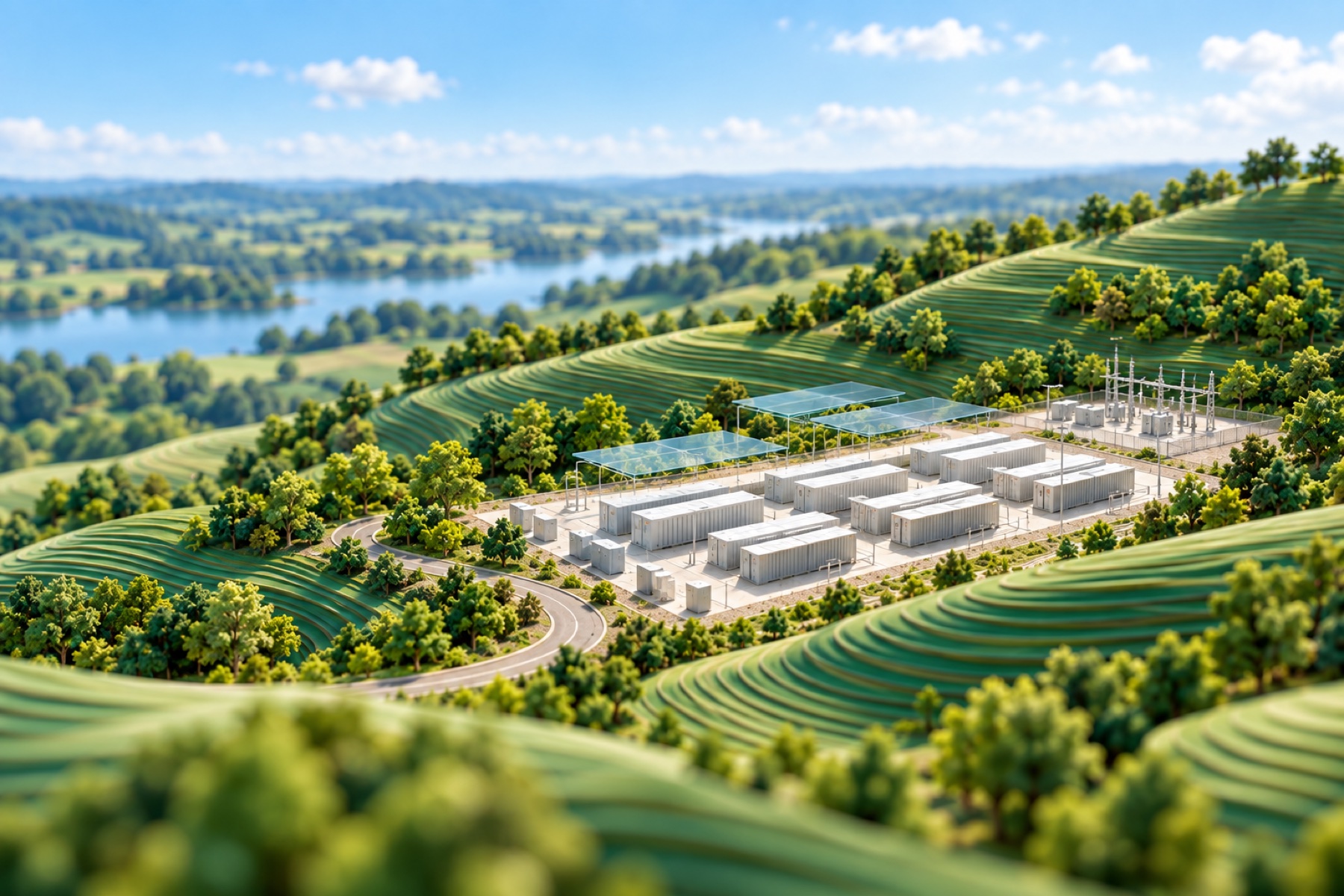
Request a dated drawing that separates the panels, battery enclosures, substation, roads, cables and temporary construction space. If your property supplies only a road or electrical route, have that part marked too. A map of the whole project may not show the rights being requested from you.
If the offer is for standalone storage, ask the responsible office for the actual applicable rules and approval route. A reference to batteries in this solar ordinance is not enough to settle that question. Equally, the ordinance’s solar-specific definition does not by itself prove that standalone batteries are prohibited.
Ask the company to identify the applicant, proposed operator and entity that would sign and pay under your land agreement. A shared project name does not establish that one company is responsible for every part.
Reference: Jackson County, Illinois: adopted Ordinance 2025-07, solar siting and associated batteries
Check which authority and ordinance apply to the parcel
Section 1 states that the solar ordinance applies throughout the county except within municipalities that have adopted local zoning ordinances. Establish the parcel boundary and responsible authority before comparing the proposal with these requirements. A mailing address does not answer that question.
The ordinance states an October 1, 2025 effective date. It also contains an exclusion for solar facilities that, before September 1, 2025, had commenced construction and/or submitted an acceptable deconstruction plan meeting the stated agricultural agreement standard. An older project name or lease date alone does not show that this exclusion applies.
If the company relies on an older approval or an exclusion, request the supporting record. Have the County explain how it treats the actual facility and a proposed battery addition. Keep that response with the approved drawing and any amendments.
The County’s current solar directory links Ordinance 2025-07. Ask about later adopted changes and project-specific conditions before acting. An agenda can identify a proposal under discussion; it does not establish that a change passed.
Reference: Jackson County, Illinois: posted commercial solar ordinance directory · Jackson County, Illinois: adopted Ordinance 2025-07, solar siting and associated batteries · Jackson County, Illinois: County Board agendas and minutes
An existing solar approval may need another review
Sections 15 and 19 address modifications that change a solar facility’s essential character or operation in a way not intended when its siting permit was granted. The text calls for a new siting approval in that situation and addresses amended permits. It also distinguishes ordinary repairs and like-kind replacements in Section 15.
Do not decide for yourself that a battery addition is an ordinary replacement or that it always requires a particular permit. Ask the company and County to identify how they classify the actual change, with reference to the existing decision and proposed layout.
Compare the old and new drawings. Would the addition occupy land outside the existing exhibit, enlarge a fenced area, change the entrance or need another cable route? Would it change construction traffic or restrict access to a field or building?
Review the private agreement separately. Does it already allow the proposed equipment and land use, or is the company asking you to sign an amendment? A public approval and a private land right answer different questions. Have your adviser explain the rights already granted before agreeing to an expansion.
Reference: Jackson County, Illinois: adopted Ordinance 2025-07, solar siting and associated batteries
| Document to compare | Question it should answer |
|---|---|
| Existing decision and conditions | What was approved? |
| Revised project drawing | What would change on this parcel? |
| County response or amendment | How would the change be reviewed? |
| Land agreement and exhibits | Which rights have you already granted? |
Want to ask about your land?
Send the location and what you know. You don’t need a project plan.
Tell us about your landRead the removal plan and funding documents together
The ordinance’s decommissioning provisions expressly include batteries, storage facilities, transformers and related equipment. Ask for the plan for the actual combined facility and confirm that the battery addition appears in its equipment list and cost estimate.
Section 6 describes financial assurance with the County as primary beneficiary and participating property owners as secondary beneficiaries. It also describes funding phased over the project’s operating years and circumstances for using the security. Do not assume the full estimated removal cost is already funded when construction starts, or that you can obtain payment simply on request.
Request the actual bond, escrow, letter of credit or other approved instrument, the funding schedule and the current amount secured. Have the County and your adviser explain who can use it, when, and what would happen if the operator stopped work or changed hands. Compare those documents with the removal obligations in your lease.
Ask what would remain underground and what condition the land would be returned to. The listed removal scope contains an exception allowing sufficiently deep underground cables to remain. Roads and some buildings also have provisions involving the landowner’s wishes. Make sure the plan and agreement explain the outcome you want rather than relying on the word “restored.”
Discuss the combined project’s sequence. If solar stops operating but the batteries remain in service, who decides when each component must be removed? Request an answer tied to the actual approvals and agreement, not a general promise that everything will be cleaned up.
Reference: Jackson County, Illinois: adopted Ordinance 2025-07, solar siting and associated batteries
Trace the road and cable route beyond the fence
The posted ordinance packet includes a road-use agreement template. A blank template is not an executed agreement for your project. Ask for the signed version and its route exhibits if the company says public-road arrangements are complete.
The template’s utility-encroachment consent is limited to the local agency’s property interest. It does not bind the underlying fee owner and does not replace that owner’s approval where legally required. For the actual electrical route, ask which rights have been obtained and which remain unresolved.
On your land, mark the permanent entrance, temporary delivery space, drainage features and routes you use now. Would construction block farm equipment, tenants or access to another parcel? Ask who arranges notice, repair and restoration before authorizing entry or work.
If panels and batteries would share a road, identify who maintains it and who may use it. What happens if the two parts are operated by different companies later? Compare the road rights with the transfer provisions in your agreement and the applicable permit conditions.
Reference: Jackson County, Illinois: adopted Ordinance 2025-07, solar siting and associated batteries
Ask Sunland about your property or an offer
Start with your name, email and phone number in the form, then the property location, county and state. Acreage and parcel references are optional. Correct the Jackson County and Illinois fields if the property lies elsewhere.
Tell us whether the inquiry concerns batteries alone, batteries with solar or an addition to a project already under agreement. Mention anything you have signed, the area being requested and the uses you want to preserve. You can start without an engineering plan.
If you have an offer, explain the option period, payments and proposed next step. Ask when unused land would be released if one component does not proceed. An estimated construction date does not establish when rent begins or how long the whole area stays reserved.
The form starts a property discussion. It does not reserve your land, authorize a visit or file a County application. A proposal would still need review of its connection, permissions, land rights and commercial terms.
Questions landowners ask
Does this solar ordinance establish a standalone battery permit route?
No. Its battery definition concerns storage of solar-generated energy. Ask the responsible office which rules apply to a standalone proposal. This distinction does not by itself establish a ban.
Can a company add batteries under an existing solar approval?
Ask the County about the proposed change and request the existing decision, conditions and revised plan. Do not assume an older approval covers every addition.
Does the posted removal requirement mean all the money is secured from day one?
Do not assume that. The text describes phased financial assurance. Request the actual instrument, funding schedule and current secured amount.
Is the road-use template proof the project has its road rights?
No. Request the executed agreement and route exhibits. Public-road consent may also leave separate property rights to obtain.
Do I need acreage or a parcel number to inquire?
No. Start with contact details and the property location. Those additional details are optional.
Sources & further reading
Sources checked 2026-10-05. Local rules and program details can change. Check the requirements for the actual project.