
Establish which rules cover your parcel
The county lists its large-scale battery amendment as adopted March 17, 2026 and effective March 18. The signed text distinguishes systems above 600 kWh and excludes certain smaller or building-contained systems. Its district permissions include special exceptions and development-plan routes, with co-location restrictions in some districts.
Ask the reviewing office to confirm the parcel jurisdiction, district and proposed use. A Fairfax mailing address alone does not establish that county zoning applies. Give the location and a description of what the battery would serve.
Have the project team identify the relevant row in the permissions table. Ask whether it proposes a standalone facility or equipment alongside another approved use. If it refers to an exception or another legal route, ask for the written basis applicable to that design.
Reference: Fairfax County: adopted large-scale battery storage amendment · Fairfax County: signed amendment ZO 112.2-2026-18
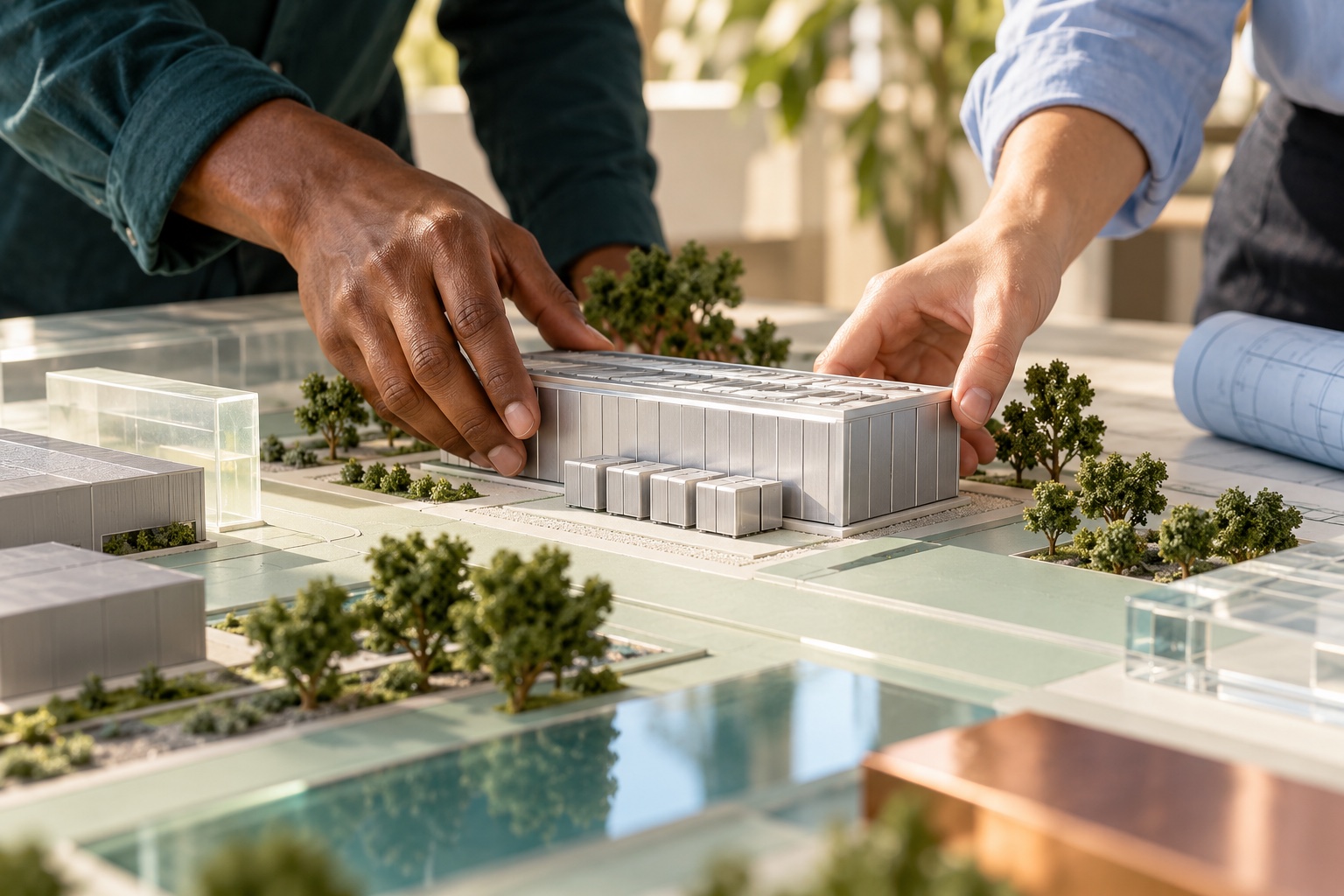
Check space after setbacks and other uses
The adopted text measures setbacks to battery structures or associated equipment, rather than a fence. It specifies 100 feet from lot lines and 200 feet at specified residential boundaries. Ask how the actual requirements apply to the proposal and any later amendments.
Have the team draw the equipment, screening, access and electrical work. Then mark the land you need for buildings, tenants, deliveries or another planned use. An acreage figure alone does not show whether those uses can fit together.
If a proposal moves equipment toward a boundary, compare the revised plan with the prior one. Ask what changes for your retained land and adjacent properties. Keep the drawing date with the explanation.
Identify temporary work areas too. Discuss how deliveries would turn, where equipment would be staged and when those areas would be returned.
Reference: Fairfax County: signed amendment ZO 112.2-2026-18
Ask for the sound study behind the layout
The county’s April 2025 technical report discusses noise from cooling equipment, transformers and power conversion devices. It recommends site-specific study rather than treating distance alone as proof of compliance. The report is technical advice; the adopted text and current Noise Ordinance govern the actual review.
Ask which equipment and operating conditions the study uses. Does it include the full proposed build, the homes or other sensitive uses nearby, and the layout now being offered? If equipment changes, ask whether the study needs updating.
Request a plain-language explanation of the results and proposed measures. Identify where equipment, walls or other measures would go and how they would be maintained. Do not assume that landscape screening answers the sound question.
Discuss how an operating complaint would be reported and investigated. Keep the operator’s contact details with your agreement records.
Reference: Fairfax County: April 2025 noise findings and recommendations
Want to ask about your land?
Send the location and what you know. You don’t need a project plan.
Tell us about your landSeparate initial review from final plans
The amendment calls for preliminary emergency and removal plans in the application, followed by final plans and a noise study at specified later review stages. It also provides for removal security.
Ask which documents are preliminary, which have been accepted and what remains before work can begin. A drawing prepared for a land discussion may not be the plan used for construction.
Review the removal plan beside the land agreement. Ask who pays, who can use the security, which parts of the property are restored and how responsibility continues if the operator changes.
Compare the development timetable with your option period and payment dates. Have your adviser check extensions and the process for releasing land if the proposal stops. Public review does not establish when rent begins under your private agreement.
Reference: Fairfax County: signed amendment ZO 112.2-2026-18
| Subject | Question for the owner |
|---|---|
| Permission route | Which district and review apply? |
| Usable layout | What space remains after constraints? |
| Noise study | Does it match the equipment and current design? |
| Final plans | What is still preliminary? |
Tell us what you would consider
Provide your name, email and phone, then the property location. Mention the present use, tenants, existing agreements and any proposal you have received. Optional property details can be added when available.
Say whether you would consider a lease, sale or a defined area of the property. Explain the entrances or future uses you need to preserve. You do not need a completed battery application to inquire.
Further review must establish the land rights, layout, connection, approvals and commercial fit. Nearby electrical infrastructure or a permitted use category does not settle all of those questions.
Questions landowners ask
Does a Fairfax postal address establish county zoning?
Confirm the actual parcel jurisdiction before relying on county rules.
Does landscape screening settle noise concerns?
Ask for the site-specific study and an explanation of the measures supporting the design.
Can I start without a full property package?
Yes. Provide contact details and the location you know; other information can follow.
Sources & further reading
Sources checked 2026-10-04. Local rules and program details can change. Check the requirements for the actual project.