
Confirm City jurisdiction and the current application
This guide concerns the City of Winchester. Give the team the tax parcel and municipal location rather than relying on a Winchester mailing address. A proposal elsewhere needs its own governing authority and rules.
The City’s code page directs readers to check ordinance changes alongside the online compilation. Its current permit page routes planning and zoning applications through the City portal. Ask staff which documents and process apply to this proposal.
The City also posts site-plan guidance and checklists dated earlier than several amendments shown in the code. Request the current instructions before relying on an old brochure’s approval route or timing. A company should be able to identify the application it expects to submit.
We have not established a battery-specific use classification for your parcel. Ask the developer to obtain a written City response describing the proposed operation and review route. Separate that question from utility connection work and the private terms offered to you.
Explain any existing tenants, access agreements or planned uses. Ask for a drawing of the land rights sought, including work outside the battery area. That is the starting point for comparing the proposal with what you want to retain.
Reference: City of Winchester: code resources and checking changes · City of Winchester: current permit and application portal route · City of Winchester: land-use guidance and planning documents
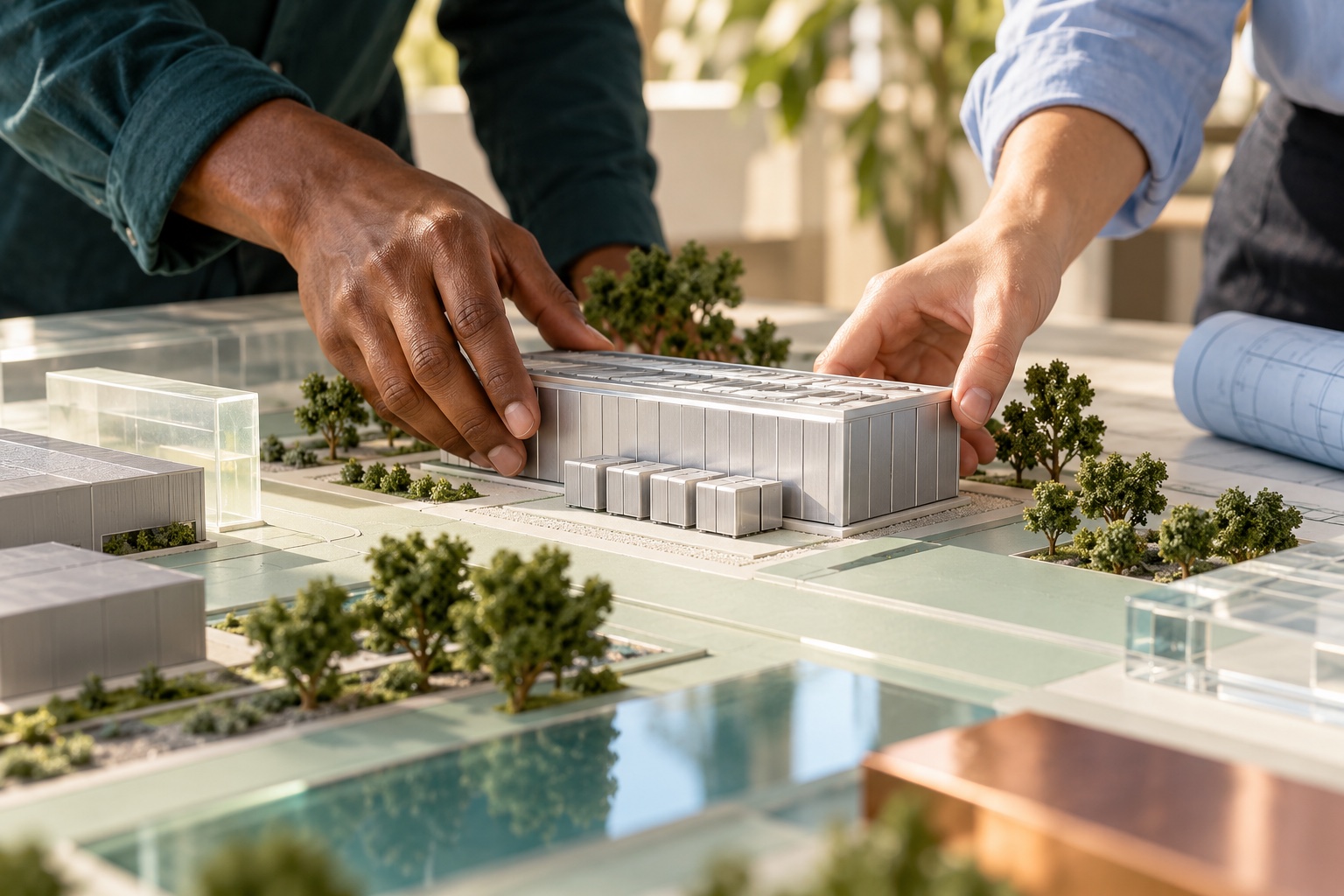
Review the whole site plan, not only the battery fence
Article 19 calls for plans showing existing features, utilities and easements, access, drainage, landscaping and lighting. Confirm the applicable requirements for this project.
Request a drawing that distinguishes the equipment enclosure from construction access, permanent roads, cables and landscaped areas. If the company wants rights described as necessary for the project, ask it to map those rights before you sign.
Compare the drawing with the way people use the property today. Will equipment deliveries cross a tenant’s entrance? Will a cable route conflict with a future building? Which areas would need to remain clear after construction?
Ask whether work outside your parcel requires someone else’s permission. Identify who must secure that permission and what happens to your option if it cannot be obtained. A proposed route across neighboring land is not the same as an agreed route.
Use the same drawing when discussing rent or a sale price. Decide how payments account for occupied land, restricted land and shared access. A small equipment pad can be part of a proposal that affects a much larger area.
Reference: Winchester zoning code: Article 19, site plans, landscaping and completion surety
Off-site landscaped land needs its own explanation
The posted code offers alternatives for a landscaped-area deficit, including qualifying off-site land or a City fund contribution. The off-site route includes easement and public-access conditions. Ask which alternative, if any, applies.
If a developer approaches you for landscaped land supporting a project elsewhere, ask to see that project’s plan and the proposed rights over your parcel. You may be discussing an open-space arrangement rather than a place where batteries will be installed.
Find out what the proposed agreement would permit and restrict. Would people be allowed onto the land? Who would maintain paths or plantings, respond to damage and handle insurance? Could you fence the area, change its use or sell it independently?
Ask how long those restrictions would continue and what happens if the project changes or closes. Have your adviser review the proposed easement, ownership arrangements and release process. A payment for a strip of land should not leave the duration or permitted use unclear.
If the proposal uses a contribution instead, ask who calculates and pays it, when it is due and how it affects the company’s decision to proceed. Do not assume that a contribution replaces every planting, screening or maintenance requirement.
For either approach, request the City’s acceptance of the actual arrangement. A developer describing an available alternative still needs to show why its specific proposal qualifies.
Reference: Winchester zoning code: Article 19, site plans, landscaping and completion surety
Want to ask about your land?
Send the location and what you know. You don’t need a project plan.
Tell us about your landDecide who will maintain the approved features
Section 19-10-4 places continuing plan conformance on the owner; Section 19-5-4 addresses owner maintenance of required landscaping. Discuss how the operator’s agreement will cover those duties.
Ask who inspects landscaping, drainage, roads and lighting after the site begins operating. Who arranges repairs and replacement planting? Which work is included in the operator’s budget, and what records will you receive?
Consider a simple problem: a required screen is damaged while a contractor replaces equipment. Who restores it, how quickly and at whose expense? Your agreement should address that work even if the battery itself continues operating normally.
Ask your adviser what remedies are practical if the operator stops performing while you remain the owner. Identify a contact, a process for missed work and financial support for the promised duties. A statement that the company takes care of the site needs a defined scope.
Review changes against the approved plan and your private agreement. A new driveway, different cable route or enlarged equipment area may affect land you retained. Obtain the revised drawing and explain how new costs and responsibilities will be handled before consenting.
Reference: Winchester zoning code: Article 19, site plans, landscaping and completion surety
A completion surety is not a removal promise
Section 19-11 addresses completion or bonding of site improvements before occupancy, with limits on when surety is accepted. Its completion arrangement also addresses access for unfinished work.
If the team says the project will be bonded, ask for the instrument and the list of work it covers. Who can draw on it, what event triggers payment and what must be completed? Identify whether it protects the City, you or another party.
Then ask separately about removal at the end of the battery project. Which equipment, foundations, cables and roads would be removed? Who pays and what funds or other support secure that obligation? Do not treat construction completion and eventual restoration as one promise.
Discuss an interruption during construction. If a company stops halfway through the work, who maintains access and drainage, protects current uses and completes or restores the affected areas? Ask how the land would be managed while those steps are unresolved.
If access is required to finish improvements, review the area and conditions of that access. Tell the team about gates, operating businesses and tenants. The agreement should make practical coordination possible without leaving unrelated land rights open-ended.
Reference: Winchester zoning code: Article 19, site plans, landscaping and completion surety
Connect review milestones to the property agreement
Ask the developer for a short list of the work still needed: use classification, applicable site-plan review, connection studies and agreements for additional land. Have it identify the evidence that would complete each step.
Keep those milestones separate from the payment dates in your option. What are you paid for reserving the land now? What event starts construction or operating rent? What payment is required if the company needs longer to resolve an off-site route or landscape arrangement?
Decide what investigation can take place during the option. Describe survey access, visits and permitted physical work. Ask how any disturbance will be documented and restored if the company does not proceed.
If the design changes, request an updated drawing and explanation of the affected rights. Consider whether more land, a different access route or additional maintenance changes what you are willing to accept. An extension should not silently expand the original project scope.
For a transfer, ask who will take over payment, site upkeep and restoration duties. Require a practical way to receive updated contacts and records. You should know which company to approach about the obligations affecting your property.
Tell us which part of the proposal affects you
Begin with your name, email and phone number, then the property location. City of Winchester and Virginia are selected here and can be corrected. Acreage and a parcel number are optional.
Say whether the inquiry concerns the battery site, access, a cable route or landscaped land for another project. Mention any company involved, an existing option and a deadline for responding. You do not need to decide the zoning classification before reaching out.
Include what you want to preserve, such as tenant parking, a working entrance or another building location. If someone has promised that a bond covers your concerns, tell us which concerns you are trying to resolve.
Sending the form starts an initial property review. It does not authorize a filing, grant land rights or establish eligibility, utility capacity or a payment offer. Those decisions require the actual proposal and supporting records.
Questions landowners ask
Does this page establish that a battery is permitted on my land?
No. Obtain the City’s review route for the actual operation and parcel before relying on a use label.
Why would landscaped land outside the battery site need review?
Ask what rights the company wants, who may use the land, who maintains it and when the restrictions can end.
Does contributing to a City fund replace every landscape duty?
Ask for the requirements accepted for the actual plan, including any work and maintenance that remains.
Does a construction bond cover battery removal?
Read the instrument’s purpose, beneficiary and covered work. Obtain a separate explanation of removal and restoration support.
Can a tenant’s maintenance promise matter if I own the property?
Yes. Review who performs each duty, how missed work is handled and how the private promises address your responsibilities as owner.
Can I inquire about an access or open-space offer?
Yes. Describe the rights requested and the area affected, along with any existing agreement or signing deadline.
Sources & further reading
Sources checked 2026-10-07. Local rules and program details can change. Check the requirements for the actual project.