
Start with what the battery would do
A battery serving your existing building is a different proposal from leasing a field for a facility that sells electricity or grid services. Ask the project team to describe where electricity would come from, where it would go and whether any backup service for your property is actually included.
The county definition of Tier 1 includes an aggregate energy capacity of 600 kWh or less, onsite use only and, if enclosed in a room or area, a single storage technology. Tier 2 includes systems above 600 kWh or more than one battery technology in an enclosed room or area.
Energy capacity in kWh describes how much energy can be stored. A rating in kW or MW describes power. If an offer only gives a power rating, ask for the energy capacity and the intended use as well. A statement that a project is “small” does not identify the county classification.
Give the county the actual design rather than assuming every system below 600 kWh qualifies as Tier 1. Exporting electricity, adding equipment or changing technologies can raise questions that a label in a sales pitch will not answer. Ask which classification the county would apply and what information it needs.
Reference: King William County: current zoning compilation, revised September 15, 2026; battery provisions pages 166–168 · King William County official code: Article XVI, battery definitions, permitting and removal provisions
Check the parcel and district before fixing the land commitment
The county zoning compilation describes its scope as the unincorporated county. Establish whether your property is within that jurisdiction and which district applies. A King William mailing address or an agricultural-looking field does not establish the zoning designation.
The battery permitting provision allows Tier 1 systems as accessory to a permitted use in all zoning districts. For Tier 2, it describes a conditional-use permit from the Board of Supervisors within the A-C and I districts. That route requires a decision; it does not mean every parcel in those districts is approved.
Ask the developer to identify the proposed district, the requested permit and the layout it plans to submit. If a different zoning action is needed, ask who would pursue and pay for it. Keep your authority to approve the private land agreement separate from permission to act as an applicant or enter the property.
The current county PDF and the official codified article number some battery sections differently. The provisions cited here agree on these points. Use their battery headings and, for the September 2026 PDF, pages 166–168 when discussing the proposal with staff. Confirm the applicable current text for the actual application.
Reference: King William County: current zoning compilation, revised September 15, 2026; battery provisions pages 166–168 · King William County official code: Article XVI, battery definitions, permitting and removal provisions
Keep the approval stages and payment dates visible
The published general requirements call for all Tier 2 installations to comply with the county’s site-plan requirements. They also describe compliance with applicable building and energy codes. A conditional-use decision is therefore not the only document to ask about.
Request a simple schedule showing the county application, site plan, electrical review, construction permissions and proposed operating date. Ask which stages are complete, which are still assumptions and what happens if the drawings change. A utility conversation is not the same as permission to connect and operate.
Set that schedule beside the offered payment terms. What payment is due while the company reserves the land? What starts operating rent? Can a delay extend the reservation, and on what terms? Ask for dates and triggers you can identify from documents rather than a general promise that the project should move quickly.
For example, a company may want a long reservation while it studies a connection. You may still need to harvest timber, renew a farm tenancy or plan a sale. Discuss those uses before agreeing to the hold, and identify how the company releases rights if its studies do not lead to a project.
Want to ask about your land?
Send the location and what you know. You don’t need a project plan.
Tell us about your landReview a drawing that shows more than the battery containers
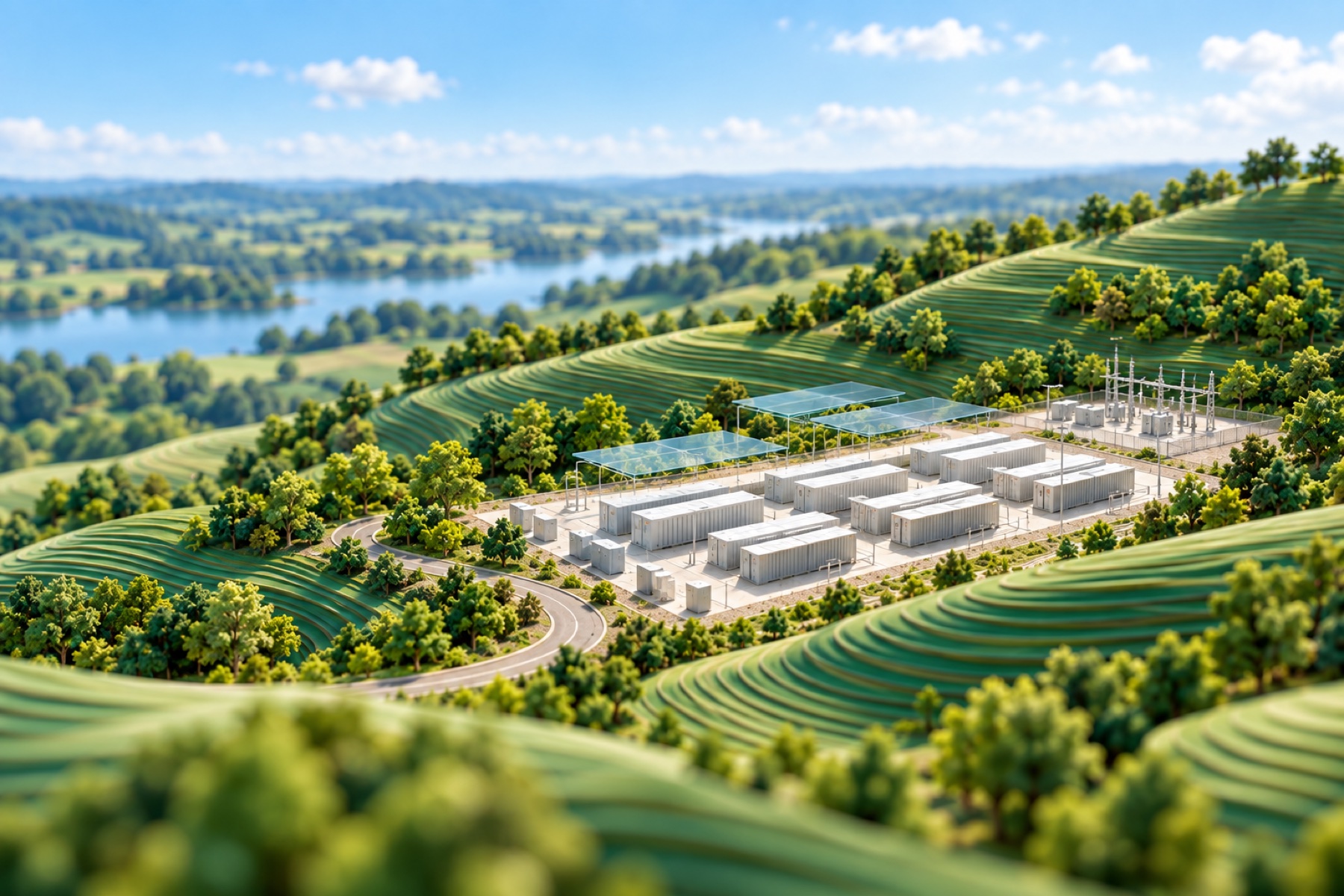
Ask for a plan showing the containers, foundations, fence, gates, electrical equipment, cable route and temporary delivery or staging areas. Mark the driveway, farm access, tenants and other land uses you want to retain. The leased rectangle alone may not show all the rights being requested.
Tier 2 setback and height provisions refer to the underlying district’s standards for principal structures. Ask the team to show which standards it has used and how they affect the usable area. Do not apply solar-project buffer or height figures to a standalone battery just because solar and batteries appear in the same article.
The battery application provisions address underground onsite utility lines where feasible and permitted by the serving utility, with specified service-connection and interconnection exceptions. Request the actual proposed route and any new easements. Ask who can use the route, who maintains it and what land you can continue using above or beside it.
The application also addresses facility-owner emergency signage, limited safety and operational lighting, and the referenced county noise rules. Ask what the equipment would sound like at your retained house or business and how lighting would be directed. Have the project team identify the applicable standards instead of promising that a generic battery layout will fit.
| Show on the plan | Discuss before signing |
|---|---|
| Permanent equipment and fence | Paid area, setbacks and future expansion |
| Entrance and service route | Shared access, deliveries and maintenance |
| Cable and connection works | Separate easements and retained land uses |
| Temporary construction space | Return date and repair obligations |
Understand what the county removal requirement covers
The Tier 2 application provisions require a decommissioning plan before site-plan approval. It addresses removal activities and timing, the people doing the work, equipment and structures, waste disposal, estimated costs, funding and how the estimate stays current.
The plan also addresses restoration and protection of adjacent areas or systems, plus contingencies for equipment damaged by fire or another event. Ask for the plan that applies to your site. Which foundations, barriers and cables would be removed? What work would be needed before the land could support your intended next use?
The published provision assigns the facility owner or operator the cost of removal security, using a letter of credit, cash bond or corporate surety in an amount determined by the county, for the life of the facility. Request the actual security document, responsible entity and process for maintaining it.
Do not assume that public security can be drawn by you or will pay missed rent. Ask who benefits from the instrument, what events allow a claim and how its scope compares with your private agreement. The county requirement and the promises to the landowner need to be reviewed together.
Keep the battery provisions distinct from the solar removal rules nearby in the code. Do not assume the solar timetable or estimate-update interval also governs this battery proposal. Have the team identify the actual battery plan and any conditions attached to its approval.
Reference: King William County: current zoning compilation, revised September 15, 2026; battery provisions pages 166–168 · King William County official code: Article XVI, battery definitions, permitting and removal provisions
Describe the condition you expect when the land is returned
“Remove the battery” leaves several owner questions unanswered. Would roads and pads stay or be removed? Would soil be repaired, drainage restored and trenches made safe? If you want to keep an improvement, discuss how that choice would be recorded and who assesses its condition.
Ask how removal access would work if another part of the property has been sold or occupied by a new tenant. A route suitable for ordinary maintenance may need different arrangements for large removal deliveries. Put the proposed rights and responsibility for damage beside the site drawing.
Find out who signs your agreement, who owns the equipment and who operates it. If the project changes hands, how would you be notified, which obligations pass to the new company and what happens to security? Discuss responsibility for unfinished repairs as well as future work.
Before making a long commitment, have your adviser compare the county plan, actual financial security and private removal terms. A clear description of the returned land helps you judge whether the proposed arrangement fits your plans for the rest of the property.
Start with the property location and your priorities
Use the form to send your name, email and phone number, then the location of your King William County property. Say whether you are considering a lease, sale or an initial discussion. You do not need to know the battery rating or zoning district to make an inquiry.
Mention the present use and any areas that need to remain available. A useful note might say: “We could discuss the rear field, but the farm entrance must remain open and we want the ground returned for pasture.” Include an existing project offer or agreement if relevant.
Acreage and the parcel number are optional if you do not have them handy. Sunland can review the starting information and may request further details. The inquiry does not grant entry or reserve your land; a possible project still needs property, connection, permitting and commercial review.
Questions landowners ask
Does a 600 kWh battery automatically qualify for Tier 1?
No. The definition also includes onsite use and a single technology if enclosed. Ask the county to classify the actual design and use.
Is a Tier 2 battery automatically allowed on agricultural land?
The published route calls for a Board of Supervisors conditional-use permit in A-C and I districts. Confirm the parcel’s district and required reviews; the route is not an approval.
Should I use the solar setback and removal rules?
Do not assume those figures apply to a standalone battery. The battery provisions refer to underlying district setback and height standards and have their own removal requirements.
Who pays for county removal security?
The published battery provision assigns its costs to the facility owner or operator. Ask for the actual instrument and review private removal and payment obligations separately.
Can I inquire without a parcel number?
Yes. Start with contact details and a location you can identify. Acreage and the parcel number are optional on the inquiry form.
Sources & further reading
Sources checked 2026-10-06. Local rules and program details can change. Check the requirements for the actual project.