
Describe the proposal before asking whether it is allowed
The county Planning Department administers zoning in unincorporated Montgomery County. Start by establishing whether your property is under county jurisdiction or within a town. Then identify its zoning, existing approvals and the use the company proposes.
Section 10-61 describes a battery system charged through solar, with stored energy later supplied to a distribution network. Section 10-48 places its battery requirements within the rules for community- and utility-scale solar. Do not treat that wording as a general permission for every kind of storage facility.
Ask the company to explain whether it proposes batteries with new solar, batteries added to approved solar, a separate grid-connected facility or equipment serving an existing business. Ask Planning which current rules and approvals apply to that description and parcel. The posted code warns that recently adopted legislation may not yet be reflected online.
Keep the written answer with the drawing it addresses. If the company changes the equipment, boundaries or operating arrangement, ask whether the answer still fits. You can contact Sunland before collecting these records; they become important when a proposal moves toward a land agreement.
| Document | Question to resolve |
|---|---|
| Existing approval and conditions | What solar use and land area were approved? |
| Current lease or option | What rights has the owner already granted? |
| Battery layout and description | What equipment, access and work areas would be added? |
| Removal plans and funding | Who is responsible for each part of the site? |
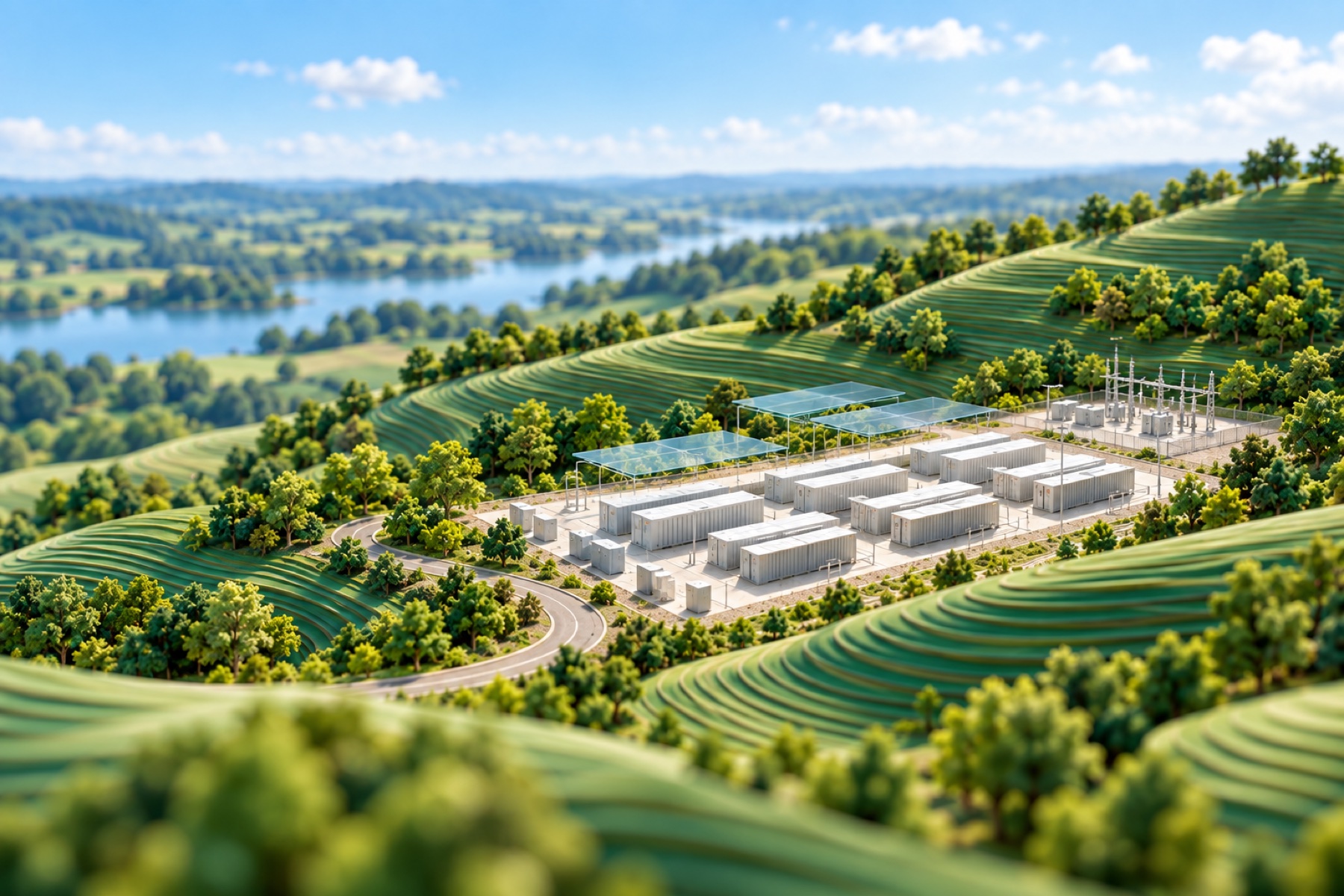
An approved solar site has a different starting point
Virginia Code Section 15.2-2316.10 provides an accessory route for qualifying batteries within the parcel boundaries covered by an approved solar special exception. The law includes a capacity condition tied to the associated solar facility. Ask the project team to show how the actual equipment and approval meet that condition, rather than comparing unlike equipment ratings yourself.
A qualifying project does not need an additional local land-use approval under that section. It must still comply with applicable safety, fire and environmental requirements. The law also distinguishes the approved solar project’s public payment obligations and other approval or siting-agreement terms from the added battery project.
That public approval route does not tell you what your private lease allows or what additional compensation you should receive. Ask your adviser to compare the solar lease with the proposed battery amendment. Does the company need more land, a longer term, additional access or a different permitted use?
Have the developer explain which public conditions continue to cover solar and which requirements cover storage. Avoid relying on a general statement that the existing solar approval takes care of everything.
Read the solar removal provisions before expanding the agreement
The posted county solar rules call for a decommissioning plan and describe financial assurance, with an exception for solar systems owned by a Virginia public utility. They also describe circumstances in which the property owner must conduct removal after the applicant or successor fails to act.
The text gives the county a right, rather than an obligation, to carry out removal after defaults. It describes responsibility for costs exceeding the surety and a lien against the real estate for unpaid excess costs. Ask your adviser to explain the provisions, the actual approval and any instruments you would be asked to sign.
Do not assume those solar obligations automatically cover batteries added under the newer state accessory route. Ask for a separate explanation of battery removal, the funding that supports it and the obligations you would accept privately. If a company says one plan covers both systems, ask to see where each system and its costs are included.
Ask who can obtain the funds, when estimates are updated and what happens if the solar operator and battery operator are different companies. A promise that equipment has resale value is not a substitute for understanding how unfinished work would be funded.
Want to ask about your land?
Send the location and what you know. You don’t need a project plan.
Tell us about your landPut the added equipment and access on the same drawing
Ask for battery enclosures, cooling equipment, cable routes, entrances, drainage work and temporary construction areas on one drawing. Compare it with the solar lease boundary and the land you still use. Identify roads, gates or field access that construction could interrupt.
Section 10-48’s solar battery provisions address applicable setbacks and an equipment- and site-specific emergency response plan with first-responder training. Ask the company which standards apply to its particular proposal, especially if it is using the state accessory route. A setback quoted from a solar document does not settle every storage layout.
Confirm how responders would enter and who maintains the route, gate access and emergency contacts. Also ask who handles ordinary complaints, repairs and coordination between operators. Keep those contacts current after an ownership transfer.
Discuss what remains when one system closes before the other. Would you still need a shared road or drainage feature? Which cables and foundations are removed, and which could be retained with the necessary agreement and approval? Record the condition of those areas before work begins.
Compare the offer with your plans for the property
If the company needs time for studies, ask how long the option reserves the land, what extensions are available and what payment is due during each period. Show the area reserved for study separately from the eventual equipment footprint.
For a solar lease amendment, compare the original and proposed documents together. Does adding batteries extend the solar term or affect a later sale, financing or use of the remaining land? Ask your adviser to review transfer rights and responsibility after a change of operator.
Set out the payment triggers clearly: signing, construction, operation and extensions. Ask what happens if approvals or an electrical connection cannot be obtained. Neither the county’s code nor a nearby power line establishes a viable connection or a buyer for a project.
Resolve repair and removal obligations before granting additional rights. Keep a complete copy of the signed documents, drawings and any county instruments. A short amendment can matter as much as the original lease.
Tell us about your Montgomery County property
Start with your name, email and phone, then the property location. Montgomery County and Virginia are starting selections you can change. Acreage and a parcel number are optional.
Mention whether the property already has approved solar, an existing energy lease or a new battery proposal. Tell us what land you want to keep using and any access that must remain available. You do not need a completed design or a zoning determination to make an inquiry.
Sunland can start with the information you have and may follow up. Further review would need to establish jurisdiction, approvals, land rights, layout, connection and commercial fit. Sending the form does not file a county application or commit you to a lease or sale.
Questions landowners ask
Does the county’s battery definition permit a separate grid battery on my land?
The posted definition describes solar-charged storage. Ask Planning to confirm the current classification and route for the actual proposal and parcel.
Does adding batteries mean I need another solar use permit?
A project qualifying under Virginia Code Section 15.2-2316.10 has an accessory route without additional local land-use approval. Confirm its boundaries and capacity condition; safety, fire and environmental requirements still apply.
Does the existing solar removal plan cover the new batteries?
Do not assume it does. Ask how the added equipment, funding and responsibilities are addressed, and have your adviser compare the public requirements with the private agreements.
Can I inquire without a parcel number?
Yes. Your contact details and property location are enough to start. Acreage and a parcel number are optional.
Sources & further reading
Sources checked 2026-10-06. Local rules and program details can change. Check the requirements for the actual project.