
What New Jersey’s proposal does—and does not—tell an owner
The official Phase 2, Block 1 page, checked October 5, 2026, lists the program as under development. The August proposal focuses on new residential batteries behind the meter. The August 19 announcement discusses commercial and industrial batteries at critical facilities, and a separate distribution-connected front-of-the-meter initiative, as subsequent opportunities.
That distinction matters if someone cites the home-battery proposal while asking to reserve vacant land. Request the name of the actual program and the current decision or enrollment document that applies to the offered project. Ask the developer to show where its equipment and customer category fit. A statewide proposal is useful background; it is not evidence that this particular project has been accepted.
You can discuss a property before every program detail is settled. The agreement should make clear which payments are due now, what still needs to happen and how long the developer may hold the property while it waits. Avoid assuming that a future program will begin on the developer’s preferred schedule.
Reference: New Jersey Clean Energy: Phase 2, Block 1 status and proposed scope · NJBPU August 19, 2026: proposed home-battery program and subsequent storage opportunities
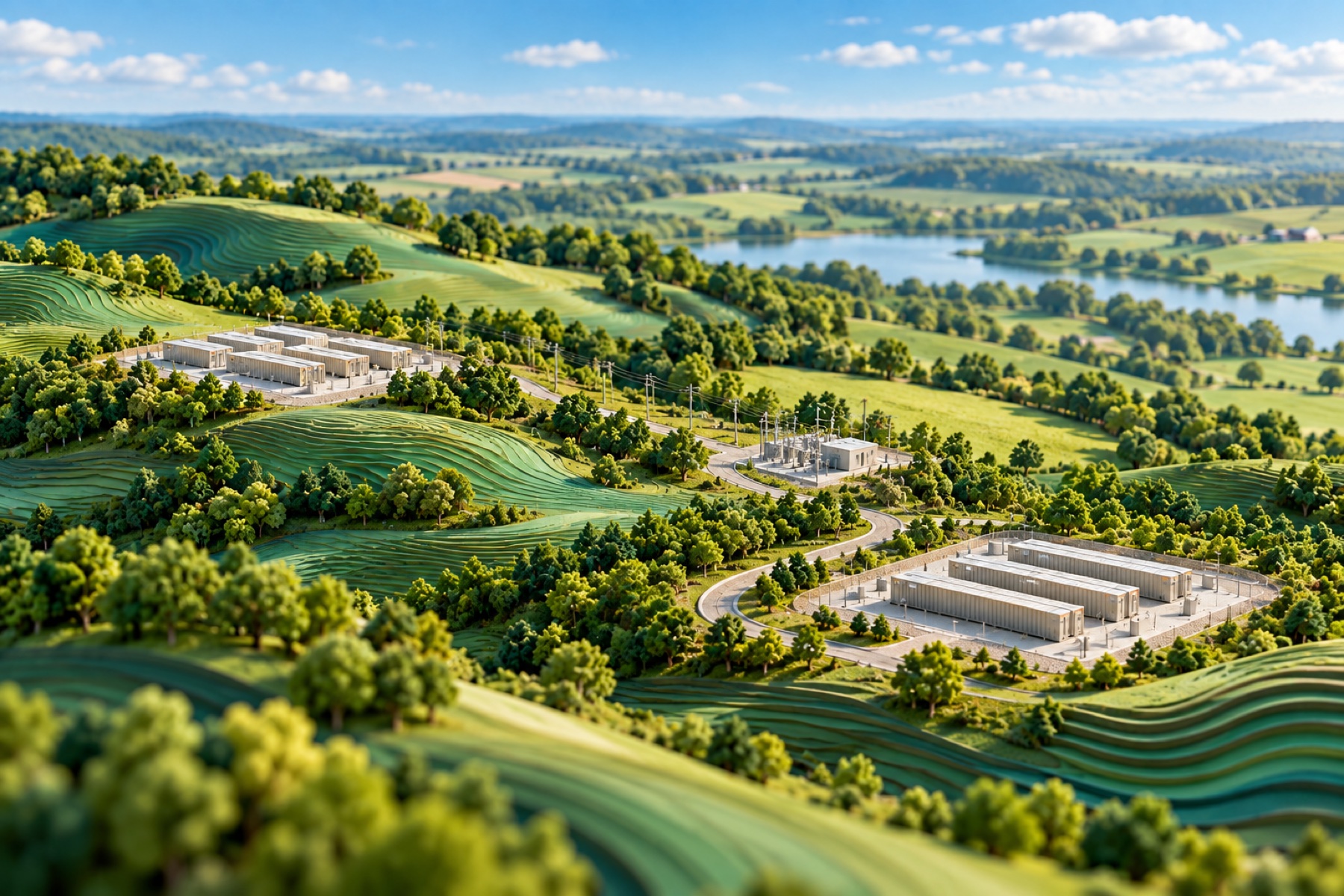
Identify which kind of battery project is proposed
A behind-the-meter battery connects on the customer side of the electric meter. A home installation may be intended to support household power needs. A commercial installation may serve a building or business. A separate front-of-the-meter battery has a different connection arrangement and may use a defined site primarily to provide grid services. Ask the project team to explain its actual design in ordinary language.
For example, a warehouse owner might receive an offer to install equipment that works with the tenant’s electricity use. Another owner might be asked to lease an unused field for a battery with its own grid connection. Both offers may mention distribution storage, but the meter, parties, construction work and payment arrangements can be different.
Ask for a drawing showing the battery area, electrical equipment, cable route and point of connection. Have the team mark anything that uses the building or crosses retained land. A nearby utility line does not establish an available connection. Ask who will apply for connection review and who bears the cost if the route or required work changes.
| The offer describes | Clarify before agreeing |
|---|---|
| A home battery | Whose home, meter and equipment are involved? |
| A business battery | Who holds the electric account, and does a tenant need to participate? |
| A separate battery site | What land and access rights support the project’s own connection? |
| A state incentive | Which current program covers this design, and who would receive the payment? |
Keep land permission separate from electric-account permission
Owning the land does not answer every question about using a tenant’s meter or electric account. Identify the landowner, building owner, occupant, account holder and proposed equipment owner. Ask which parties would sign which documents. If one company fills several roles, have that explained rather than leaving it implicit.
Suppose your tenant pays the electric bill and you own the parking area proposed for equipment. Discuss both arrangements before installation: permission to occupy the parking area and participation involving the tenant’s electricity use. Ask what happens if the tenant leaves, changes its business hours or moves the account. Keep those questions separate from ordinary land rent.
Request a plain explanation of any requested meter data, account authorization or remote operating access. Ask what information is needed, who can use it, for what purpose and how participation ends. Do not share account passwords to make an initial property inquiry. An interested developer should be able to explain the proposal before asking for sensitive account access.
Want to ask about your land?
Send the location and what you know. You don’t need a project plan.
Tell us about your landUnderstand your payment without relying on an incentive headline
Ask for the money you would receive, the party responsible and the date each payment becomes due. A land option payment, equipment purchase discount, electric-bill benefit and performance incentive are different things. If several appear in a presentation, have them shown separately. Confirm which amounts are promised and which are estimates or depend on later events.
If the battery would be operated for grid services, ask who controls that operation and how it affects the benefits described to you. Does the offer promise backup power, bill savings, rent or some combination? Request the conditions and limits for each claimed benefit. A battery’s presence alone does not establish how much power remains available to an occupant during an outage.
Ask what happens to your payments if a program changes, an application is unsuccessful or the battery performs differently than expected. For a land lease, find out whether rent depends on the developer receiving incentive revenue. For a customer installation, ask who handles incentive enrollment and payment disputes. Your own agreement should explain your position without requiring you to guess from a program announcement.
Check how the installation affects the rest of the property
Mark entrances, parking, loading areas, drainage, utilities and land you expect to use later. Ask how much space the project needs during construction and after it begins operating. Discuss equipment deliveries, routine maintenance and access when the owner or tenant is away. A compact equipment drawing may omit the space needed to reach it.
For a business property, consider a future lease or sale. Ask how a new occupant would learn about the equipment, who must consent to a transfer and whether the proposed arrangement restricts redevelopment. For vacant land, identify any access or cable rights outside the equipment area. Have the agreement reviewer check those rights against the map.
Ask who is responsible for equipment maintenance, insurance, emergency coordination and removal. Discuss what happens if the operating company stops responding or the installation is no longer used. Find out how disturbed surfaces would be restored and who pays. Program participation and property restoration are separate questions; both need clear answers.
Start with the property and the offer you have received
Tell Sunland where the property is, its present use and whether you are considering a lease, sale or an initial discussion. If you have received an offer, mention whether it concerns a home battery, equipment serving a business or a separate land-based project. You do not need to know the final connection design to ask a question.
Use the property inquiry form to provide your name, email, phone number and property location. Acreage and parcel details are helpful if you know them, but they are optional. Keep private account records and passwords out of the inquiry. If more information is needed, we can explain why before you decide what to provide.
An inquiry does not reserve the property or enroll you in an incentive program. It starts a conversation about the land and your goals. Sunland’s development inquiry is not an application for the proposed state home-battery program; use the official program source for that program’s current status and contact information.
Questions landowners ask
Does the home-battery proposal mean my vacant land qualifies?
No. Ask which current program applies to a separate land-based project and request project-specific connection and permit information.
Is a distribution-connected project necessarily behind the meter?
No. Ask whether the battery connects through a customer’s meter or through its own front-of-the-meter arrangement.
Can the landowner sign for a tenant’s electric account?
Do not assume so. Identify the account holder and ask which authorizations and signatures the actual arrangement requires.
Does a state incentive determine my rent?
No. Your payment and its conditions need to be stated in your own agreement.
Can I ask about my property before a program is finalized?
Yes. Send your contact details and location. Discuss what remains uncertain before committing land or account rights.
Sources & further reading
Sources checked 2026-10-05. Local rules and program details can change. Check the requirements for the actual project.