
Start with the adopted amendment and the actual zoning
The code directory lists the July amendment as a new law affecting Chapter 195. Read that amendment alongside the underlying code rather than relying only on an older use table. The public hearing agenda describes the proposal considered; the signed ordinance supplies the adoption record.
Identify the municipality and zoning district for your parcel. West Hanover Township in Dauphin County is a different authority from other places named Hanover. An address or a county name alone does not establish which rules govern the property.
Ask the project team to show the proposed use, the tract it relies on and the approval route it plans to follow. Conditional-use review is an application process, not an approval already held by the developer. Request any actual decision and its conditions if the team says permission has been granted.
The ordinance combines data-center and battery provisions, with some clauses written specifically for data centers. Ask the Township to explain the requirements applicable to the proposed battery design. Do not assume every example in a data-center presentation describes what would be built on your land.
Reference: West Hanover Township: zoning code and new-law directory · West Hanover Township: adopted Ordinance 2026-01, July 23, 2026 · West Hanover Township: July 23, 2026 public hearing agenda
Separate the tract from the land the company wants to reserve
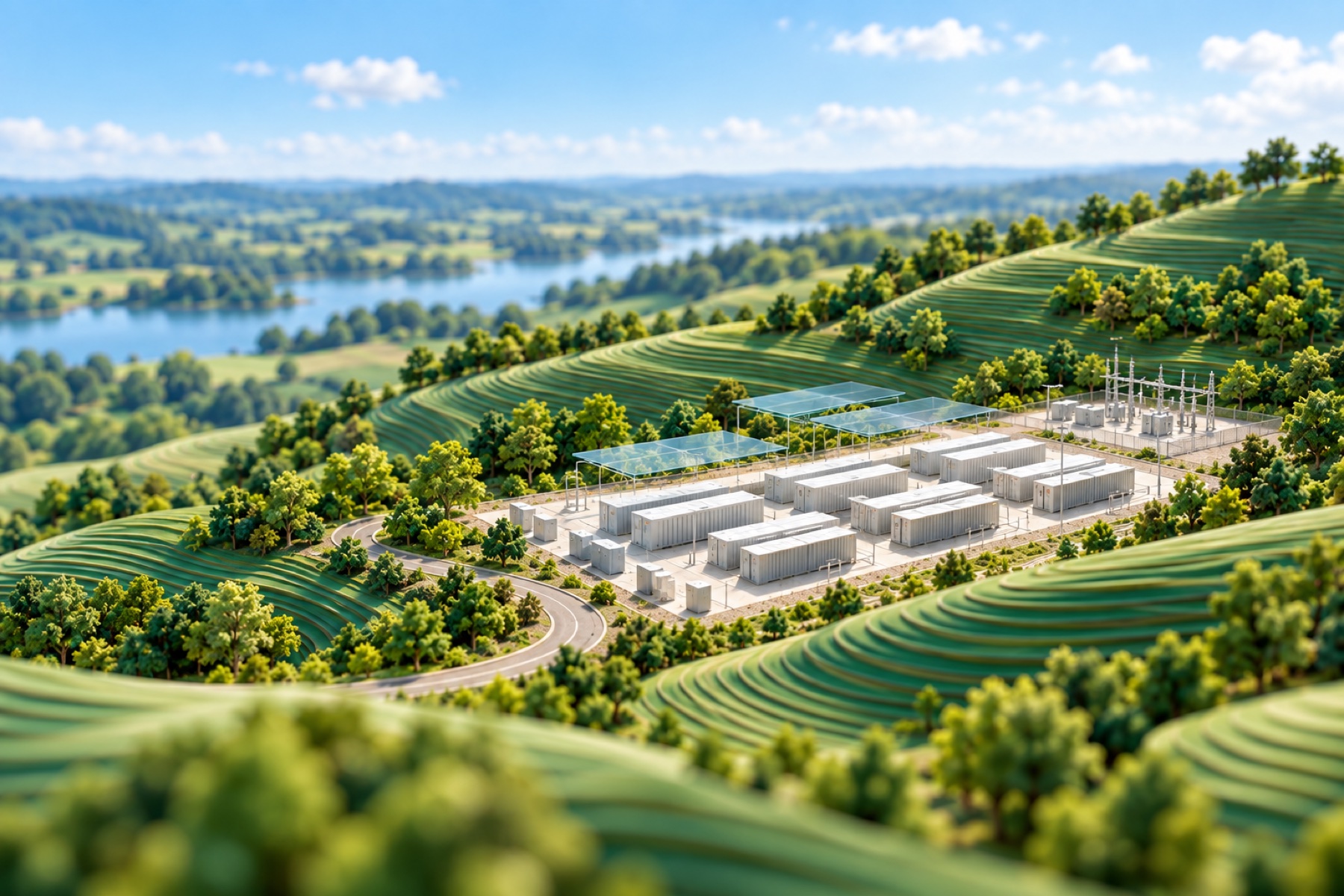
Ask for a drawing that distinguishes the battery equipment, permanent roads, cables, screening, drainage work and temporary construction area. Then compare it with the option or lease exhibit. A small equipment pad can still come with substantial rights outside the fence.
Discuss the land you expect to keep using. Mark tenant areas, entrances, loading space, utility routes and plans for future construction. Ask which activities would remain possible and what restrictions the company wants beyond the leased area.
Have the project team explain how setbacks, buffers and its layout work together. Request the actual dimensions on the drawing rather than estimating from an aerial image. If more than one parcel is involved, identify which rights are needed from each owner and what happens if an adjoining agreement is not obtained.
Clarify payment for every period the property is held. When does an option payment become due? What triggers operating rent? When is unused reserved land released? An approval schedule and the company’s desired reservation period should be explained separately.
| On the drawing | In the agreement |
|---|---|
| Equipment area | What area earns rent, and when? |
| Roads and cables | Who may enter and maintain them? |
| Screening and buffer land | What use or maintenance restrictions continue? |
| Temporary work space | When is it restored and released? |
Existing trees can come with a continuing commitment
The amendment allows the Board to consider existing vegetation as an alternative to specified screening. That alternative includes ongoing owner and successor obligations and a Township-approved recorded instrument. Before offering existing woodland for that purpose, ask exactly which area and obligations would be involved.
Have your agreement adviser compare the proposed recorded wording with the lease. Who maintains the vegetation? Who pays if screening is damaged or must be replaced? What would happen if you sold the retained land or wanted a different use later?
Ask for the approved sight-line drawing and screening conditions. A developer’s statement that existing trees save construction costs does not explain your continuing obligations. Keep the actual decision and recorded document with the property records.
If the woodland lies outside the proposed equipment lease, have that made clear. Discuss whether separate compensation or rights are requested and how the company’s responsibilities continue after a project transfer. The map, public conditions and private agreement should describe the same arrangement.
Reference: West Hanover Township: adopted Ordinance 2026-01, July 23, 2026
Want to ask about your land?
Send the location and what you know. You don’t need a project plan.
Tell us about your landPlan access around the uses that stay
Ask the developer to explain deliveries, construction traffic, routine maintenance and emergency entry. Show where people already enter the property and which routes must stay available to tenants or other authorized users.
The battery review includes emergency planning and access requirements. Ask how the project team will coordinate the actual site plan with the Township and responders. Discuss gates, access roads and who maintains them. The existence of an emergency plan does not answer every private access or repair question.
For example, a shared drive may work for everyday visits while an equipment delivery requires turning or waiting space on retained land. Ask where that space is, when it would be used and how it would be restored. Do not let a drawing of the permanent road stand in for a construction-access plan.
Ask who handles a complaint or damage report after operations begin. Request current company contacts and a clear process for inspection and repair. Discuss lighting and sound alongside the site layout so that the equipment and any screening can be evaluated together.
Review removal security and the document naming the responsible party
The ordinance requires a decommissioning plan and financial assurance and gives the Township enforcement provisions for excess removal costs. Ask your adviser to explain how those provisions apply to the parties in the actual proposal. Do not assume the approved security eliminates every possible cost or obligation.
Request the actual removal plan, cost estimate and assurance document. Who provides the security, who can use it and what conditions apply? Find out how changes in equipment, costs or ownership would be reflected. A mention of a bond in a presentation is not the same as an issued instrument.
Compare the public removal plan with what your lease promises. Would foundations, cables, roads and disturbed ground be addressed? What would be retained because it has an ongoing purpose? Describe the condition you need for the next use of the land and ask who would pay to achieve it.
Ask what happens if the company stops operating or transfers the project before removal. Keep the responsible company’s identity, contacts and obligations current. Your adviser should review the public requirements and private wording together rather than assuming they provide identical protection.
Reference: West Hanover Township: adopted Ordinance 2026-01, July 23, 2026
Check the electrical connection separately
Identify the connection being considered and the rights needed to reach it. Ask whether the project team has only identified a nearby line, applied for a study or obtained an agreement. Those are different stages.
Find out who pays for studies, equipment and required utility work, and what happens to the land agreement if costs make the project impractical. Nearby electrical infrastructure does not establish available capacity or an affordable connection.
If the project also includes a data center or equipment serving an existing business, ask how those components relate to the battery proposal. Request a plain explanation of what would occupy your land and which parties would own and operate each part. A combined development needs an agreement that describes the actual use.
Tell Sunland about the property and any offer
Start with your name, email and phone number, then the location and county. Dauphin County and Pennsylvania are selected on this page; correct them if the property is elsewhere. Acreage and parcel references are optional.
Mention current uses, tenants, woodland and shared entrances. If someone has asked for an option, screening rights or a cable route, describe that request and any deadline. You can inquire before you have a completed site plan.
An inquiry starts a discussion. It does not reserve the land, authorize entry, submit a Township application or establish an electrical connection. Any opportunity would require its own review of the property, permissions, land rights and commercial terms.
Questions landowners ask
Does a 20-acre property automatically qualify?
No. The adopted ordinance states a minimum tract size for the use, but zoning, layout, approvals, connection and commercial fit still require review.
Does the new law mean the company already has permission?
No. Request the actual conditional-use decision and other approvals for the proposed project.
Can using existing trees for screening affect land outside the battery fence?
Ask for the approved screening map and recorded wording. The alternative-screening provision can create continuing owner and successor obligations.
Does removal security mean I cannot face any related cost?
Do not assume that. Have an adviser review the actual plan, instrument, parties and agreement alongside the Township’s provisions.
Do I need a parcel number to start?
No. Send contact details and the property location. Acreage and parcel references are optional.
Sources & further reading
Sources checked 2026-10-05. Local rules and program details can change. Check the requirements for the actual project.