
Start with the lot and the current Township rules
The published battery section specifies a 50-acre minimum lot, 250 feet from property lines and 750 feet from a non-participating owner’s existing occupied residence. It describes conditional use in the Rural Estate District. Ask the Township how those provisions apply to the actual parcel and proposal.
The lot requirement is not a statement that batteries occupy 50 acres. Request separate measurements for the lot, the proposed leased area and the equipment footprint. A large property may still have little usable space after its shape, slopes, existing uses and other constraints are considered.
Confirm the parcel’s municipality and zoning rather than rely on its mailing address. Ask whether newer ordinances or project-specific conditions affect the published provisions. The Township’s review directory helps identify planning matters, but a proposal under review is not proof of an adopted change.
Reference: West Deer Township: published conditional-use battery storage provisions · West Deer Township: planning matters currently under review
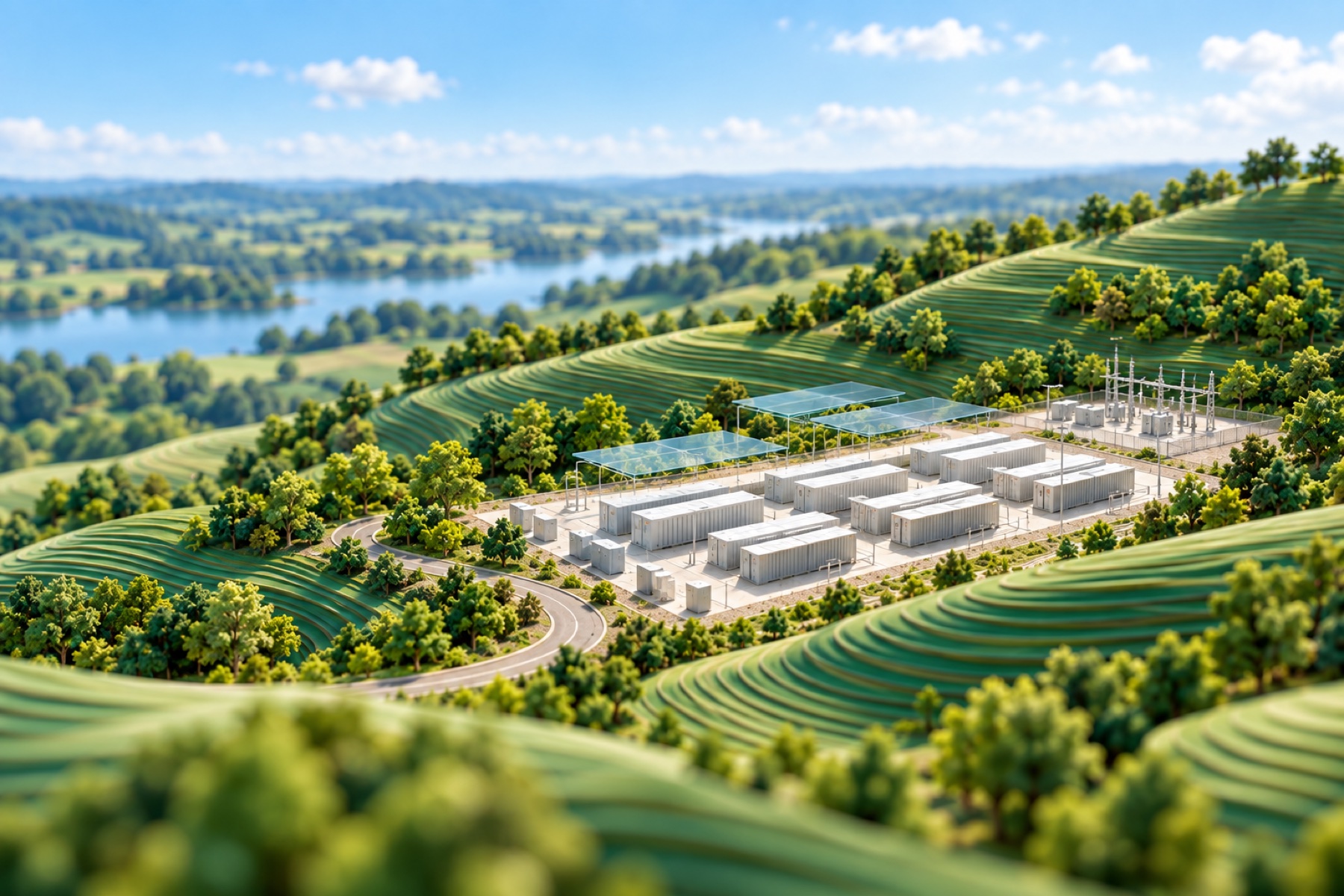
Draw the land that would remain available to you
Ask the project team to place the equipment and required separations on a scaled drawing. Include nearby occupied houses, existing buildings, entrances and any areas you need for farming, tenants or another future use.
Then ask where roads, cables, screening and drainage work would go. Show which areas are inside the proposed lease and which require separate rights. A drawing of battery containers alone does not show the full effect on the property.
If the layout leaves an unused corner or divides a field, discuss whether you can still reach and use it. Explain the vehicles and activities that need access. Ask who maintains any shared road and what happens if an entrance must be closed temporarily.
Keep each revised drawing with the proposal. Before signing, have your adviser compare the areas and rights shown with the legal description in the agreement. Ask how unused land would be released if the final design becomes smaller.
| Area to identify | Owner question |
|---|---|
| Entire lot | Is this the actual parcel being evaluated? |
| Equipment area | Where would the batteries and other equipment sit? |
| Additional rights | Where are access, cables and temporary work areas? |
| Retained land | Can I still reach and use the land outside the project? |
Plan for delivery traffic before agreeing to access
The battery provisions require a construction transportation plan, road repair arrangements and Township-road bonding. They also call for coordination with Deer Lakes School District to avoid construction traffic at school drop-off and pickup times.
Ask which entrance and roads would be used for large deliveries. Find out whether trucks need temporary widening, a turning area or space to wait. Mark those areas separately from the permanent equipment site.
Tell the team about school travel, business deliveries, tenants and other regular traffic you know about. Ask for the expected working hours, notice of disruptive work and the contact who can address a blocked entrance.
Public-road obligations do not explain every responsibility for your private driveway or field. Discuss who records existing conditions, repairs damage and restores temporary access. Keep photographs and agreed drawings with the contract records.
Reference: West Deer Township: published conditional-use battery storage provisions
Want to ask about your land?
Send the location and what you know. You don’t need a project plan.
Tell us about your landKeep emergency access and ordinary use workable
The published provisions require an emergency response plan, responder training and round-the-clock gate access for emergency personnel. Ask where the response routes and gates would be located on your property.
If the entrance is shared, discuss how people can reach your house, business or retained land without entering the equipment area. Ask who controls keys or codes and how an access problem is handled after hours.
Have the company explain the proposed maintenance routine and the person responsible for it. Request a contact for routine complaints as well as the project’s emergency contact. Changes of operator should not leave you without a responsible company to reach.
Discuss screening, vegetation and drainage alongside access. Ask who maintains them and whether maintenance requires entry onto retained land. Keep these continuing responsibilities clear in the land agreement.
Reference: West Deer Township: published conditional-use battery storage provisions
Decide what stays after the equipment is removed
West Deer’s battery provisions call for a removal plan and Township-beneficiary financial security. They also say paved access drives remain unless the landowner directs otherwise. Review those public requirements alongside your private restoration terms.
Consider whether you want a permanent road to remain for another use or want the area returned to its earlier condition. Ask the developer to show the proposed result for roads, pads, foundations, cables, fencing and planting.
Discuss drainage, compacted soil and the condition of the retained land. Ask who assesses the completed restoration and what records you receive. A general promise to remove batteries does not answer every question about the ground beneath them.
Have your adviser review who can use the removal security and what duties remain with the responsible company. Ask how the agreement handles a transfer, an early shutdown or a project that stops after preliminary work.
Reference: West Deer Township: published conditional-use battery storage provisions
Tell us about your land and what you want to keep
Start with your contact details and the property location. Tell us the present use and whether you would consider a lease, sale or only part of the land. Acreage and parcel numbers are useful when available, but optional for an initial inquiry.
Mention an existing agreement, battery proposal or public approval if there is one. Explain the entrance, buildings, field or future use you need to preserve. You do not need to prepare a site plan to start a discussion.
Further review must establish the actual rules, land rights, layout, connection and commercial fit. An inquiry does not authorize work or commit you to a project.
Questions landowners ask
Would batteries occupy the full 50-acre lot?
The published minimum lot size is separate from the proposed equipment footprint. Ask for a drawing distinguishing the whole lot, leased area, equipment and additional access rights.
Does a large lot qualify automatically?
No. Confirm the applicable rules and district, usable layout, connection and remaining approvals for the actual proposal.
Can I ask to keep or remove an access road?
Discuss your preferred end condition before signing. The published battery provisions address paved drives remaining unless the landowner directs otherwise; compare that with the actual restoration agreement.
Sources & further reading
Sources checked 2026-10-04. Local rules and program details can change. Check the requirements for the actual project.