
What the Morgantown plans actually describe
The county’s economic-development overview describes reuse of the 355-acre Morgantown property in phases, beginning with environmental remediation and energy-facility modernization. Battery storage and a data-center campus are described as future phases. Those are plans for that property, not a countywide offer to buy land.
TeraWulf’s August 5, 2026 update calls the proposal Chesapeake Data Campus. It describes an integrated generation, storage and data-center concept subject to remaining closing conditions and required approvals. The possible scale of the whole campus should not be presented as an approved standalone battery size.
The county summary says the property was purchased in early 2026. The company’s August 5 filing instead describes the acquisition as pending after July 29 FERC authorization, with closing expected later in 2026. These records do not establish a later closing or completed battery construction. Ask for the current transaction and permit records if those milestones matter to an offer you receive.
Reference: Charles County Economic Development: Morgantown redevelopment overview · TeraWulf: August 5, 2026 Chesapeake/Morgantown project update · TeraWulf August 5, 2026 Form 10-Q: Morgantown acquisition conditions
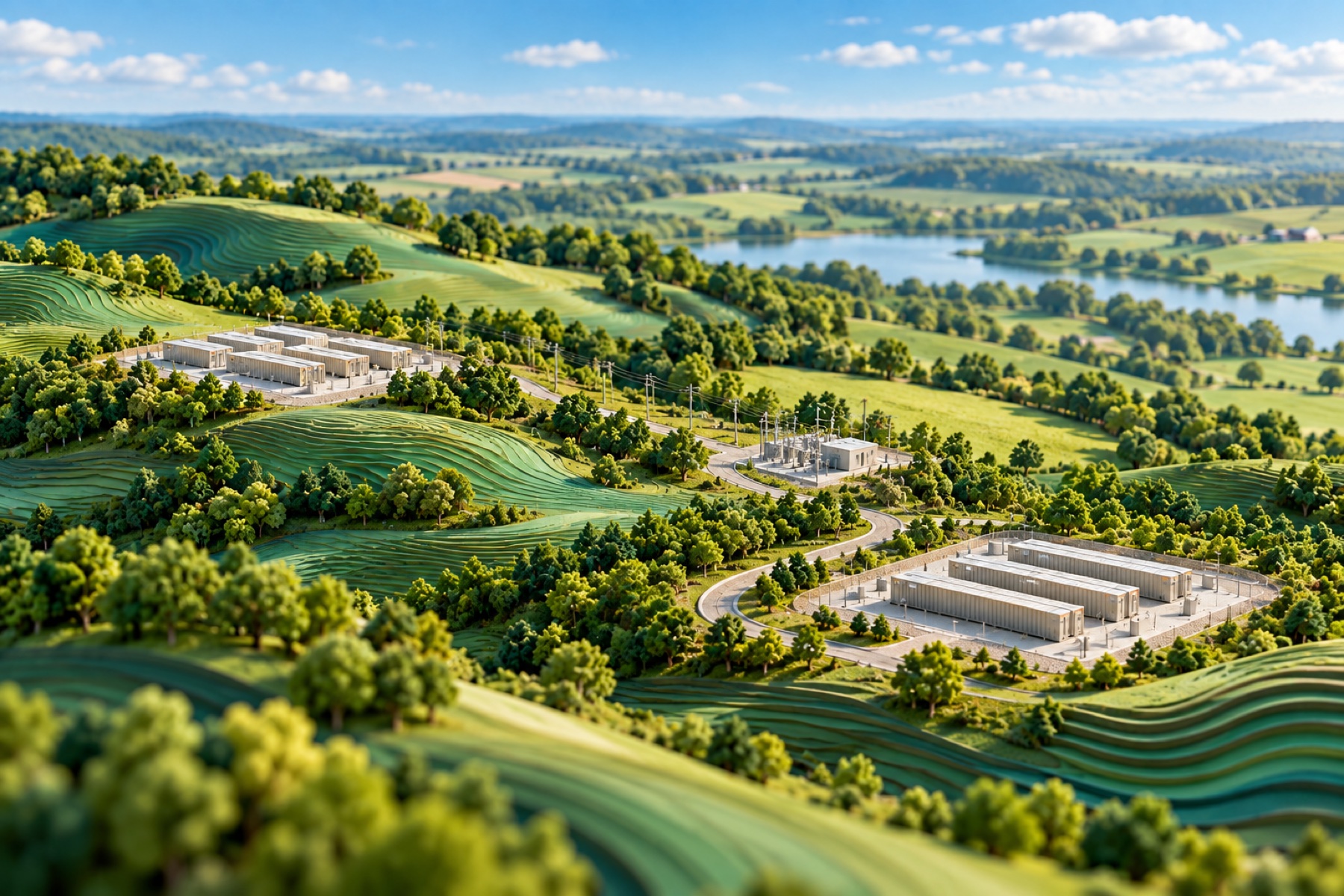
Find out whether an offer concerns equipment, access or a route
A company discussing a nearby energy site may want something quite different from a battery lease. It might need a road, a cable corridor, temporary construction space or an additional equipment area. Ask it to identify the actual use before comparing payments.
Have the proposed rights drawn over your property boundary. Mark the battery area, vehicle entrance, cable route and temporary work space separately. Include land you want to keep available for farming, a tenant, a business or a future sale.
For a corridor, ask where it begins and ends, whether it can move later and what you can do above or beside it. For temporary space, ask when occupation ends and what restoration is required. A small permanent footprint can still involve a much larger construction area.
If an offer refers to Morgantown, ask who the company represents and whether the request belongs to that project. A familiar project name does not explain the company’s authority or which rights it wants from you.
| Proposed use | Question to settle |
|---|---|
| Battery equipment | Which permanent area would be occupied? |
| Road or cable route | What rights restrict the rest of the parcel? |
| Construction space | When is the area returned and restored? |
| Future expansion | Is extra land reserved, and for how long? |
Use county maps to prepare a specific question
Charles County’s mapping directory offers zoning, development activity, Critical Area, protected-land and other maps. The county says its maps are illustrative and directs users to the appropriate regulating departments to verify suitability for their needs.
Use the property location to gather the relevant map information. Then describe the actual proposal to the reviewing office: storage alone, storage alongside generation, or equipment serving another operation. Ask which authority and application process apply to that design.
A zoning color does not explain every approval needed for batteries, roads, drainage or electrical work. Request the current requirements and identify who will prepare the application. If a developer asks for an owner signature, find out what that signature authorizes.
Keep the written answer with the offer and layout. If the team changes the use or expands the boundary, ask whether the earlier answer still applies. This guide does not assign a permitted-use category to an individual parcel.
Reference: Charles County: mapping services and parcel verification guidance
Want to ask about your land?
Send the location and what you know. You don’t need a project plan.
Tell us about your landExisting infrastructure needs existing-rights evidence
Ask how the proposed battery would charge and export power. Have the project team identify the connection point, responsible utility or grid operator, work completed and decisions still outstanding. Nearby lines or an existing generating facility do not establish available capacity for your land.
On industrial property, collect the documents you already hold for access, equipment, utility easements and former tenants. Ask who owns each facility and who can authorize its use. Physical infrastructure and transferable contractual rights are different things.
Have the developer explain whether its studies and agreements cover the proposed battery or another use. A data-center electricity supply arrangement should not simply be assumed to cover a separate storage project.
Ask what happens to the layout, reservation period and costs if the intended connection changes. You need a clear account of the next decision; you do not need to interpret technical studies yourself.
Separate earlier land conditions from new construction work
For property with an industrial history, tell the team what you know about previous operations, filled areas, drainage, buried structures and studies. Send records you have rather than trying to certify that the land is ready for construction.
Before allowing investigation, agree on entry notice, work locations, methods and responsibility for damage. A site visit, drilling program and excavation permission are different requests. Get a contact for the crew and a record of the findings you will receive.
Ask the agreement reviewer to distinguish responsibility for existing conditions from damage caused by the new project. Have the team explain who investigates, who pays for necessary work and what happens if the findings make the proposed layout impractical.
If the team changes the footprint after testing, compare the new drawing with the rights you agreed to provide. Do not let an early sketch become an unexplained right to use the entire parcel.
Make a phased reservation match your own timetable
A redevelopment project may move in stages. Ask which stage needs your land and whether the company would reserve it before that stage can proceed. Separate an initial investigation period from construction access and long-term occupation.
Write down the reservation end date, any extension rights and payments for each period. Ask what ends exclusivity if a transaction fails to close, an approval is delayed or a connection becomes too costly. A projected opening date is not the same as a private payment obligation.
For leased land, identify exactly what starts rent. Discuss whether road, cable and construction rights start before equipment rent and how those uses are compensated. Include continued tenant access and uses you want to retain.
Ask who remains responsible if the project or agreement is transferred. Review removal, restoration and financial protection for the actual use of your property. Public remediation or permitting duties do not explain every obligation owed to you under the private agreement.
Send Sunland the location and the question you have
Use the form to provide your name, email and phone number, then the property location. Mention Charles County, current use and whether an offer concerns equipment, a route or redevelopment. Acreage and parcel numbers are optional.
Explain any tenant, existing energy agreement, industrial history or deadline you already know about. Say whether you would consider a lease, sale or use of part of the property. You can inquire with incomplete records.
Further review needs to establish the property’s rights, conditions, layout, connection, approvals and commercial fit. Contacting Sunland does not reserve the land or give anyone permission to enter, test or file an application on your behalf.
Questions landowners ask
Does the Morgantown proposal show that nearby land is needed?
No. It concerns a specific redevelopment property. Ask a company making an offer to explain why it needs your parcel and the precise rights involved.
Is the proposed campus size an approved battery size?
No. The company describes an integrated generation, storage and data-center concept subject to conditions and approvals.
Can I rely on the county map as battery approval?
Use the map to prepare a parcel-specific question. The county directs users to the appropriate regulating departments for verification.
Can I ask about only part of my property?
Yes. Mention the area you would consider and the uses you want to preserve. Roads, cables and temporary work areas should also be shown.
Do I need an industrial site to contact Sunland?
No. Send the property location and current use. The Morgantown example does not set an eligibility rule for every inquiry.
Sources & further reading
Sources checked 2026-10-07. Local rules and program details can change. Check the requirements for the actual project.