
Describe the operation before choosing a permit guide
The published county ordinance includes Section 158.153.01 for front-of-meter energy storage devices. The county also provides a separate residential solar and battery permit guide. Neither resource should be used without identifying what is actually proposed.
Ask whether the battery would primarily serve an existing building or operate as a grid-facing project. If solar is included, explain that too. Have the planning office confirm the current classification and applicable approval route; the published 2025 text may need to be read alongside later changes.
Reference: Carroll County: published 2025 Chapter 158 ordinance · Carroll County: residential solar and battery permitting
A parcel’s outline is not the equipment footprint
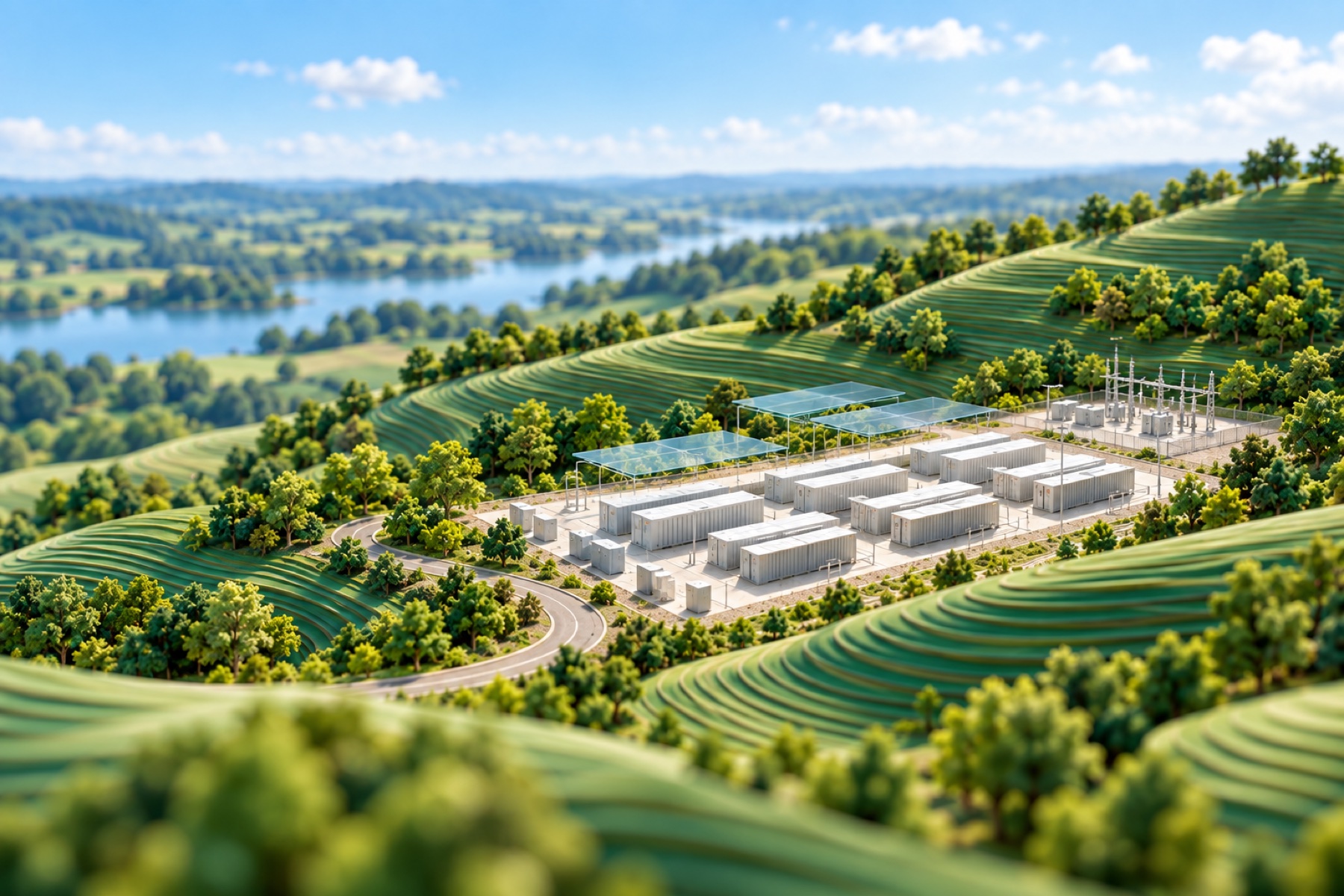
The published storage section addresses separation from property boundaries and emergency coordination. That makes a complete layout important. Ask for battery structures, entrances, nearby buildings and the electrical route to be drawn on the actual property.
A narrow parcel or an irregular boundary may leave less usable space than the total acreage suggests. Show which part is available and which uses must remain. Let the design review establish the workable area rather than relying on a universal minimum-acre figure.
Reference: Carroll County: published 2025 Chapter 158 ordinance
Identify restrictions you already know about
Tell the developer about recorded easements, agricultural preservation, mortgages, tenants and shared access if you know of them. You do not need to interpret the documents yourself. Having the records available allows the appropriate reviewer to check the proposed use against existing commitments.
Do not assume that permission for one type of energy equipment extends to every storage arrangement. Ask which land rights are needed and whether another party’s agreement is required before your land can be reserved or used.
Want to ask about your land?
Send the location and what you know. You don’t need a project plan.
Tell us about your landInclude emergency access in the owner discussion
Ask how responders would reach the equipment and who maintains that access. If the project uses a shared farm lane or business entrance, identify the activities that must continue there. A plan should address the actual route, not only an emergency phone number.
Ask the developer to explain any proposed changes to gates, fencing or roads. Find out who pays for site work and how disturbed areas are restored. Keep these responsibilities visible in the land agreement as the design develops.
The utility connection remains a separate question
Identify the delivery utility if known and whether there is existing service. Carroll County location alone does not establish which electrical facilities would be used. Ask for the proposed charging and export arrangement and any application or study reference.
If the connection is still preliminary, ask what happens if the point moves or upgrades are too expensive. Understand how those uncertainties affect the option term, payments and release of land. A zoning document does not resolve the project’s electrical costs.
What to send Sunland
Start with contact information and the property location. Add the current use, parcel number, utility and approximate available area if known. Explain whether solar, an occupied building or agricultural preservation is part of the situation.
You can inquire while those details are incomplete. Sunland can begin with the location and identify further research. An inquiry does not grant a permit, commit the property or guarantee that the proposed use is allowed.
Questions landowners ask
Is the residential battery permit guide enough for a land-leasing project?
Do not assume so. Describe the actual operation and ask the planning office which current classification and process apply.
Should I calculate the usable acreage myself?
Give an approximate area if known, but ask for a layout showing equipment, boundaries, access and existing uses.
Can preserved land be assumed eligible?
No. Share the relevant records and have the proposed use checked against the actual restrictions.
Sources & further reading
Sources checked 2026-10-04. Local rules and program details can change. Check the requirements for the actual project.