
Start with a plan you can use to walk the property
Ask the developer to put the proposed work on a drawing of your land. Locate the battery equipment, supporting electrical equipment, entrance, service road and any cable route. Add the land needed during construction, even if the company expects to return it to you later.
Mark the places you already use. Include buildings, gates, drives, fields, parking and other areas that matter to the current operation. Tell the team about occasional uses too: a route for large deliveries, seasonal work or space needed to reach another part of the property.
Check which parts of the plan are confirmed and which remain under study. A preliminary equipment boundary may change when access, drainage or the electrical connection is designed. Ask how changes would affect the land reserved and your ability to keep using it.
Request a dated version and a plain explanation of what each line means. A lease boundary, utility easement, planting area and temporary work area can carry different rights. You should be able to identify them without guessing from the color of a line.
| Area to show | Question for the owner |
|---|---|
| Equipment and supporting facilities | What permanent land would be occupied? |
| Entrance and service route | What existing uses need to remain accessible? |
| Drainage and planting areas | Who maintains them and how are they reached? |
| Cable and utility routes | What rights extend beyond the equipment area? |
| Temporary work and soil storage | When and how would these areas be returned? |
Check the work area against the floodplain information
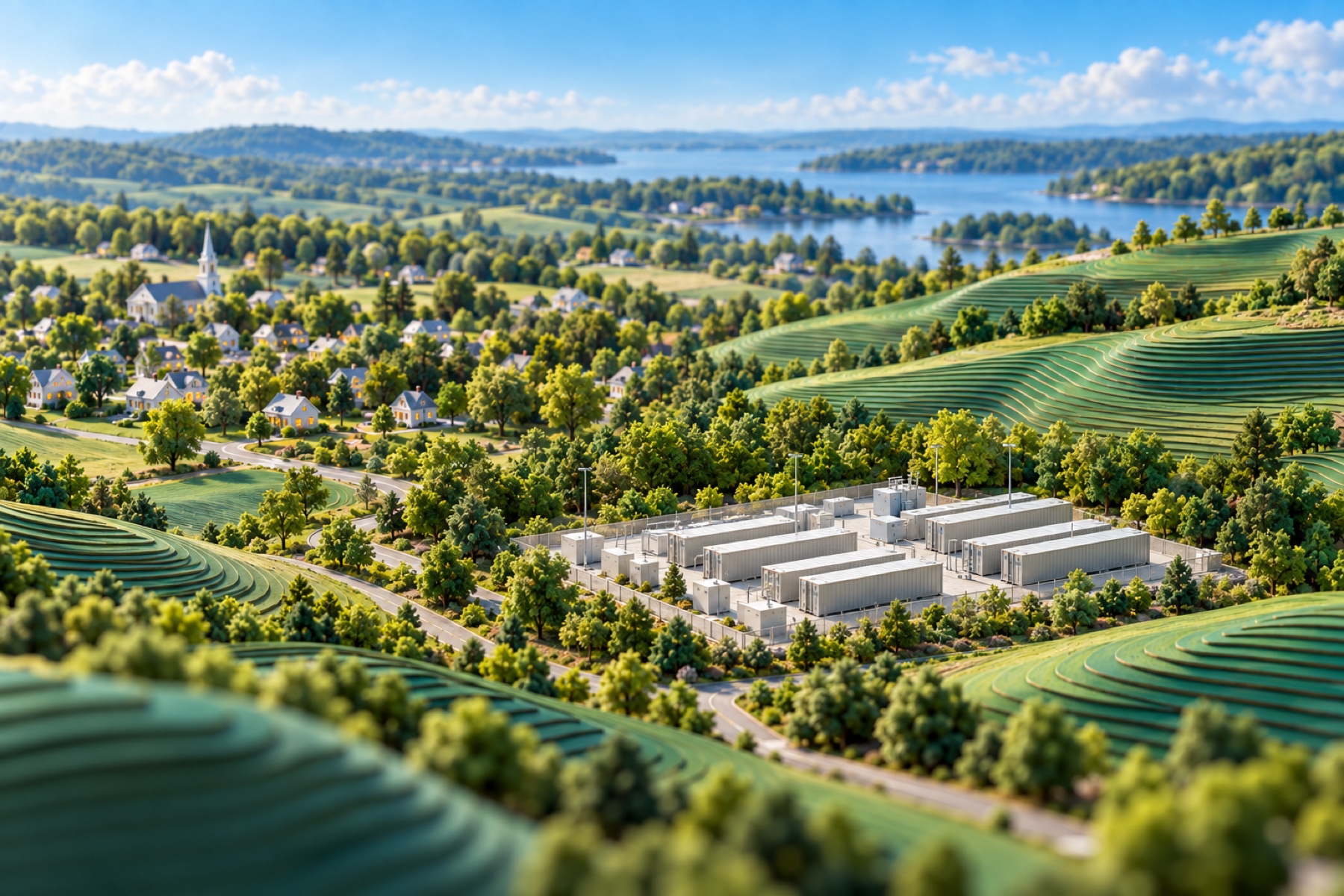
Ask the project team to show the flood hazard information it used for the whole proposed work area. Include the entrance, road, material storage and drainage work, not just the battery pad. Request the map date and an explanation of any field survey or other information used to interpret it.
The county’s floodplain code gives the Floodplain Administrator responsibility for interpreting boundaries and using available flood data. Its permit provisions cover development wholly or partly within, or in contact with, a flood hazard area. Do not make a parcel decision from the appearance of a map alone.
The application provisions call for a scaled plan covering topography, structures, excavation, filling, stored materials, drainage and other activities. Ask the team to explain which activities trigger review at your location and what it needs to resolve before work begins.
Describe what you have seen on the ground: areas that hold water, a ditch that fills after rain or a drive that becomes difficult to use. Those observations do not replace the technical review, but they can help the team understand the property and investigate the right places.
If the company proposes fill or a different road location, request an updated explanation before accepting it. Ask whether the change affects water movement, adjoining land or the route you retain. Keep the revised drawing with the agreement reviewer’s notes.
Reference: Wicomico County code: floodplain administration, applications and inspections
Read the county process alongside Maryland’s storage law
Ask what the battery would serve and which authority reviews the proposed operation. A battery serving an existing building and a front-of-the-meter grid project need their own explanations. Confirm the jurisdiction for the parcel instead of assuming a mailing address identifies the review office.
Maryland Public Utilities section 7-219 requires Commission approval before construction of front-of-the-meter storage. It limits local prohibitions and denials for qualifying site development plans and addresses grading, soil and screening. Ask how the team will meet the state process and the applicable local review requirements together.
The county’s permitting page provides separate building, electrical, floodplain and fire-review resources. The floodplain code also addresses necessary approvals from other agencies. Ask the applicant to identify the actual reviews for its design; a list of general forms does not establish a battery project’s permission.
Request a status list showing what is submitted, approved or still unresolved. Include conditions that affect the drawing or work on your land. If a document authorizes only part of the work, ask which parts must wait.
The county zoning gateway links its code and map resources. Have the team explain the current provisions and state-law interaction it relies on. Our related Maryland site-plan guide provides further questions about that process; this page does not decide permission for a particular parcel.
Reference: Maryland General Assembly: Public Utilities section 7-219, storage review and site requirements · Wicomico County: building, electrical, floodplain and fire-review resources · Wicomico County: zoning code and map resources · Wicomico County code: floodplain administration, applications and inspections
Want to ask about your land?
Send the location and what you know. You don’t need a project plan.
Tell us about your landFind out what would happen to soil, trees and drainage
Ask what would be cleared or disturbed and what would remain. Where would soil be stored during construction? Would a contractor widen a drive or cross a ditch? Request a description tied to the drawing, including how the team would protect the areas you keep using.
The county’s landscaping and sensitive-area provisions address planting plans, utilities, retained vegetation and features such as streams, wetlands and slopes. The wording includes both requirements and recommendations. Ask the preparer which provisions apply and how the design meets them.
For front-of-the-meter storage, section 7-219 also addresses minimizing grading and retaining topsoil on the parcel. It limits certain local screening demands. Have the team explain the current requirements rather than assuming a general landscaping detail applies unchanged to the battery project.
Ask who would inspect drainage work during construction and after it is completed. Who handles a blocked inlet, erosion or damage to an existing ditch? Agree on reporting, response and repair responsibilities in the land documents.
Discuss the condition you expect when temporary areas are returned. Specify surfaces, soil, grading, vegetation and access where relevant. Returning an area should mean more than moving the contractor’s equipment away.
Reference: Wicomico County code: landscaping and sensitive-area standards · Maryland General Assembly: Public Utilities section 7-219, storage review and site requirements
Keep access workable for both the project and retained land
Walk the proposed service route with the current use in mind. Can your vehicles pass when a maintenance truck is present? Does the route cross a gate used by another occupant? Ask the team to show how deliveries and service visits would work.
Clarify who can enter and when. Discuss notice for routine work, urgent access, keys and gate arrangements. Identify the contact responsible for coordinating visits so you are not left managing several contractors without a clear operator contact.
Check road and crossing responsibilities. Who repairs damage, clears vegetation, maintains culverts or pays for improvements? If the company and owner share a route, ask the agreement reviewer to describe how upkeep and costs are divided.
Keep construction access separate from routine operating access. A route used temporarily by heavy equipment may need different space and repair commitments. Identify when temporary rights end and what evidence confirms that the work area has been restored.
Make study and application permissions specific
Before giving the company access to investigate the property, ask what it intends to do. Surveys, soil tests and other studies can involve different levels of disturbance. Identify the location, notice, scope of work and responsibility for repairing damage.
The floodplain application provisions allow the property owner or an authorized agent to apply. If the team asks you to authorize it, read the actual authorization and the plan it covers. Ask whether later changes or additional work need another owner decision.
Discuss any other interests in the land with your advisers. A tenant, lender, co-owner or existing recorded right may affect the permission needed. Resolve those questions against the proposed work rather than assuming one signature covers everything.
Ask which study results and agency comments you will receive. If the company learns that a proposed route or work area needs to change, how will it tell you? Keep access permissions and application documents with the current drawings.
Reference: Wicomico County code: floodplain administration, applications and inspections
Agree on costs and restoration before tying up the property
Ask who pays for surveys, design changes, applications, connection studies and proposed improvements. Compare those costs with the payments owed to you. Money spent on engineering does not explain when an option payment or operating rent becomes due.
Set out the period during which the company can investigate and reserve the property. Check extension rights, additional payments and the point when restrictions begin. Ask what you can continue doing while the company works through approvals.
If review results require more land, a new access route or a changed design, ask how the agreement handles it. Does the company need your consent? Would rent or restoration duties change? Those questions should be resolved before treating a larger footprint as agreed.
Plan for work stopping after disturbance. Who maintains a safe entrance, repairs drainage and restores temporary areas if construction does not continue? Ask for deadlines and responsible parties, including any payment duties during the delay.
At the end of operations, identify which equipment, foundations, roads and cables would be removed and what condition would remain. Discuss drainage and planting obligations too. Have your advisers compare any removal funding with the actual restoration duties and release of land rights.
Include a project transfer. Ask how the next company assumes payments, maintenance and restoration obligations and how you receive notice. Keep the operator’s current contact details with the agreement so repair or removal questions have somewhere to go.
Send the location and what you know about the land
Start with the form’s contact details, then describe the property. Wicomico County and Maryland are starting entries you can correct. Exact acreage and a parcel number are optional for an initial inquiry.
Mention the current use, access route and anything you know about drainage or areas that hold water. If you have received a proposal, describe what the company is asking for. You can begin without a completed survey or engineering plan.
Sending an inquiry does not authorize studies, entry, construction or an application. We may follow up about the property and opportunity. Any arrangement needs its own review of the connection, site, approvals and terms.
Questions landowners ask
Should I check only the battery equipment area for flooding?
Ask the team to review the complete proposed work area, including access, drainage, storage and temporary construction space. Get an explanation of the map and site information used.
Does an authorization to apply also give construction access?
Read the actual document and its attachments. Ask the reviewer to identify which filing or entry rights it grants and which activities require separate permission.
Who maintains drainage after the project is built?
Agree on the responsible party, access for maintenance, reporting and repair duties before signing. Compare the land agreement with the planned drainage work and any approval conditions.
Can I inquire before getting a survey or parcel number?
Yes. Send your contact details, location and what you know about the land or proposal. Exact acreage and a parcel number are optional at the initial inquiry.
Sources & further reading
Sources checked 2026-10-07. Local rules and program details can change. Check the requirements for the actual project.
- Maryland General Assembly: Public Utilities section 7-219, storage review and site requirements
- Wicomico County code: floodplain administration, applications and inspections
- Wicomico County code: landscaping and sensitive-area standards
- Wicomico County: building, electrical, floodplain and fire-review resources
- Wicomico County: zoning code and map resources