
Use the current rules for the actual proposal
The county’s ordinance gateway reports adoption on July 15, 2025, with effect from July 25. Its linked Article V places the power-storage provision within utility-scale solar standards. Ask the team to show which provisions apply to its proposed arrangement.
An older document found through a search may describe a different rule. Keep the date and section with any explanation you receive. If the company relies on an earlier approval for solar, ask for that decision and an explanation of what would need to change to add batteries.
For a separate battery proposal, ask for a separate explanation of the use and review route. Article III directs readers to district use tables and generally prohibits unlisted uses unless the context indicates otherwise. Do not try to settle the classification from a drawing or a familiar project nearby.
Give the project team the property location and ask it to confirm the responsible local office. A postal address is useful for finding land, but it does not settle every jurisdiction or approval question. Request a written account of the proposed process that you can discuss with your advisers.
Reference: Kent County, Maryland: current Unified Development Ordinance gateway · Kent County: posted Article V, utility-scale solar standards, pages 251–255 · Kent County: posted Article III, general use provisions
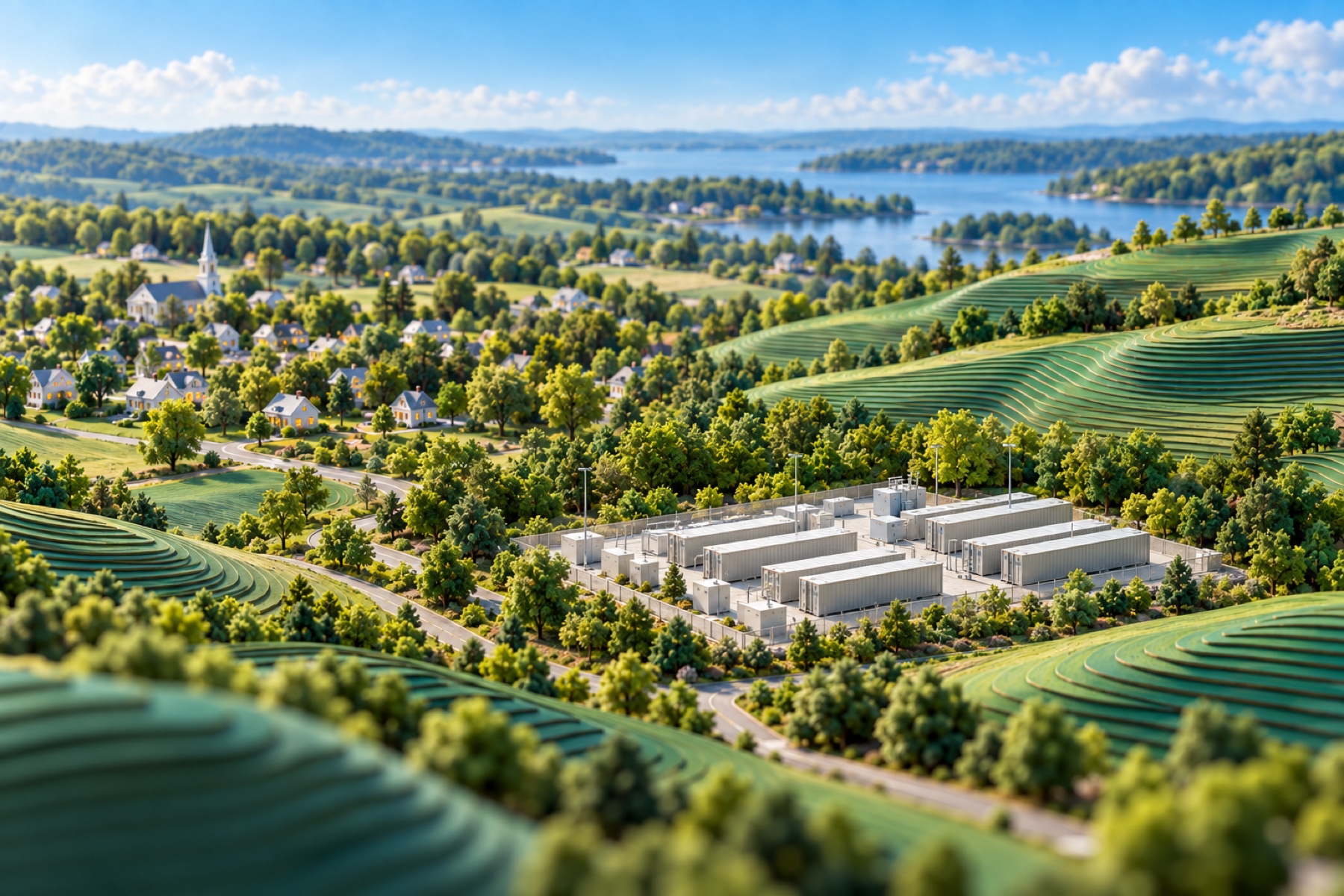
Find what the battery adds to the land arrangement
Have the company mark the battery containers, supporting equipment and service area on a plan showing any existing or proposed solar. Ask which equipment belongs to which project and whether the same company would operate both.
Compare that drawing with your existing agreement if you already have solar on the property. Does the company believe the current rights cover a battery, or is it asking for new rights? Have your agreement reviewer check the actual wording before you accept that explanation.
An addition can involve more than the space under the containers. Show the entrance, cables, temporary storage, drainage work and areas kept clear for service. Identify which areas would be occupied throughout operation and which would be returned after construction.
Keep a copy of the proposed drawing with the payment offer. If the plan changes, ask the company to identify the differences and explain whether it wants more land, longer access or another restriction. A revised drawing should lead to a clear discussion of the agreement.
| Part of the proposal | Question to resolve |
|---|---|
| Battery and supporting equipment | What additional land and rights are requested? |
| Shared entrance or cable route | Who uses it, maintains it and pays for changes? |
| Existing solar agreement | Does it cover this equipment, or is consent requested? |
| Construction-only space | When does use end and restoration occur? |
| Land retained by the owner | Which ordinary uses can continue? |
Keep your remaining property usable
List the uses you need to retain before deciding which land to offer. Include fields, farm lanes, tenant entrances, woodland, parking and room for future work. Point out places that are quiet now but serve an important seasonal purpose.
Ask the team to walk through deliveries and routine maintenance with you. Would a truck wait on a lane used by tenants? Could new fencing cut off a turn into a field? A short walk often makes those questions clearer than a conversation about acreage.
The posted solar standards address buffers, planting upkeep, access and removal. If those standards are part of the proposal’s review, ask who would do the work and how the relevant areas appear in the land agreement. Do not automatically apply solar requirements to a separate battery project.
Discuss how you would report a problem after construction. Ask who handles blocked access, damaged surfaces or neglected screening, and how quickly the company must respond. Keep practical responsibilities with the contact and notice provisions in your agreement.
Reference: Kent County: posted Article V, utility-scale solar standards, pages 251–255
Want to ask about your land?
Send the location and what you know. You don’t need a project plan.
Tell us about your landAsk for the review record, not just a reported milestone
The county’s project-review page describes local permit and site-plan work. The Maryland PSC separately publishes front-of-the-meter storage approval routes and notes that some solar-plus-storage projects need a CPCN. Request the route and decisions for this project rather than assuming a local filing is the whole process.
Ask for the applicant’s legal name, project name and public filing references. Keep the submitted plan and decision together. A filing receipt helps you locate the record; it does not tell you whether the proposal is approved or what conditions remain.
Have the team list the unanswered questions that could change the layout or schedule. Ask who will investigate them, whether site visits are needed and when you should expect an update. If entry is requested, review the entry rights, notice and repair obligations separately.
Use the actual agreement to understand what a milestone does to your payments and deadlines. Does a particular decision start construction rights, extend an option or start rent? Those effects need to be clear in the document you are considering.
Reference: Kent County: current project-review information · Maryland PSC: current energy storage construction approval resources
Separate land payments from project revenue
Request a payment schedule you can follow without an electricity model. It should identify what you receive for a reservation, any extension, construction use and operation, along with the conditions and dates for each stage.
If batteries would be added later, ask what happens during the waiting period. Would the company reserve land before it decides to build? Could it keep that reservation while the solar project continues? Discuss a paid deadline and how unused rights end.
For a proposal involving a share of project revenue, ask what revenue counts, what costs are deducted, what reports you receive and who checks the calculation. Have your financial and agreement advisers compare that offer with its guaranteed payment provisions.
An expected electricity payment to the project company does not establish the payment owed to you. Your land terms should identify the responsible party and the circumstances in which payments change or stop. Keep those terms with the proposed property description.
Plan for shared equipment and different ending dates
A solar installation and a battery may share a road, electrical equipment or service space. Ask the team to identify those shared facilities and explain what happens if one part closes while the other continues.
Make the removal plan specific enough to discuss. Which foundations, cables, fences and surfaces would be removed? What equipment needs to remain for the continuing use? Ask who makes that determination and how you receive a revised restoration plan.
Have your advisers compare any public removal security with the duties in your agreement. Ask who can use the security, what work it covers and whether you have a separate remedy for unpaid rent or damage. A statement that the project is bonded leaves those questions unanswered.
Include a project that stops during construction in the discussion. Who makes the disturbed land safe, repairs drainage and clears temporary work areas? Agree on notice, deadlines and access for the repair work before the company has occupied the site.
Keep responsibilities clear when the project changes hands
Ask whether the solar and battery equipment can be sold to different operators. If that is possible, discuss how their shared duties continue and whom you would contact about the road, gate or electrical route.
Review the proposed transfer provisions with the payment and removal obligations. Ask what notices you receive, whether a new party takes on the duties owed to you and what happens to any guarantee. A new company name should come with an understandable account of who is responsible.
Keep plans, approvals, signed agreements and updated contact information together. If the equipment changes at the same time as a transfer, request an explanation of both changes. Treat a request for more land or a new route as a distinct matter to review.
Explain any commitments you already have to tenants or other users. The company should understand which access and notice arrangements must continue. Ask how the proposal would work in practice if different contractors service the two parts of the site.
Tell us where the land is and what you are considering
Use the form on this page to send your contact details and the property location. Kent County and Maryland are starting entries you can correct. Exact acreage and a parcel number are optional for the first inquiry.
Tell us whether there is already solar, an existing lease or a proposal from another company. Describe the land you might consider and the uses you need to retain. If you have a drawing, mention it; you do not need to create an engineering plan to ask about the property.
We can start with the information you know and may follow up with questions. An inquiry does not reserve your land, authorize entry or grant permission for a public filing. Any proposed arrangement needs its own site, connection, approval and agreement review.
Questions landowners ask
Does the county’s solar provision approve a separate battery project?
No. Have the team identify the use and review process for the actual proposal. A provision within solar standards does not establish approval for every standalone battery arrangement.
What if I already signed a solar lease?
Review the existing lease and drawing before agreeing to an addition. Ask whether new land, access, equipment or operating rights are requested and how payments and removal duties would change.
Could the battery be removed while solar stays?
Ask for a plan covering that situation. Identify shared facilities, work that can be removed and the party responsible for protecting the continuing use and restoring your land.
Do I need exact acreage to send an inquiry?
No. Send your contact details and a location we can identify. Exact acreage and a parcel number are optional at this stage.
Sources & further reading
Sources checked 2026-10-07. Local rules and program details can change. Check the requirements for the actual project.
- Kent County, Maryland: current Unified Development Ordinance gateway
- Kent County: posted Article V, utility-scale solar standards, pages 251–255
- Kent County: posted Article III, general use provisions
- Kent County: current project-review information
- Maryland PSC: current energy storage construction approval resources