
Get a current answer for the actual proposal
The recorded moratorium vote is a reason to check the present review status before committing land. Request the final adopted text and a written explanation of how it applies to the proposed equipment and use. Have the project team identify any later amendment, extension or decision on which it relies.
Describe the property by its location and parcel reference, if available. Explain whether the company proposes a separate grid project, equipment serving an existing building or batteries alongside solar. A reference to battery recycling is a different proposed activity and needs its own explanation.
Keep the Town’s response with the dated drawing it describes. If the design changes, ask whether the response still applies. An informal conversation about a concept is different from permission for the complete installation.
You can start a property inquiry without solving those questions yourself. Tell the team what you know, including any offer or earlier application. A responsible discussion should identify the unresolved matters rather than promise a construction date before review.
Reference: Town of Vestal: December 3, 2025 adopted moratorium resolution, page 2 · Town of Vestal: Code Department · Town of Vestal: Town Board agendas and minutes
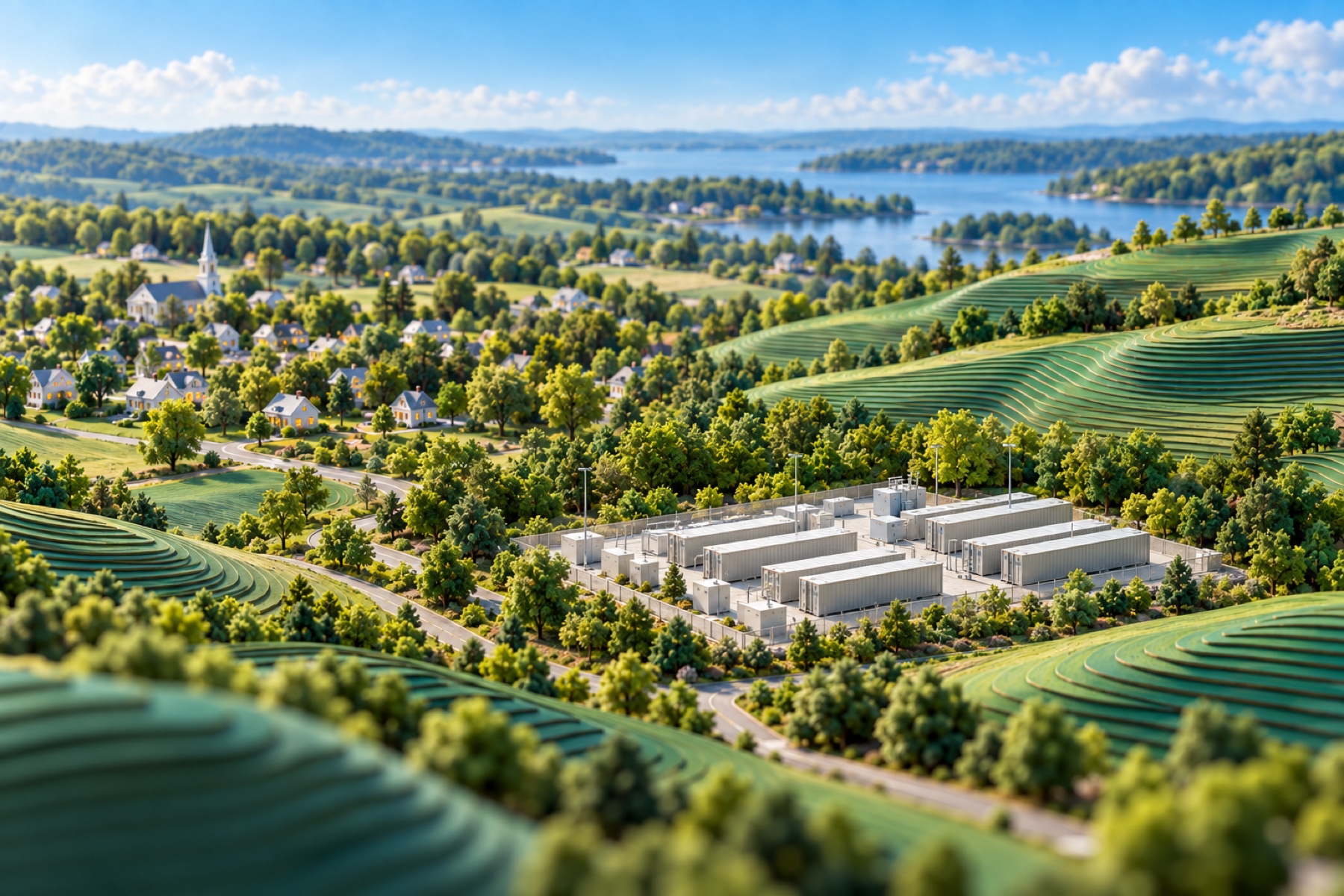
Do not assume a solar permit includes storage
Vestal’s posted solar article excludes battery storage from its solar-system and solar-accessory definitions. It also says commercial solar systems shall not include battery storage. Have the Town explain the actual battery proposal separately; a solar district or permit is not the answer by itself.
If a developer wants to add batteries to land already committed to solar, request the existing agreement, approved plan and proposed changes. Mark new equipment, access, cable routes and work areas. Which additional rights would be requested, and which existing rights would be used?
Review the private documents as well as the public permissions. A lease may describe the permitted use narrowly or give the company broader rights. Ask your adviser to explain whether the proposed change needs your agreement and how it affects compensation, insurance and restoration.
For a combined proposal, have the team explain what happens if one part can proceed and the other cannot. Would it still reserve the same area? Could it abandon the battery portion while retaining other rights? Compare those scenarios with the payment and termination wording.
Reference: Town of Vestal: posted solar Article IX, battery exclusions
Compare the land hold with the review uncertainty
Before accepting an option or exclusivity request, write down the start date, end date, payment due and available extensions. Ask what happens if public review takes longer than the company expects. Waiting for a rule change should not leave you unclear about your own deadlines.
Discuss whether extensions are automatic, require another payment or need your written agreement. Ask who gives notice and when. Compare the total possible hold period with plans to sell, refinance, farm, rent or improve the property.
Separate money owed during investigation from payments that begin only after a later event. A projected operating payment may never become due if the project stops. Have your reviewer identify what you actually receive while the property is reserved.
For example, a company might offer a short initial hold while requesting several extensions. Add those periods together before deciding whether the arrangement fits your plans. Ask what releases the property if the company concludes that approval or connection costs will not work.
| Term to find | Question to settle |
|---|---|
| Initial hold period | When does it start and end? |
| Extension rights | Who decides, and what is paid? |
| Operating payment trigger | Which actual event starts payment? |
| End of reserved rights | Who clears recorded documents? |
Want to ask about your land?
Send the location and what you know. You don’t need a project plan.
Tell us about your landKeep application consent and entry permission clear
Ask what each signature authorizes. A consent to submit an application, permission to conduct a survey and a long-term right to occupy land can appear in different documents or be combined. Read the actual scope before signing.
Request the applicant’s legal name, parcels included and current drawing. If the team wants permission to change the application later, discuss which changes require another conversation or your consent. Keep copies of signed documents and attached plans.
For proposed fieldwork, agree on notice, the people entering, the work allowed and the areas they may use. Identify tenants, livestock, locked gates, wet ground and activities that must continue. Ask how disturbed surfaces or damaged improvements would be repaired.
Do not infer entry rights from a company’s application status. Have your adviser compare the proposed access terms with the rights you intend to grant. Keep technical investigations and operating responsibilities with the qualified project team.
Ask what happens if the proposal stops
An unsuccessful proposal can still leave paperwork or disturbed ground behind. Discuss who withdraws applications, releases recorded rights, removes testing materials and repairs damage. Ask for a clear timetable and a contact who remains responsible after the project team moves on.
If early work is proposed before the main agreement begins, identify its separate restoration obligations. A promise to restore the site at the end of an operating project may not explain what happens after preliminary work on a project that never gets built.
Consider a sale of the project company or your property while the option remains in place. Who owes payments and restoration, who receives notices, and what records would a new owner need? Keep those answers with the land description and agreement.
Before granting long-term occupation, request the project-specific removal and funding proposal. Discuss the intended future use of the ground, drainage, roads and buried equipment. Have the private agreement and applicable public requirements reviewed together.
Tell us about the property and your timetable
Start with your name, email and phone, followed by the property location. Broome County and New York are selected here and can be corrected. Approximate acreage and a parcel number are optional.
Mention existing solar rights, an offer already received and the uses you want to retain. If a sale, tenancy or other deadline matters to you, include it. You can say the project category or review status is uncertain.
Sending an inquiry starts a discussion. It does not reserve your land, allow entry or authorize a public filing. Further review needs to establish the current rules, design, land rights, electrical connection and commercial fit.
Questions landowners ask
Does the December 2025 vote prove a reopening date?
No. Obtain the final law, filing record and later applicable action. Do not calculate a dependable reopening date from the meeting date alone.
Does an existing solar permission cover batteries?
Do not assume so. The posted solar article expressly excludes batteries; ask for the actual storage classification and permission.
Should I agree to hold land while the review status is uncertain?
Compare the payment, total hold period, extensions and termination terms with your plans before deciding.
Can I inquire without an application or parcel number?
Yes. Send your contact details and location, plus what you know about existing rights or offers. The parcel number and acreage are optional.
Sources & further reading
Sources checked 2026-10-05. Local rules and program details can change. Check the requirements for the actual project.