
Start with what the property already needs
A battery proposal can look small on a sketch while changing how the rest of a property works. Before discussing a lease area, mark the entrances, parking, loading space, outdoor storage and access to building equipment that your business or tenants use.
Walk through a normal working day. Where do trucks turn? Where do deliveries wait? Which doors must remain accessible? If the suggested battery area is used occasionally rather than every day, explain when that use matters. Seasonal storage or a busy delivery day can still be essential.
Ask for two drawings: one for the finished project and one for construction. Equipment delivery, a crane, cable work and temporary storage may need space outside the final fence. Discuss the length of each restriction and how that space would be returned to use.
Do not promise a shared driveway or a tenant’s parking area before checking the existing agreements. Give the project team the relevant documents and ask it to identify any additional consents it needs. Include your plans for the property, such as a building addition or a tenant renewal.
| Part of the site | Question to resolve |
|---|---|
| Loading and turning space | Can existing deliveries continue during construction and operation? |
| Tenant parking and entrances | Which rights are already promised, and whose consent is needed? |
| Temporary work areas | How long are they occupied, and who restores them? |
| Remaining property | Can you still maintain, lease or expand the parts you retain? |
Compare the battery drawing with the approved site plan
Lawrence’s Planning Board page links a form for modifications to a previously approved site plan. That is a useful reason to retrieve the existing plan; it does not establish that this is the correct or only route for a battery proposal.
The linked packet asks applicants to describe changes to the original plan and identify existing and proposed uses. It also includes an owner-of-record authorization for representation before the Planning Board. The download contains older ordinance material and a dated fee schedule, so confirm current requirements rather than copying those details into your project budget.
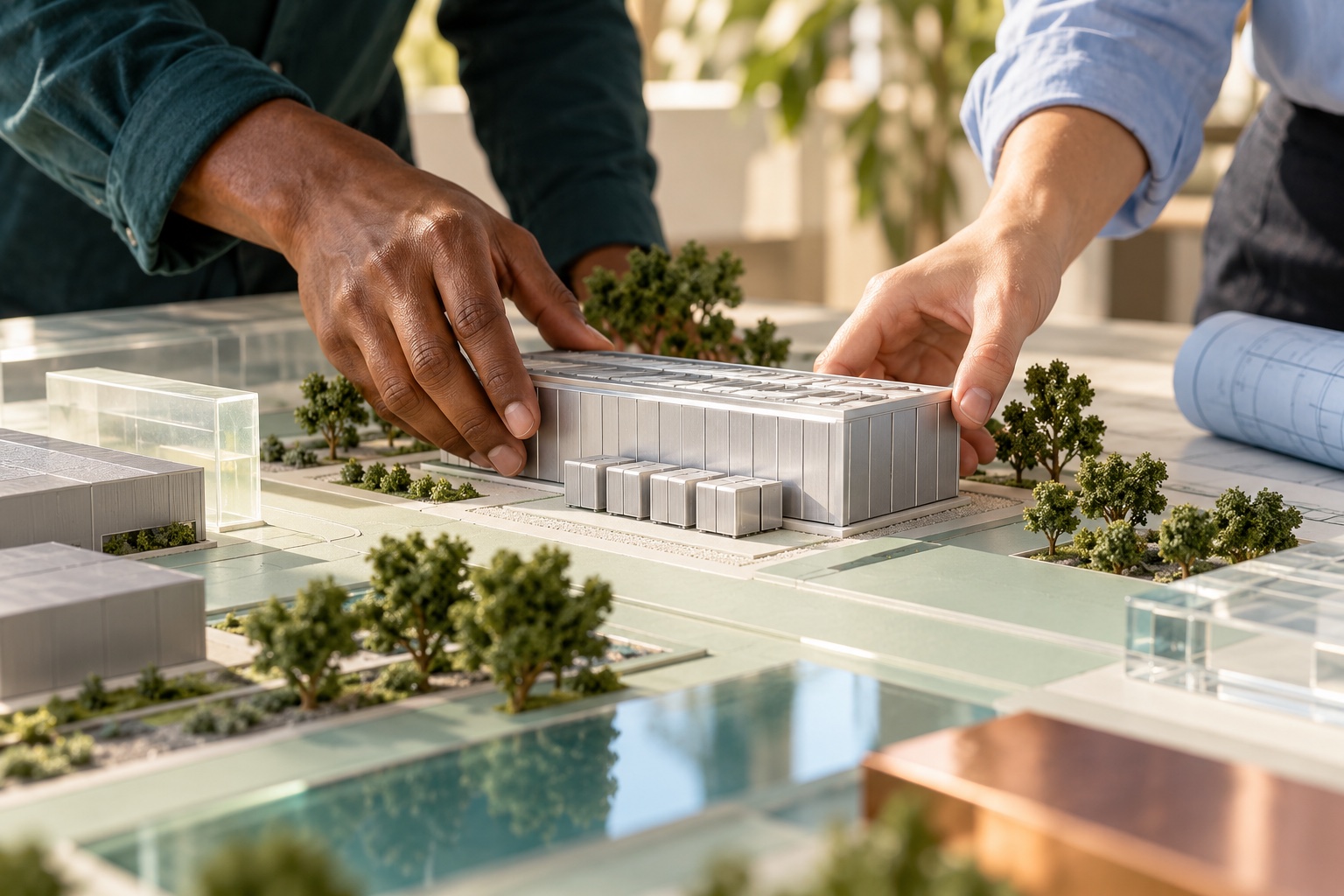
Ask the company to place the proposed equipment, access and cable route on the existing layout. Look for changes beyond the equipment footprint: a moved entrance, lost parking, a new fence or a drainage change can affect your retained property.
Have the team explain which earlier approvals or conditions it has reviewed. If it says an existing approval covers the new equipment, ask for the actual decision and the city’s current response to that interpretation. A previously approved building is not proof that a separate battery use is approved.
Reference: Lawrence, Massachusetts: Planning Board forms · Lawrence: modifications to a previously approved site plan application
Confirm the process for the actual proposal
Lawrence’s Planning office supports the city’s land-use boards and helps people understand land-use regulations. It is a starting point for asking which reviews apply to a proposed use.
The project description should explain whether the battery would serve a building, operate with solar or supply power to the grid as a separate facility. Include its proposed location and scale. Ask the team to obtain a written explanation of the current classification and review route for that description.
This guide does not establish a Lawrence battery zoning category or permission for a parcel. Ask which city and Massachusetts procedures apply on the intended filing date, which office makes each decision and what remains unresolved. Keep those answers with the drawing they describe.
Confirm the electrical arrangement separately. Who would own the battery, which meter or connection would it use and who pays for required electrical work? If a proposal includes savings or backup power for your building, ask for the equipment design and contract terms that deliver that benefit. A battery located on your land does not by itself promise either one.
Reference: Lawrence, Massachusetts: Planning
Want to ask about your land?
Send the location and what you know. You don’t need a project plan.
Tell us about your landKnow what your signature authorizes
Before signing a filing authorization, ask for the complete application, drawing and the exact company name. Find out who will represent you, what they may submit and how you receive copies of later revisions.
Keep the filing permission and the private property agreement clear. Ask your adviser to explain whether a requested document authorizes representation, reserves land, allows entry or commits you to other terms. Discuss those purposes separately so neither side has to infer the extent of your permission.
If you own the property through a company or with other owners, establish who can sign and which approvals are needed. The person discussing the site, the landowner, the applicant and the eventual operator may be different people or companies.
Discuss proposed changes before filing. Will you be able to review a larger reserved area, a different entrance or additional equipment before it is submitted? Save the version you approved and arrange to receive any revised drawings.
Protect fire access and settle review costs
Lawrence’s general Fire Department plan-review page lists building access, exits and fire lanes among its commercial review topics. It also says third-party review may be requested at the submitter’s expense. This is a general page, not a complete battery design checklist or approval.
Ask the project team to confirm the current battery-specific review and design requirements with the responsible officials. Put emergency access on the drawing alongside the routes your occupants need. Discuss how gates, delivery vehicles and temporary work would affect those routes.
Identify who prepares each submission and pays for engineering, revisions and any outside review. If the landowner must appear as a signer or submitter, ask how the agreement assigns those costs and who handles questions from reviewers.
Ask who takes responsibility during operation, including monitoring, maintenance and responding to an incident. Get a usable contact process for you and your tenants. Settle these duties before relying on an assurance that the equipment will simply sit unused beside the building.
Reference: Lawrence Fire Department: plan reviews
Tie the land reservation to clear progress
A company may need time to investigate approvals and a connection before it can commit to construction. Ask how long it wants the space reserved, what it pays during that period and what evidence of progress you will receive.
Write down the events that start payments or permit extensions. A submitted application, a review decision, a connection study and an operating facility are different milestones. Ask how you will know when the event in your agreement has occurred.
Discuss what happens if the project shrinks, moves or is transferred to another operator. When would unused land be released? Who remains responsible for promises made to you? Ask how removal, restoration and the money available for that work would be handled.
If the requested reservation blocks a tenant arrangement or expansion, include that in the discussion now. Compare the proposed income with the space and flexibility you would give up, including the investigation and construction periods.
Ask Sunland about your Lawrence property
Start with your name, email and phone, then the property location. Acreage and a parcel number are optional. You can begin without a survey or a finished battery plan.
Tell us how the property is used and which areas you need to keep available. Mention tenants, shared access, an existing offer or a deadline that affects your decision. An existing site plan can help with a later discussion if you have one.
Submitting the form starts a conversation. It does not reserve your property, grant entry or authorize a permit filing. Any next step depends on the actual site, current approvals, electrical connection and terms you agree to.
Questions landowners ask
Does an existing approved site plan cover a new battery?
Do not assume it does. Compare the proposed changes with the earlier plan and decision, then have the project team confirm the current review route with the city.
Can I keep the business or tenants on the property?
That depends on the design and existing rights. Identify parking, loading, entrances and emergency routes that must keep working, including during construction.
Does the battery automatically provide backup power to my building?
No. Ask for the electrical design and written terms explaining any proposed backup service or bill savings. Location alone does not establish that benefit.
Do I need a survey to contact Sunland?
No. Begin with your contact information and the property location. Acreage and a parcel number are optional.
Sources & further reading
Sources checked 2026-10-06. Local rules and program details can change. Check the requirements for the actual project.