
Use the current bylaw and establish the review route
The town links a zoning edition effective September 25, 2026. Section 8.9 distinguishes battery facilities from small systems serving an existing use. It describes special permit and site-plan review for facilities in the Industrial and Historic-Industrial districts.
Have the project team confirm the property’s district and the classification for its actual design. Ask it to explain which current local or state review process it intends to use. A battery serving a building and a separate land-based project should not be treated as interchangeable without that explanation.
Massachusetts DOER publishes the state siting and permitting regulations. Ask the team to reconcile those materials with the town provisions and its intended filing date. Keep the answer with the proposal so you can identify the standards and process being used.
If an older plan or bylaw is cited, ask whether it remains applicable. Request the application identifier when one exists and the decisions covering that design. A zoning category or a pending filing does not settle the private agreement you are being asked to sign.
Reference: Montague: September 25, 2026 zoning bylaw, battery provisions in Section 8.9, PDF pages 56–59 · Montague: current zoning bylaw linked on the town homepage · Massachusetts DOER: current siting and permitting regulations collection
Compare a building with an outdoor layout
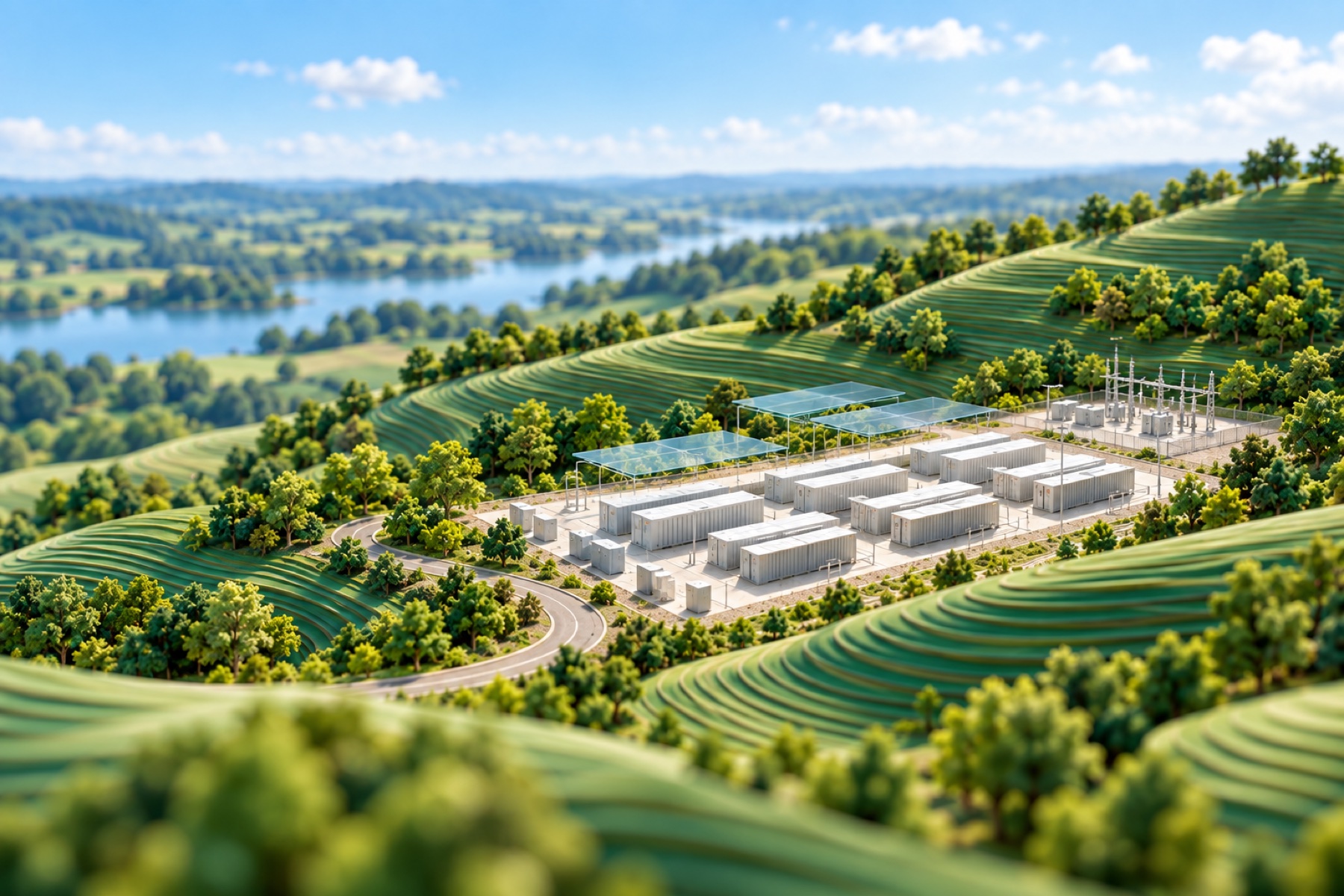
Section 8.9 describes a building requirement for a battery facility that is a primary use, with possible relief involving exceptional screening or public amenities. Do not assume an outdoor equipment drawing has secured that relief.
Ask the developer which design it proposes and what review remains. Would a building change the occupied area, deliveries or maintenance access? If screening is proposed instead, have the company show where it would go and who would maintain it.
If an offer involves publicly accessible space, ask exactly what rights that would create. Where would people enter, what hours would apply and who would manage it? Review those commitments separately from the enclosed battery area and your retained property.
Have any approval-related change brought back into the land discussion. An additional structure, access route or amenity may change the rights requested. Compare the revised plan and compensation before accepting a new boundary.
Reference: Montague: September 25, 2026 zoning bylaw, battery provisions in Section 8.9, PDF pages 56–59
Include retained trees and screening in the land boundary
The local standards address retained mature trees, vegetation buffers and fence screening. Ask the team to show how its proposal meets the applicable requirements on your land.
Mark trees to be removed and retained alongside the equipment, road and cable routes. Would the company need control over woods outside the fence? Would you still be able to maintain a drainage ditch or use an adjoining field? Resolve those questions before treating the fenced area as the whole lease.
Ask how tree retention would be measured and documented. If the company proposes a protected area or a continuing restriction, request its boundaries and written terms. Find out what happens if a tree dies, a storm causes damage or access is needed for maintenance.
Discuss the screening over time. Who replaces dead plantings, handles invasive growth and keeps gates clear? Ask whether that work affects your tenant, farm operator or regular access. A landscape plan should include practical responsibilities as well as an illustration of how the site might look.
Reference: Montague: September 25, 2026 zoning bylaw, battery provisions in Section 8.9, PDF pages 56–59
| Show on the drawing | Question to resolve |
|---|---|
| Equipment and building | What area would be occupied? |
| Trees and screening | What land or uses outside the fence are affected? |
| Service and emergency routes | Who keeps shared access clear? |
| Drainage and cables | What continuing rights would the operator need? |
Want to ask about your land?
Send the location and what you know. You don’t need a project plan.
Tell us about your landKeep ongoing maintenance out of the guesswork
The bylaw calls for operating and maintenance information, emergency access and a current emergency contact. Ask who would carry out those duties for the actual facility.
Identify the operator you would contact about a damaged fence, blocked lane, drainage problem or noise concern. Ask how you will be informed if the operator changes. Keep a routine contact as well as the project’s emergency arrangements.
On a working property, mark which entrances and routes would be shared. Discuss deliveries, snow clearing, gate controls and maintenance vehicles. Decide how the operator provides notice when work could interrupt your use.
Separate developer obligations from work expected of you. If the offer assigns you mowing, road maintenance or another task, ask how it is paid for and what standard applies. Have the agreement explain how problems are corrected rather than relying on a general assurance that the site will be maintained.
Reference: Montague: September 25, 2026 zoning bylaw, battery provisions in Section 8.9, PDF pages 56–59
Read the removal security beside your lease
Section 8.9 calls for an engineer’s removal estimate and security from owners and successors in title. It gives the town a right, rather than an obligation, to act after abandonment. Ask how the approved arrangement relates to your own exposure.
Before signing, have your adviser identify which party each reference to owner covers. Who must obtain the security, pay to renew it and update the cost estimate? Ask what responsibilities remain with the landowner if the project company stops performing.
Request the actual security document and removal plan. Find out who can call on the funds, which work they cover and whether the protection continues after a project transfer. Public security should be compared with the company’s private promises to you.
Discuss a partly built facility as well as one that has finished operating. Ask who removes equipment, buildings, foundations and cables, what will be retained by agreement and how the land will be restored. Decide how you would confirm completion and release any continuing rights.
Reference: Montague: September 25, 2026 zoning bylaw, battery provisions in Section 8.9, PDF pages 56–59
Match the reservation period to the work still needed
Ask the company for a list of unresolved design, approval and connection questions. Compare that list with how long it wants to reserve your property. Know the payment during investigation, the terms of any extension and the event that starts operating rent.
If a building or screening alternative remains undecided, ask whether either design could require more land. Establish how you would review a revised footprint and whether additional rights change the price. Avoid pricing one drawing while signing an agreement broad enough to cover another.
Keep electrical review separate from zoning. Request the actual connection status and the work still needed, including any off-site route. Nearby infrastructure does not establish spare capacity or the upgrade cost for this battery.
If the project cannot proceed, ask how the land is released and how study damage is repaired. Keep the end of the reservation as clear as its beginning. An expected approval date is not a substitute for a defined release process.
Tell Sunland about your Montague property
Begin with your contact details, then the property location. Add Montague, Franklin County, present use and any existing proposal if known. Approximate acreage and a parcel number are optional.
Mention the area you would consider making available and any access, trees, buildings or retained uses that matter. You do not need a finished layout, zoning decision or electrical study to make an inquiry.
The form starts a property discussion. It does not authorize entry, reserve the land or commit you to a lease or sale. Further review must establish the actual rights, approvals, connection and commercial fit.
Questions landowners ask
Can I judge the land required from the battery fence alone?
No. Ask for buildings, access, screening, drainage and other requested rights on the same drawing.
Does an outdoor drawing show that the design is approved?
No. Have the team establish the review route and provide the actual decisions for its design.
Does public removal security replace my lease protections?
Have the actual documents compared. Establish who is responsible, which work is covered and who can use the funds.
Can I contact Sunland before I know the zoning district?
Yes. Start with your contact details and property location, then tell us what you know. Acreage and parcel number are optional.
Sources & further reading
Sources checked 2026-10-06. Local rules and program details can change. Check the requirements for the actual project.