
Establish whether the September moratorium affects the proposal
The town’s adopted-laws register dates Local Law 12-2026 to September 15, 2026. The law sets a six-month pause on specified discretionary development approvals outside incorporated villages, with stated exceptions and an extension mechanism. Confirm its filing and current status for the actual application.
The exceptions include certain smaller commercial or industrial projects, named zoning districts and applications with specified earlier environmental-review records. Do not decide that an exception applies by counting battery cabinets or using only the fenced equipment area. Ask the reviewing office how the whole proposal would be measured and classified.
If a team says the project can proceed, ask it to identify the provision and the supporting record. A preliminary conversation, an older application number or an electrical study does not answer the same question as the current land-use route.
Have the property address and parcel reference ready. Confirm whether the Town or an incorporated village reviews the site. Keep the written answer with the proposed layout so everyone is discussing the same land and design.
Reference: Town of Clarkstown: adopted laws awaiting codification · Town of Clarkstown: Local Law 12-2026 development moratorium
Find out what the battery would actually do
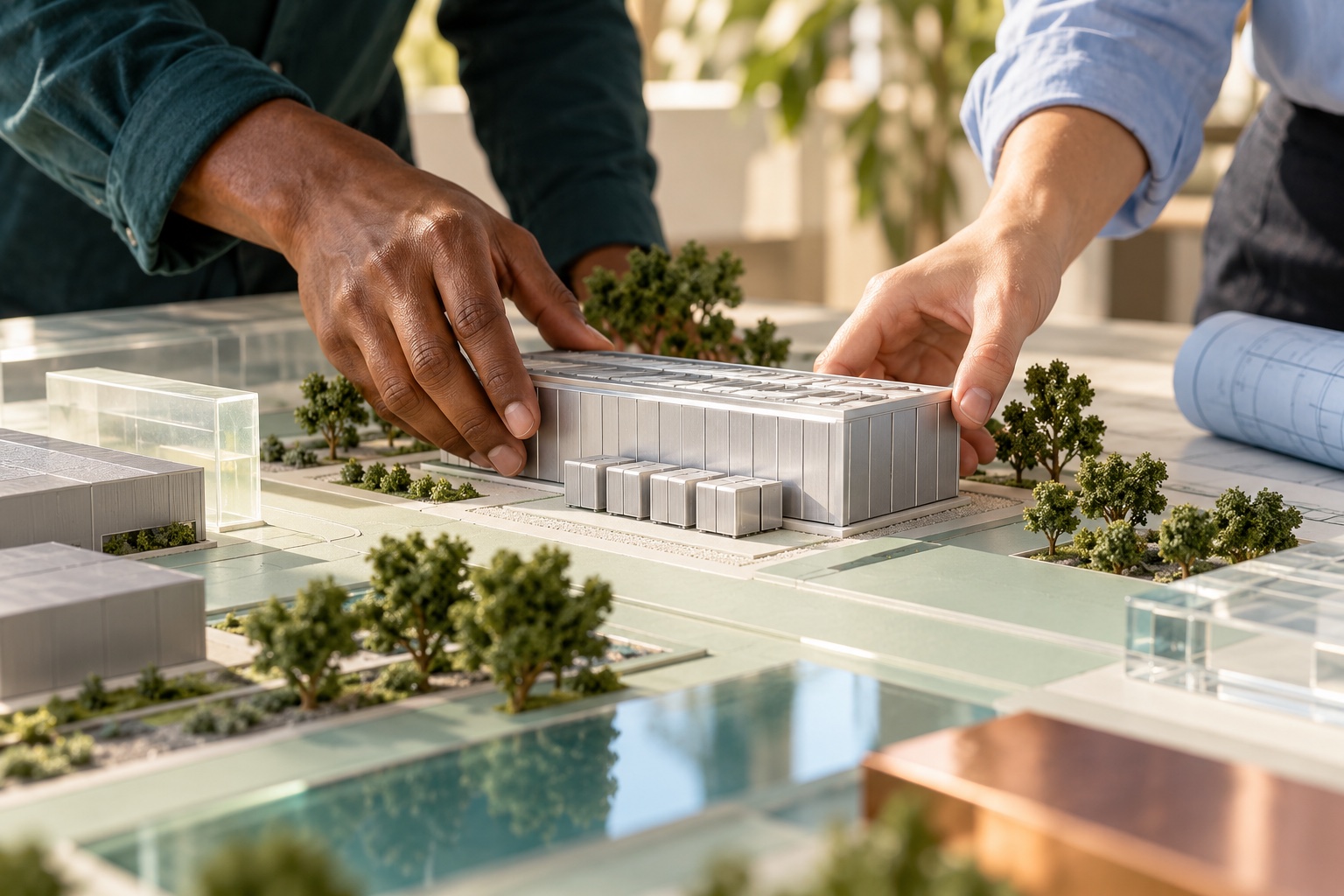
A battery supplying an existing business, storage added to solar and a facility selling services to the grid can involve different equipment, connections and land arrangements. Ask the proposer to describe its intended use in ordinary language before comparing lease terms.
Clarkstown’s solar chapter includes associated storage and enclosure/disposal provisions. It also separates solar review, inspection and utility coordination. Those solar provisions should not be treated as a blanket approval for standalone grid storage.
For an existing solar property, collect the approved plans, utility documents and private agreements. Ask what the battery changes and which new consents or reviews are needed. The presence of panels does not establish that a different operator can install batteries under the same paperwork.
Clarify whether the proposal is asking you to buy equipment, host a third party or reserve land while a project is investigated. Find out who owns the equipment, who pays operating costs and who receives any claimed energy savings or project income. These arrangements should not be compared as if they were the same deal.
Reference: Town of Clarkstown: solar power rules and associated storage
Compare the land hold with work that can happen now
If an option is offered during a planning pause, ask what work the team can complete during the initial term. Request a schedule for site investigation, connection work and local review, with the documents you will receive as each step advances.
Write down the total period the agreement could reserve the property, including extensions. Ask whether an extension requires a payment, your consent or proof of a completed task. A hoped-for review date should not quietly become an unlimited hold on the land.
Ask what ends the option if the proposed use cannot proceed. Discuss how notices are delivered, when recorded documents are released and who repairs damage from any permitted investigation. Have your adviser compare these provisions with the rights you are being asked to give.
The local law expressly warns that even exempt applications can face changed zoning requirements. Request a clear explanation of how the private agreement handles that uncertainty. A claimed exception does not promise the final design will be approved.
Reference: Town of Clarkstown: Local Law 12-2026 development moratorium
| Before agreeing | Question to resolve |
|---|---|
| Current review route | Which authority and written record support it? |
| Reservation period | How long can all extensions hold the land? |
| Owner payments | What is paid now, on extension and at lease start? |
| Stopping the project | How are land rights released and damage repaired? |
Want to ask about your land?
Send the location and what you know. You don’t need a project plan.
Tell us about your landProtect the everyday use of an occupied property
If you operate or lease a commercial property, mark the space that must remain available before discussing the battery footprint. Include delivery turns, customer and accessible parking, entrances, waste collection and access for emergency responders.
Ask for the electrical route and construction areas as well as the permanent equipment location. A small equipment area can still involve work elsewhere on the property. Explain which tenants, customers or neighboring owners use those routes and what agreements govern them.
Clarkstown’s fire-permit guidance distinguishes tenant establishments from landlord common areas and says permits are not transferable. Ask the Building Department how the proposed change affects the existing premises. Then allocate the work, costs and continuing responsibilities in the private documents.
Keep an up-to-date contact list for the site operator and the people responsible for gates, access and maintenance. Decide how ordinary problems are reported and who can authorize work. Do not leave your tenant to discover a changed entrance or interrupted service after construction starts.
Reference: Town of Clarkstown: annual fire permits and landlord/tenant responsibilities
Include landscaping in the usable-space calculation
The July 2026 tree amendment addresses landscape plans, minimum tree density and native plantings, including sites where trees are not removed. Ask the project designer and reviewing office how the current rules affect the actual plan.
Walk through the proposed location with your present uses in mind. Point out vegetation you want to retain, drainage paths, existing utilities and areas needed for maintenance. Ask for a drawing that shows those constraints together, rather than separate pictures that hide where uses overlap.
Find out who installs and maintains planting, replaces failed material and keeps required access clear. If that obligation runs beyond the initial construction period, ask how it is funded and what happens when the operator changes.
An open area on an aerial photo is only a starting point. The proposed layout needs to account for the land you intend to keep using and the reviews it actually requires. Do not authorize clearing merely to meet a target development date.
Reference: Town of Clarkstown: Local Law 10-2026 tree and landscape amendment
Send the property details you already have
Start with your name, email and phone number, then the property location. New York and Rockland County are selected in the inquiry form and can be corrected. Acreage and a parcel number are optional.
Tell us whether the property is vacant, occupied or already used for solar, and whether a tenant or another agreement affects the available space. Mention an existing offer or option and any dates you are being asked to meet.
Explain whether you would consider a lease, sale or use of part of the property. Photos, a plan or an offer can help later; you do not need a completed application to start the conversation.
Sunland can review the information and identify questions for further investigation. An inquiry does not reserve the land, establish an exception to the moratorium or authorize a project. The connection, approvals, land rights and commercial fit still need to be established.
Questions landowners ask
Does the September law ban every battery project?
The published law concerns development approvals and has exceptions. Establish the actual parcel, proposal and review route rather than assuming either a blanket ban or an exemption.
Does existing solar make a battery automatically permissible?
No. Collect the existing approvals and agreements and ask what the proposed storage changes. The solar chapter does not settle every standalone storage proposal.
Is the equipment area the only land I would provide?
Ask for all permanent and temporary areas, including access, electrical routes and construction space. Compare the drawing with the rights in the proposed agreement.
Can I inquire about an occupied commercial site?
Yes. Explain the current business or tenant uses, access that must remain available and the portion you would consider. Further review is still needed.
Sources & further reading
Sources checked 2026-10-06. Local rules and program details can change. Check the requirements for the actual project.
- Town of Clarkstown: Planning Department and review functions
- Town of Clarkstown: Local Law 12-2026 development moratorium
- Town of Clarkstown: adopted laws awaiting codification
- Town of Clarkstown: solar power rules and associated storage
- Town of Clarkstown: Local Law 10-2026 tree and landscape amendment
- Town of Clarkstown: annual fire permits and landlord/tenant responsibilities