
Check the published site preferences first
NYSERDA lists former industrial and commercial land, closed landfills, brownfields, dormant generating sites and other underused properties as priorities. The owner must participate in a nomination. Its page calls for at least 10–15 buildable acres, favors larger sites and says smaller sites will not be considered for development. It also favors flat or gently sloping land and excludes active agricultural use and designated agricultural districts.
These are this program’s preferences, not a minimum acreage rule for every battery project. If your property falls outside them, do not assume that it has no other possible use. A private proposal needs its own assessment.
Reference: NYSERDA: Build-Ready site nomination and preferred sites
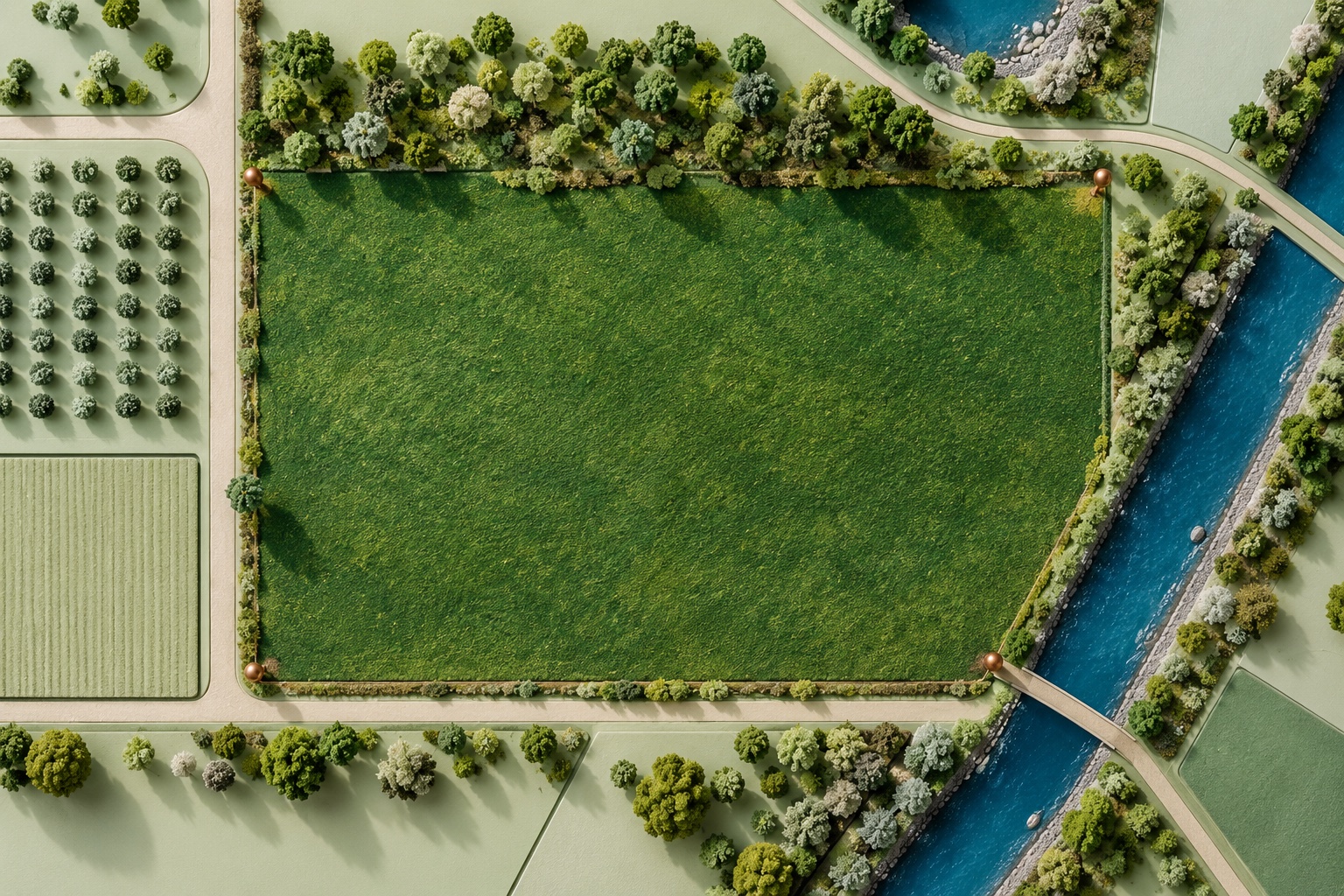
Count usable ground rather than the whole deed acreage
Start with a simple property sketch. Mark buildings, current operations, roads, slopes, ponds and areas you cannot make available. Include entrances that serve neighbors or tenants. You can explain these features before paying for a new survey.
For example, a parcel might cover twenty acres while much less is open for a new use. Explain the difference when discussing it. A deed acreage figure alone does not show where equipment, access or construction work could fit.
Write down what you want to keep using. Would a proposal need to avoid a building, leave a yard available or preserve a future expansion area? Those priorities belong in the first conversation, before someone prepares a layout that assumes the whole site is available.
If a map shows more than one parcel, label the boundaries and who owns each. Do not describe neighboring land as part of your available site unless its owner is participating. Mark an uncertain boundary as uncertain.
Bring the history of the property into the review
An underused site can still have obligations. Gather the records you already hold: older site plans, environmental reports, access agreements and any restrictions associated with the property. Explain which records are missing rather than guessing what they say.
If there is a landfill cap, former industrial use or known contamination, point it out early. Ask the project team what investigation it needs and who would pay. Interest in reusing a site is not an agreement to take over every existing responsibility.
Separate the owner’s current obligations from work caused by a new installation. Ask how excavation, foundations, roads or electrical routes would be reviewed and how any disturbance would be documented. Your adviser can help compare the proposed work with existing records.
You do not need to solve every technical question before an initial inquiry. The useful first step is a clear account of what is on the land, what happened there and what information is available.
Want to ask about your land?
Send the location and what you know. You don’t need a project plan.
Tell us about your landIdentify existing commitments before offering space
Check whether an option, lease, mortgage or other agreement affects the area you are considering. Tell the reviewer if someone already has rights to investigate or develop the site. Keep any deadline in that agreement visible.
For a commercial property, explain tenant occupancy and shared access. Would a proposed entrance cross a tenant’s yard? Does someone have parking, delivery or utility rights in the area? A vacant-looking space may already be committed.
If several people or an entity own the property, identify who can discuss it and who would need to approve a later agreement. An informal conversation with one owner should not be presented as consent from everyone.
Do not sign an additional reservation simply because a program has been mentioned. Ask which rights are requested, how long they last and what happens to your existing commitments. Review the actual document before deciding.
Separate a nomination from permission to enter or build
Ask what the next step involves before agreeing to it. Is someone requesting information, a site visit, testing access or a binding land agreement? These are different decisions and should be explained separately.
For a visit, agree on notice, the entrance, areas that may be inspected and who will attend. For testing, request the proposed work, insurance information and arrangements for repairing disturbance. Keep a record of what you authorize.
If an agreement follows, ask about the reservation period, extensions, payments and release of rights. Discuss your plans to sell, lease, operate or improve the property during that period. A program name does not explain those terms.
Also ask which permissions and connection work remain. An assessment can identify questions to investigate; it does not replace the project-specific records needed to establish whether a design can proceed.
| Step | What the owner should understand |
|---|---|
| Initial information | What is being assessed and who receives it |
| Site visit or testing | What work is allowed and who repairs damage |
| Land reservation | Term, payment, extensions and release |
| Project development | Approvals, connection and responsibilities |
Keep the state route and a Sunland inquiry separate
NYSERDA provides its own nomination link on the official page referenced above. Read that form and its current instructions if you want to pursue that route. This guide does not submit information on your behalf.
Use the Sunland form if you want to discuss your property with our team. Start with your name, email and phone, then the location. Acreage and a parcel number are optional. Mention current uses, existing agreements and whether you have already contacted NYSERDA or another developer.
Tell us whether you would consider a lease, sale or only part of the site. Explain the uses you want to retain and any dates affecting your decision. An existing sketch or report can help with a later review; it is not required to start.
Submitting the Sunland form does not reserve your property, grant access or create a Build-Ready nomination. Further work must establish the land rights, site constraints, connection, approvals and commercial fit.
Questions landowners ask
Is Build-Ready limited to solar?
The official nomination page includes potential battery energy storage projects as well as renewable energy. Review the current site preferences and instructions.
Does every battery project need 10–15 acres?
No. That figure comes from Build-Ready’s site preferences. It is not a universal battery-project minimum.
Does nomination determine what I would be paid?
It is an assessment route. Any payment or land commitment needs to be explained in the actual offer and agreement.
Does the Sunland form nominate my site to NYSERDA?
No. It contacts Sunland America. NYSERDA has a separate official nomination route.
Sources & further reading
Sources checked 2026-10-06. Local rules and program details can change. Check the requirements for the actual project.