
Confirm the town or village boundary
The town zoning chapter describes its districts as covering the Town of Clayton outside the incorporated Village of Clayton. The village publishes its own code and planning resources. Shared boards do not make the two codes interchangeable.
Use the parcel location, rather than a mailing address alone, to confirm the office and current rules. The town cautions that its online zoning map is for general reference. Ask the office to identify the district and any overlay for the exact property.
Keep that answer with the proposal. If an access road or cable route crosses another parcel, ask the project team to identify where each part would be reviewed and which owners would need to consent.
You can start an inquiry without knowing the jurisdiction. Share the location you have, and explain whether the land is near an existing building, road or shoreline.
Reference: Town of Clayton: published zoning chapter · Town of Clayton: zoning, planning and forms · Village of Clayton: separate code and planning resources
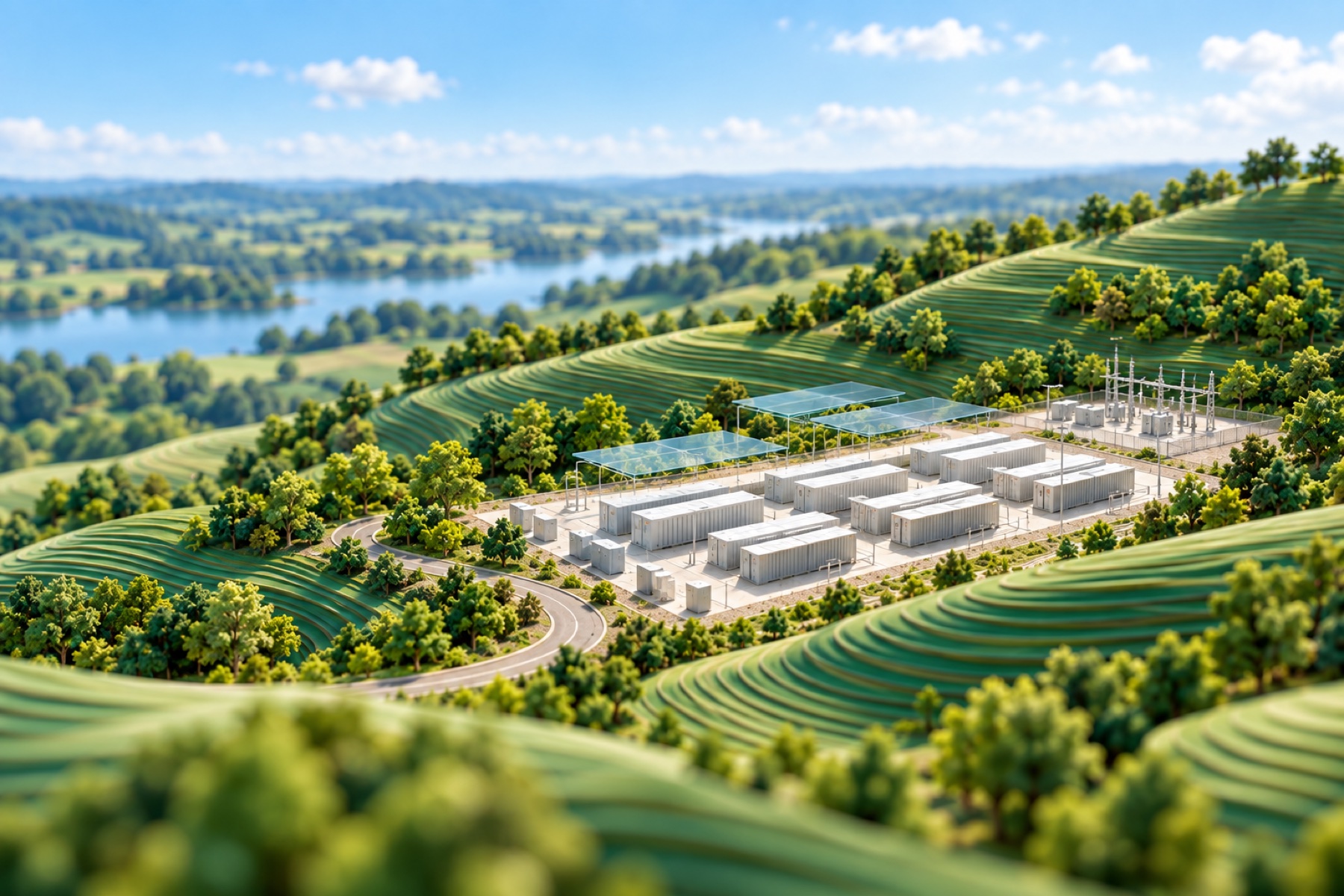
Describe what the battery would actually serve
The town’s solar section defines solar storage batteries and includes storage devices in solar equipment. Those provisions concern solar systems. They should not be used as a substitute for a determination about a separate grid-connected battery facility.
Ask the company to explain the proposed use in plain language. Would the battery support equipment already on your land, accompany a new solar project or operate as a separate site? Which parts of the drawing and agreement belong to each use?
Request a written explanation of the approval route, including any unresolved classification. This guide does not establish that a standalone project is permitted or prohibited on your parcel.
If the company is still investigating that question, discuss how long it can reserve the land, what it pays during that period and what happens if the route proves unavailable. A local classification answer also leaves the electrical connection to be investigated separately.
Reference: Town of Clayton: published zoning chapter
Read the site-plan application before signing it
The town’s posted site-plan form contains an ownership statement, requests an existing-feature sketch and proposed layout, and includes an agreement allowing board inspections by appointment or at other agreed times. It also asks about construction phases and timing. Confirm the current filing package with the office; the download includes older environmental-assessment pages.
Ask who will be named as applicant and who is expected to sign. If the project company does not own the property, ask the office how ownership and authorization should be documented. Do not sign an ownership statement that does not accurately describe the arrangement.
Read the complete application and drawing together. Would your signature authorize only the proposal shown, or could someone use it for a revised design? Discuss how you will review later submissions and changes.
Separate board inspections from the company’s private testing visits. Agree on notice, access routes, gates, people attending and activities allowed. Ask who pays for damage, whether drilling or clearing needs separate consent, and how visits avoid interfering with your use of the land.
Reference: Town of Clayton: published site-plan application
Want to ask about your land?
Send the location and what you know. You don’t need a project plan.
Tell us about your landShow the land you need to keep using
Before settling on a reserved area, mark entrances, existing buildings, field access, drainage routes and any paths you use to reach other parts of the property. Show existing easements and utilities if you know where they run.
Ask for a drawing that includes equipment, fencing, cable routes and temporary work areas. A battery footprint alone does not show every right the company may ask for.
Discuss the changes that would matter to you. Would a new fence block an entrance? Would deliveries use a shared drive? Would planting or grading affect a view, ditch or field edge? Who restores temporary space when work ends?
Compare the drawing with the option and proposed easements. If the option covers the whole parcel but the equipment uses only part, ask when unused land can be released and what you may do with it meanwhile.
| Mark on the drawing | Discuss before signing |
|---|---|
| Retained land | How you continue reaching and using it |
| Entrance and cable route | Who holds the necessary rights |
| Temporary work area | When it returns and who repairs it |
| Screening and drainage | Where work occurs and who maintains it |
Ask about waterfront review early
The town links a waterfront program, consistency-review law and a separate waterfront assessment form. The posted form asks about water resources, scenic effects, shoreline access and drainage. Ask the office whether that review applies to the location and proposed work; it is not a finding about every Clayton parcel.
If your land is near water, share what you know about flooding, drainage, shore access and existing recreational or other uses. Ask the project team which current maps and site investigations it will use.
Consider the access and cable route as well as the equipment area. Ask whether avoiding a sensitive part of the land changes the route or adds rights over another property. Request a revised drawing before agreeing to that change.
Discuss who obtains the necessary reviews and pays for studies or revisions. If the company needs more time, compare its request with the option deadline and extension payment rather than assuming the original reservation continues indefinitely.
Reference: Town of Clayton: zoning, planning and forms · Town of Clayton: published waterfront assessment form
Ask Sunland about your Clayton property
Start with your name, email and phone, then the property location. Acreage and parcel numbers are optional. Explain the current use and which part you might consider for a battery project.
Mention an existing offer, shared entrance, solar installation or waterfront concern if it affects your decision. You do not need a survey or a completed permit application to start the conversation.
Submitting this form does not reserve land, authorize entry or approve a filing. Further review depends on the actual parcel, current local requirements, connection route and terms you are willing to consider.
Questions landowners ask
Do the town and village use the same zoning code?
The town chapter covers land outside the incorporated village; the village publishes separate code resources. Confirm the jurisdiction for the parcel before relying on a rule.
Does solar-battery wording allow a standalone storage site?
It does not establish that answer. Describe the actual use and ask the reviewing office to confirm the current classification and route.
Should I sign a site-plan application before seeing the layout?
Review the complete filing and drawing first. Confirm who is named as applicant, what your signature authorizes and how changes or inspections will be handled.
Can I inquire without a parcel number?
Yes. Start with your contact information and the property location. Add the parcel number and acreage if you have them.
Sources & further reading
Sources checked 2026-10-05. Local rules and program details can change. Check the requirements for the actual project.